tourism

Saltee Islands – treasure bigger than money -part 2

Saltee_Islands

(Click on the photographs to enlarge them)

First three hours were gone in a blink. It is the magic of Puffins.  I was on my way to the Cat Cliff on the Southern end of the island – the land of the Northern Gannets.

Great Saltee island ascends from 3-5m high shore on the mainland side to 20-30m high cliffs on its south-eastern side. The Southern Summit rises to an altitude of 58m.
Saltee_Islands

I was walking along a stone wall, and after it ended the path took steep up through the waist-high ferns.

saltees

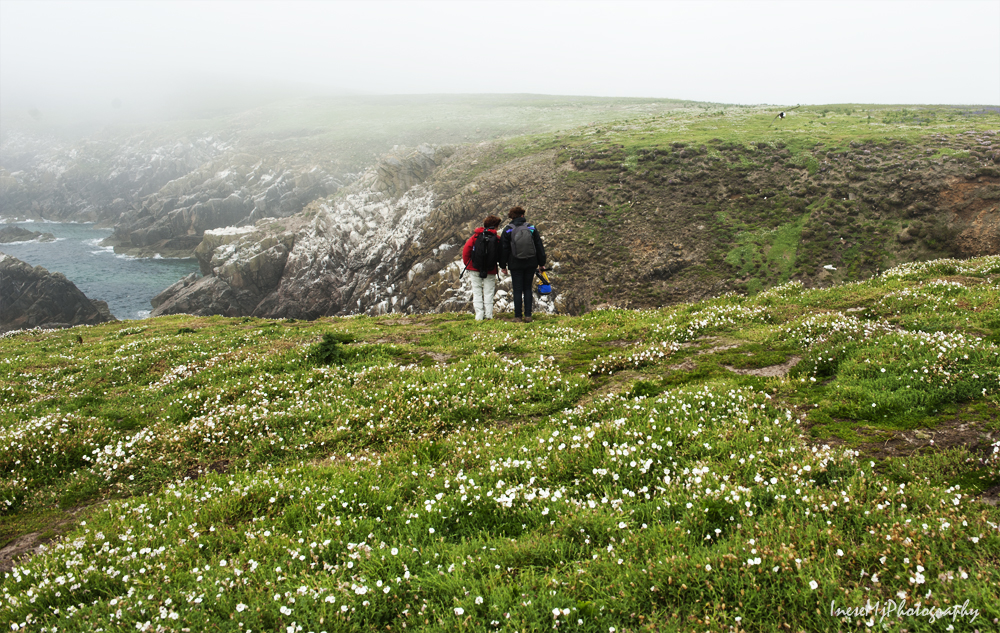
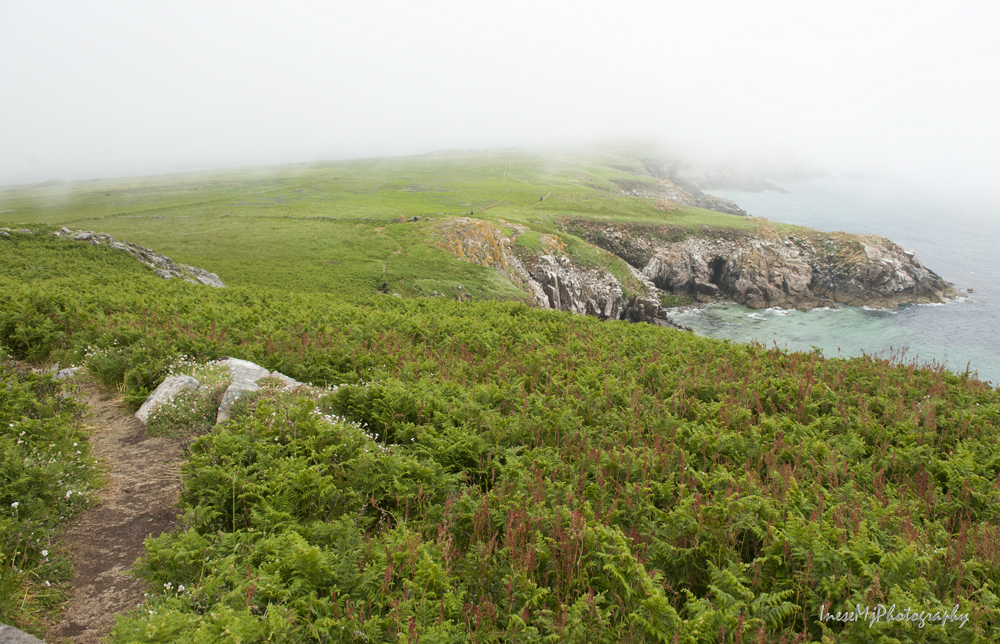
On the summit I made a stop to take a picture. It was still foggy.
Saltee_Islands

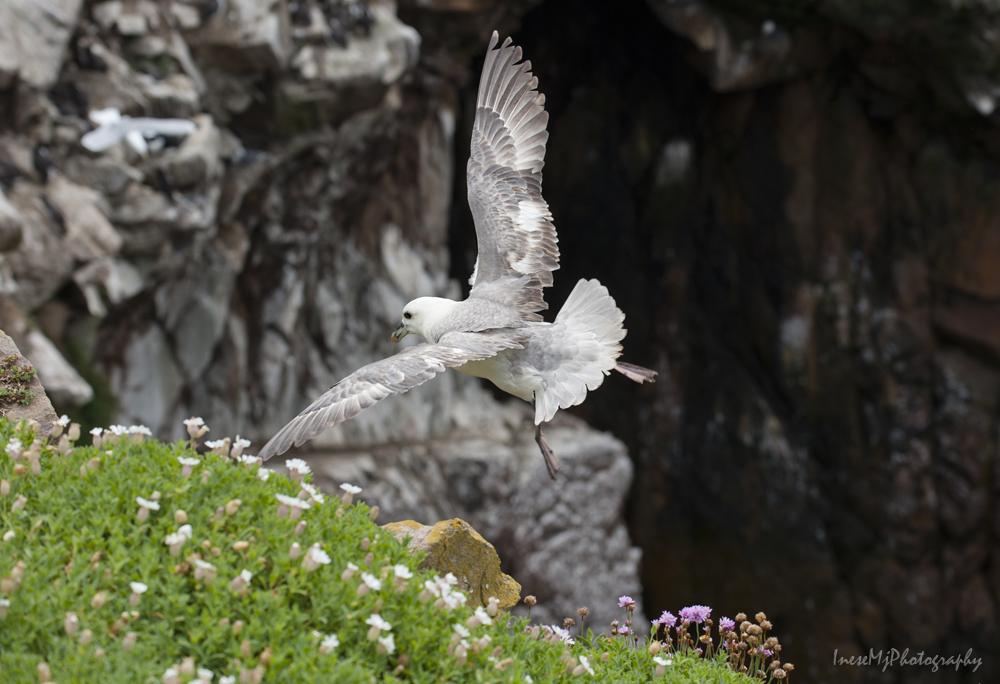
A Great black backed gull was standing on a rock. I came closer. It is a large bird, a predator attacking and killing even the far larger animals and birds, and I didn’t want to take a risk. Yet, I didn’t notice the chicks until they ran and hid themselves, and only then I knew I was in trouble.  The last thing I needed was to be struck by a gull! I turned back and walked away as fast as  I could without running in panic, while the gull’s partner repeatedly flew over my head diving low enough to touch my hair.  With its wingspan of 150-170cm the attacking gull was as good as a small aircraft.

Saltee_Islands

I caught up with the other photographers and we headed to the Cat Cliff barely visible in the mist.

Saltee_Islands

There was another gull – a male with no chicks around ( we will see them later).

Saltee_Islands

Saltee_Islands

Saltee_Islands

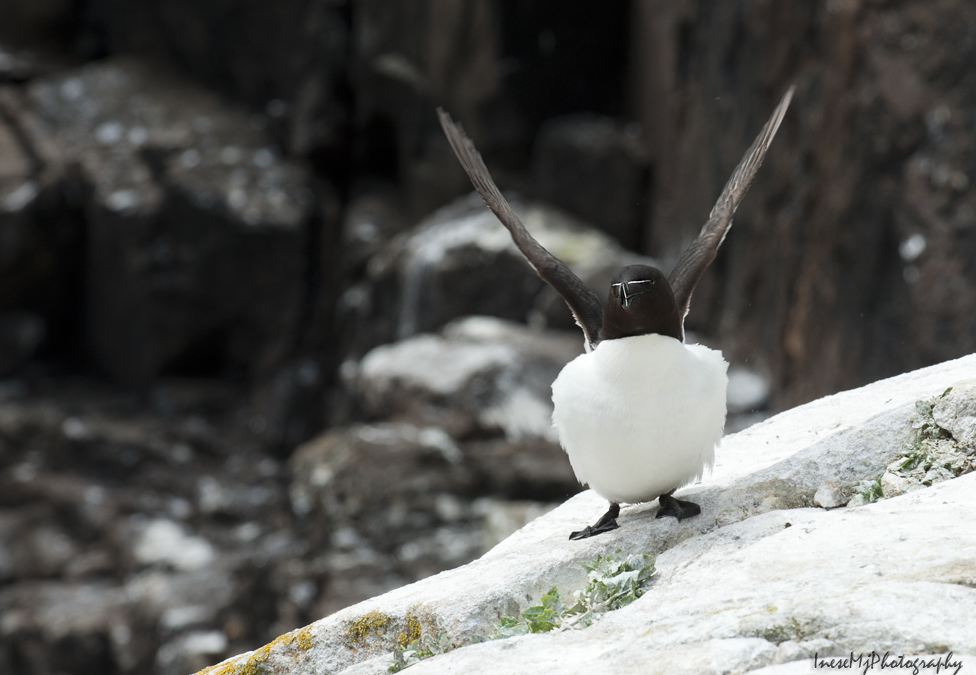
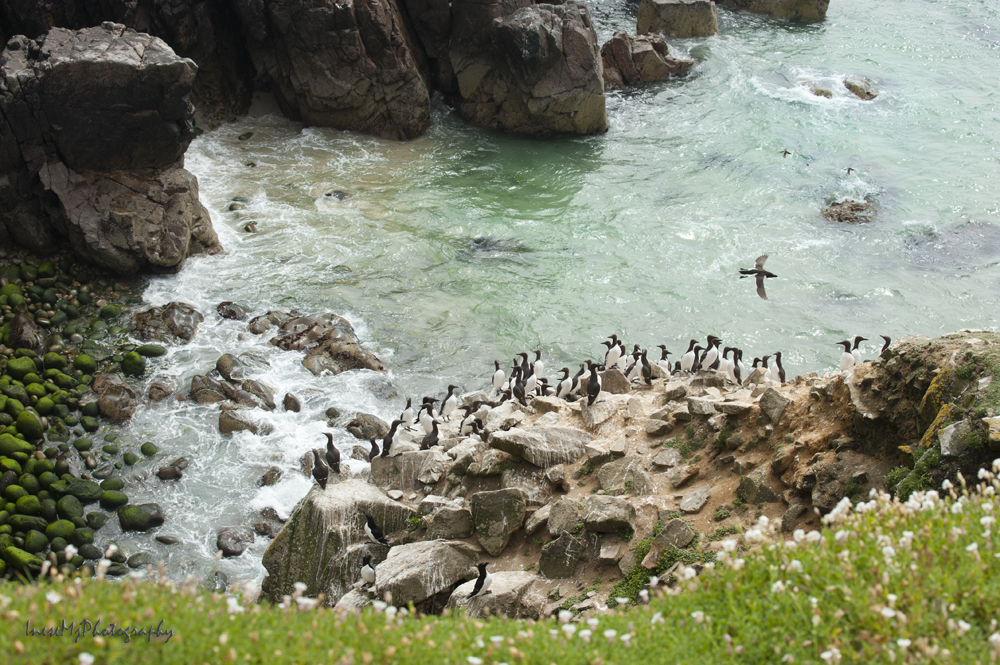
To get to the Cat Cliff takes an effort, but it was a fun climb because of the many species of the sea birds and their young we met on our way.  Look at these Razorbills with their soft fluffy bellies.

Saltee_Islands

Saltee_Islands

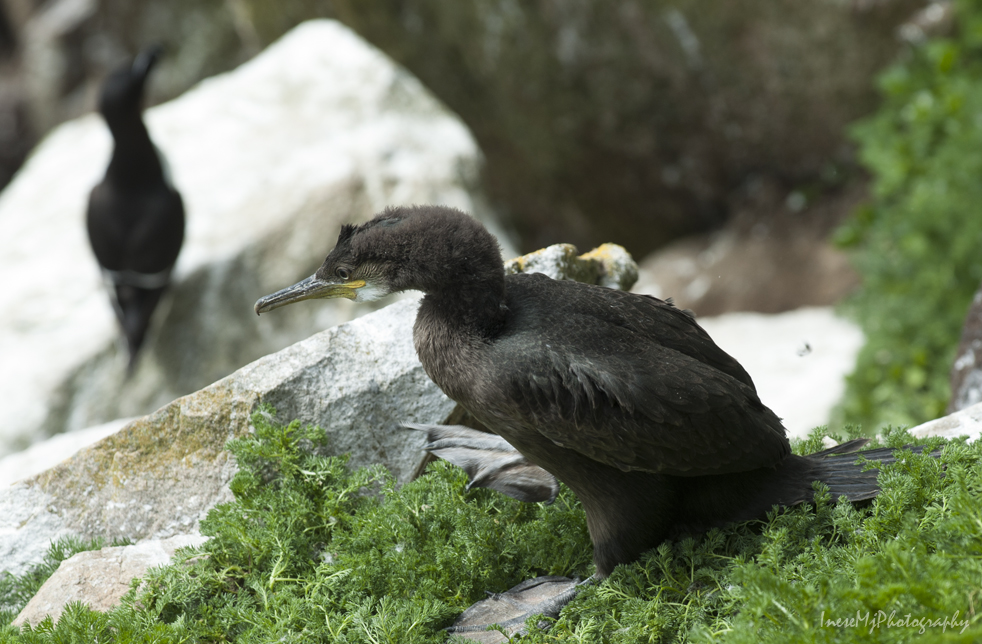
A young Common shag looks from under the rock…

Saltee_Islands

…and makes a careful step with his clumsy webbed foot.
Saltee_Islands

An adult bird is different, all shiny and beautiful.

Saltee_Islands

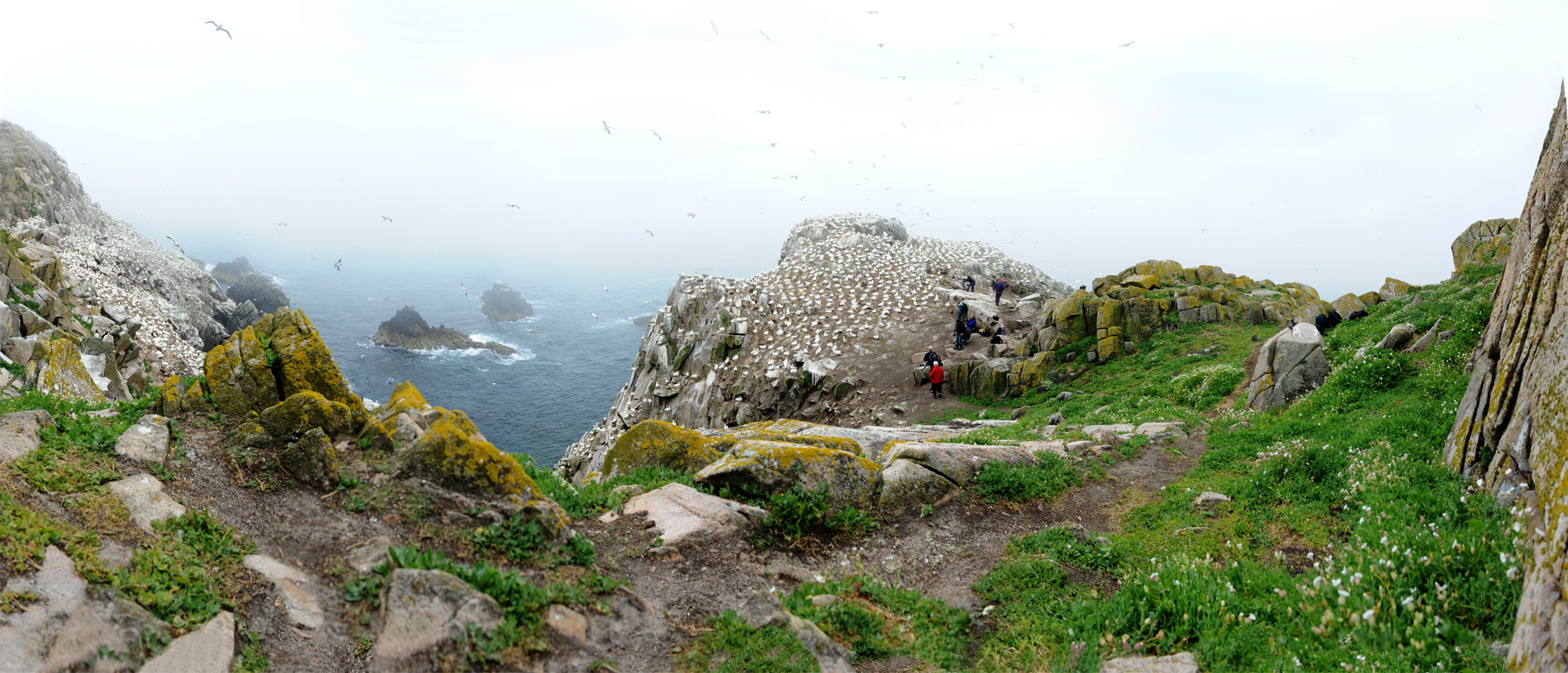
This is the place. A small colony of Gannets are settled on the left from the Cat Cliff. We don’t go there  – it is a steep cliff and very little room for a tripod.

Saltee_Islands

This is the Cat Cliff itself.

Saltee_Islands

I sat there enjoying the sight, and took this panorama. Unfortunately there is no sky because of the thick fog.
Saltee_Islands

We came very close to the nesting birds, but they didn’t mind. They have lived a long life, and have seen it all…

In my previous posts,  there are more facts  and more different photographs. If you are interested, you can go back and read these post –   I have reblogged them.

Here you can listen to the gannet call. Multiply it by couple of thousand  🙂
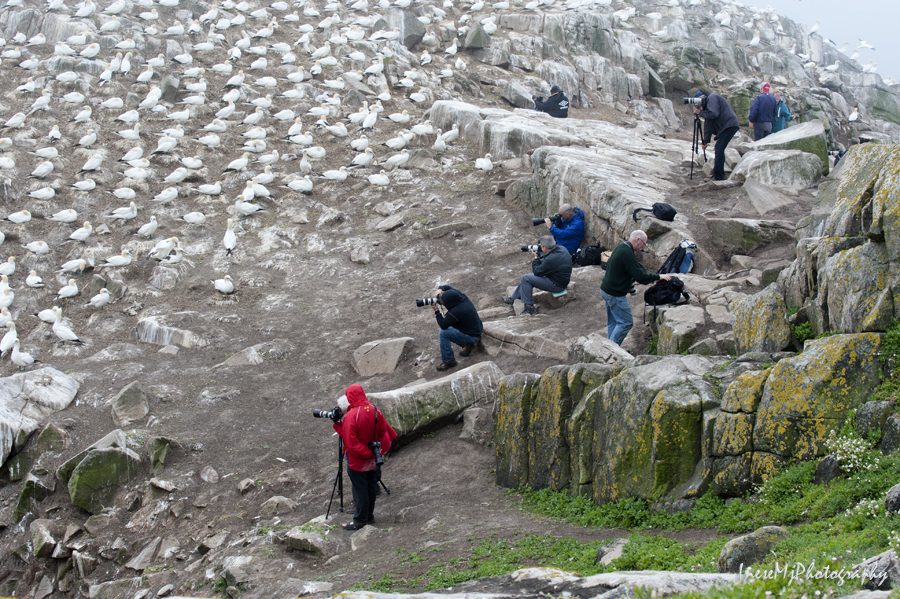
Saltee_Islands

The sky is crawling with Gannets.

Saltee_Islands

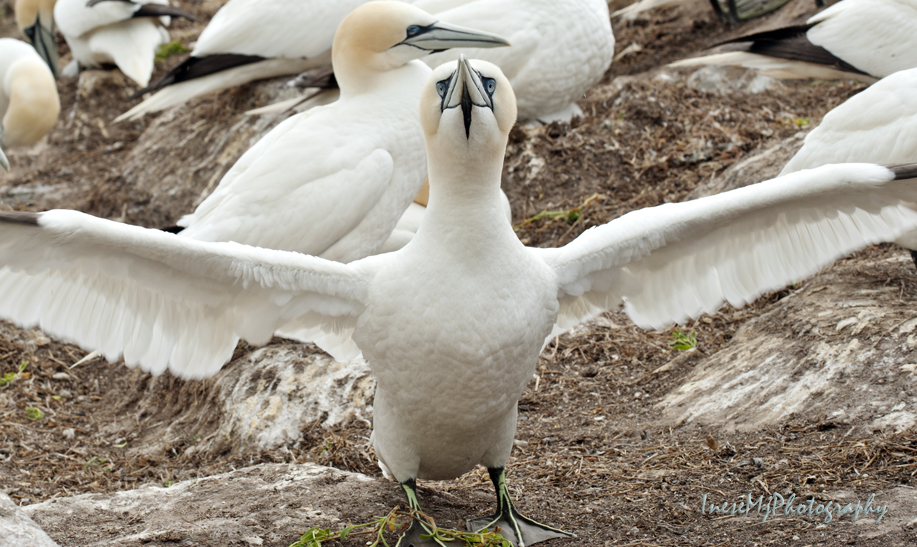
After landing the birds perform a “dance”.

Saltee_Islands

Saltee_Islands

Sometimes they bring some weeds.

Saltee_Islands

Saltee_Islands

Under every rock there is a chick. I have no idea what bird they belong to.

Saltee_Islands

This one looks different.

Saltee_Islands

And finally I see them – the chicks of the Great black backed gull I photographed in the flight. Their mother is standing next to them and looking at me with the menacing red eye. They are so tiny and innocent, but the fact is that three more killers will join the party soon. Sorry for the Puffins…
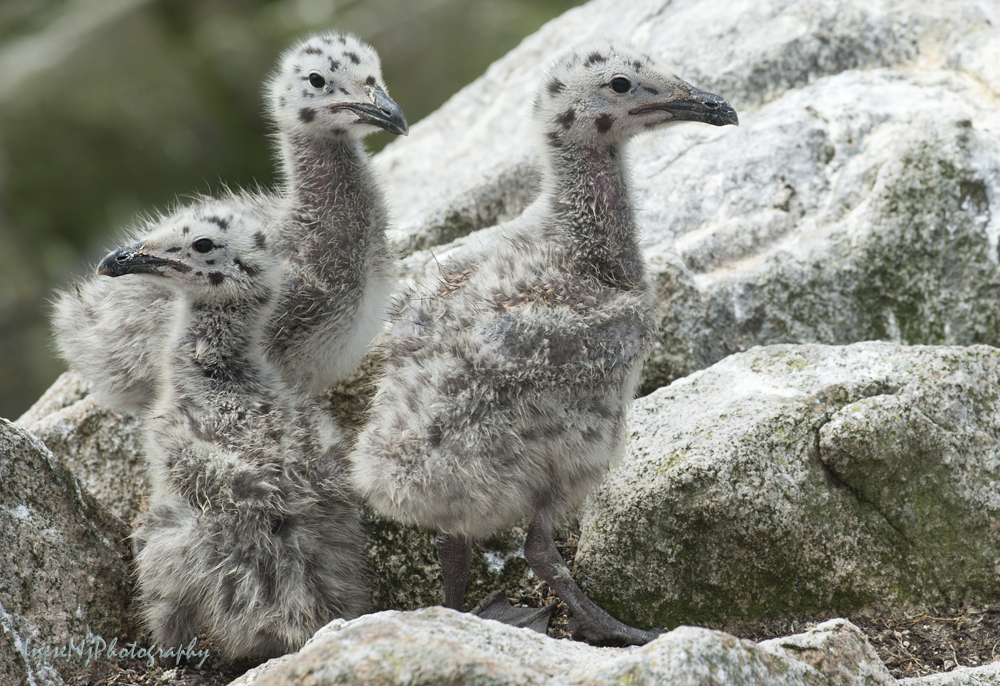
Saltee_Islands

Look at this tiny wing 🙂

Saltee_Islands

Who can find the chicks in this photograph in 10 seconds?  🙂

Saltee_Islands

On the way back the sky cleared for a few minutes and I took another picture of the island.

saltees

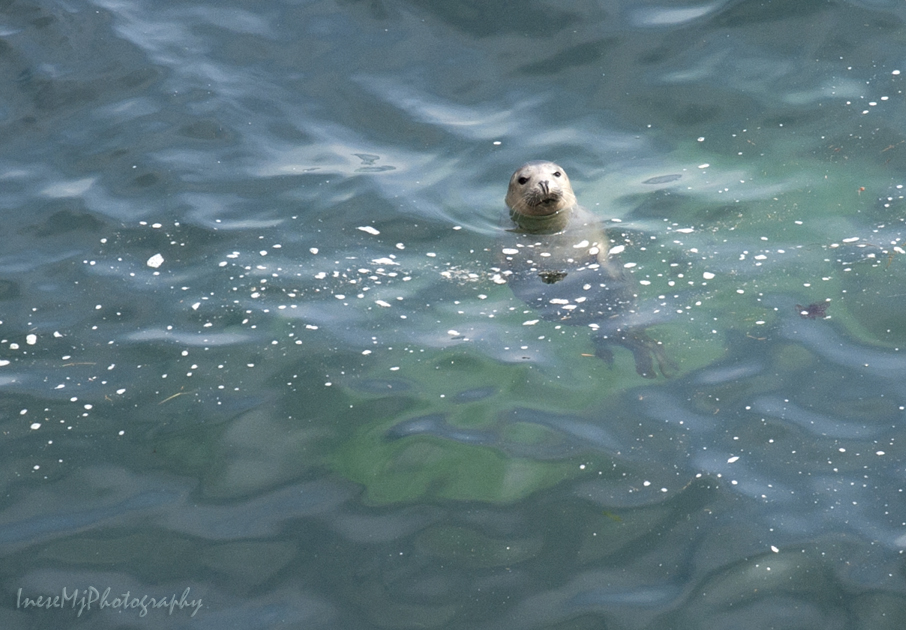
We also got to see the seals.

Saltee_Islands

The boat was coming in an hour.  I started getting nervous.  This photograph of a tiny rock that stuck between the big rocks forever shows exactly how I felt.

Saltee_Islands

We went down to the Boulder Beach and sat there looking in the mist. Our motorboats finally came, the inflatable boats took us six at a time on board, and off we went again. Lucky me. The wind was not that strong, and I had never left the deck this time, all soaked in seawater but perfectly well and happy.

Thank you for reading about my adventures!

IneseMjPhotographyHave a great weekend!

Saltee Islands – treasure bigger than money -part 1

Saltee_Islands

“All people young and old, are welcome to come, see and enjoy the islands, and leave them as they found them for the unborn generations to come see and enjoy.”      –  Michael the First

Even after I shared two posts on my Saltee experiences I still have a lot to say. I love this place.

When we arrived to Kilmore Quay to catch our motor boat, the sea looked rough. In the days of sail, the area around the Islands was known as “the graveyard of a thousand ships”.  I cannot tell that I have a brilliant memory, but this sort of information somehow always gets stuck in my head.

We boarded our boats – twelve in each – and off we went.  Not wanting to get soaked in salty wate, I went inside the boat, and it was a grave mistake. The waves were rolling over the boat; a few times the wave hit the bottom of the boat so hard that I though it would break up in pieces. Half way to the island, fighting sea sickness I had to get out, and there I stood another 15 minutes all soaked but unable even to move to make myself comfortable.  I barely remember the short trip on the inflatable boat; I was focused on staying conscious. It took me some six hours to completely recover – right before our trip back.

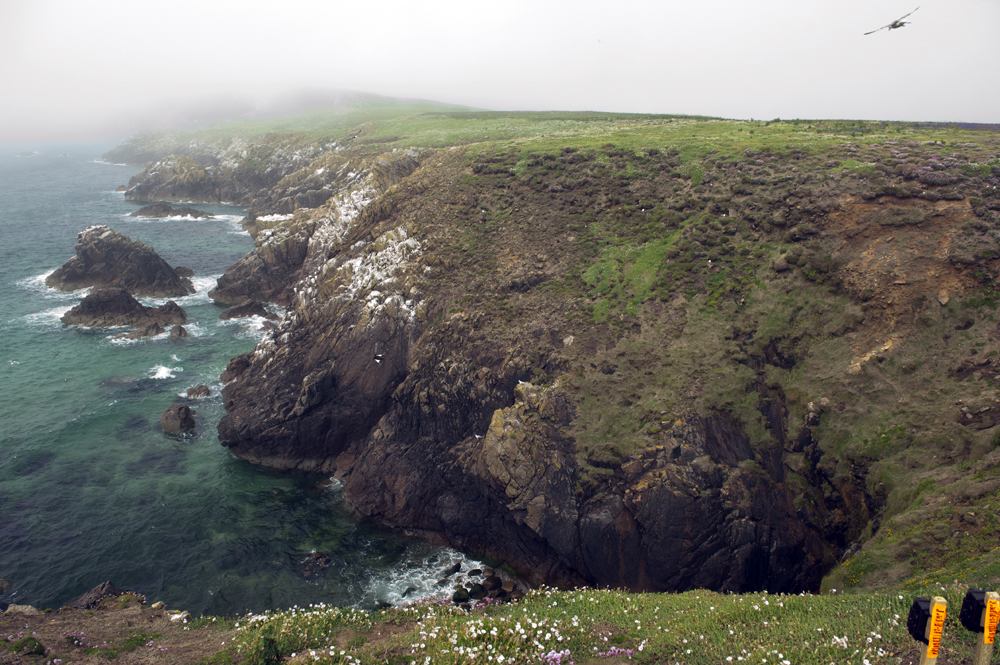
We walked up the steps, passed by the owners’ house and headed to the Puffin place. The island was wrapped in fog.

Saltee_Islands

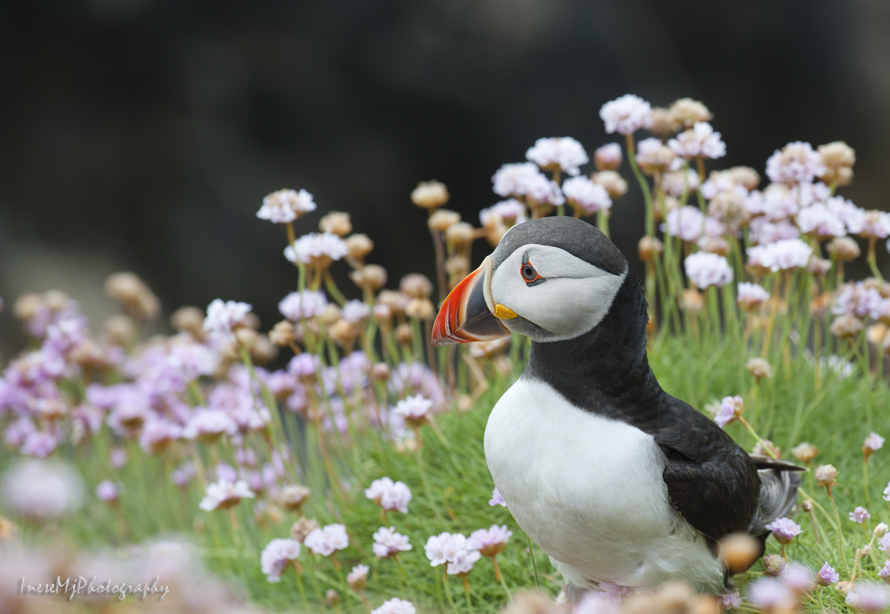
The cliffs surrounding the first bay  near the cave known as the Wherry Hole are the nesting place for Atlantic Puffins.

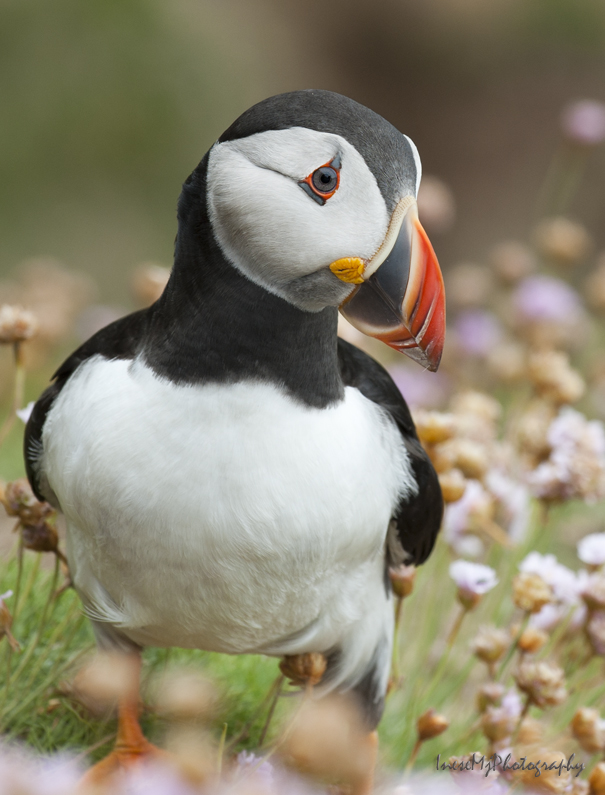
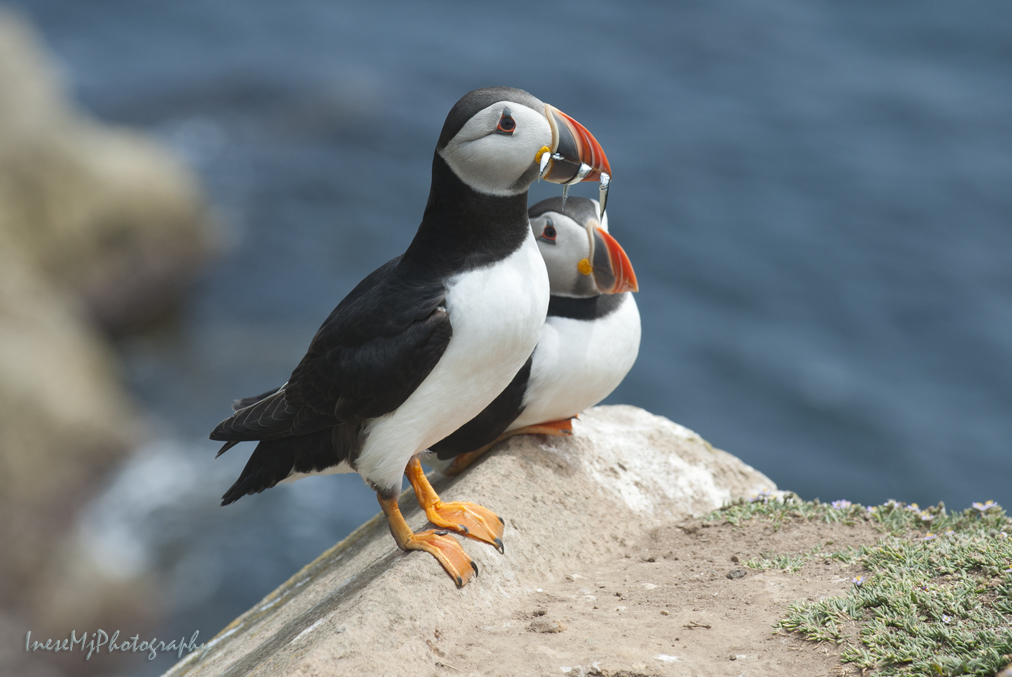
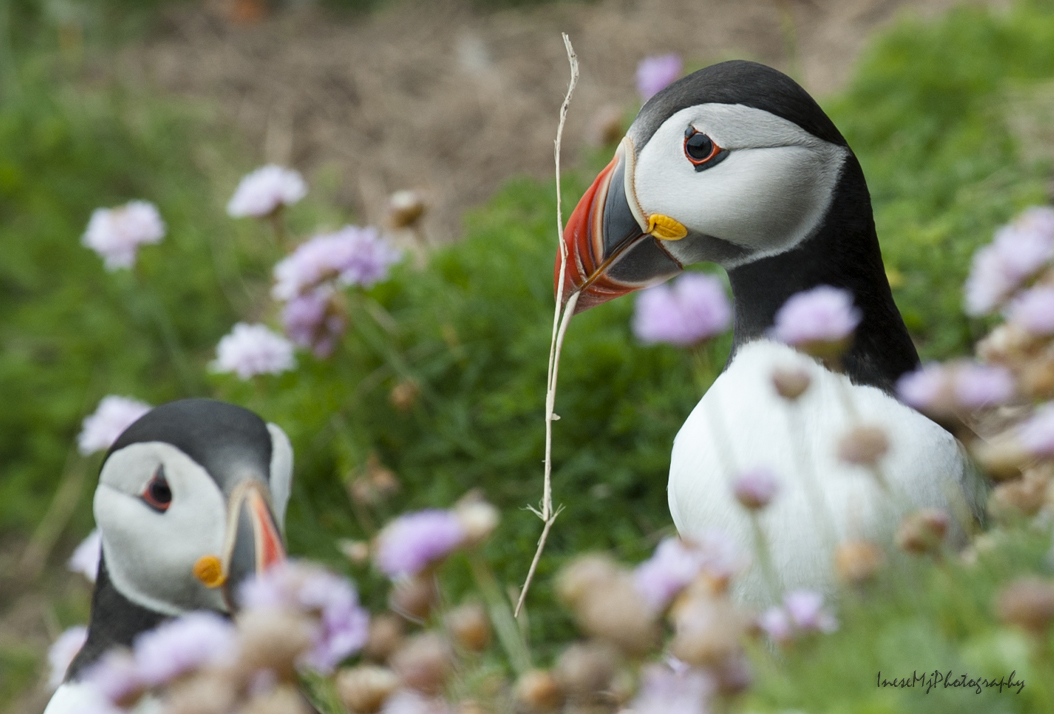
I am very glad to tell you that there were remarkably more puffins this year than the year before.  Knowing that the birds return to their old burrows, I went to check out my buddy who made such a great model for me last year, and there he was – with some more neighbours, possibly his own grown up chicks from the previous years.

Saltee_Islands

Puffins start breeding when they are five years old.  They use their pre-breeding years to learn about feeding places, choosing a mate and nest sites.

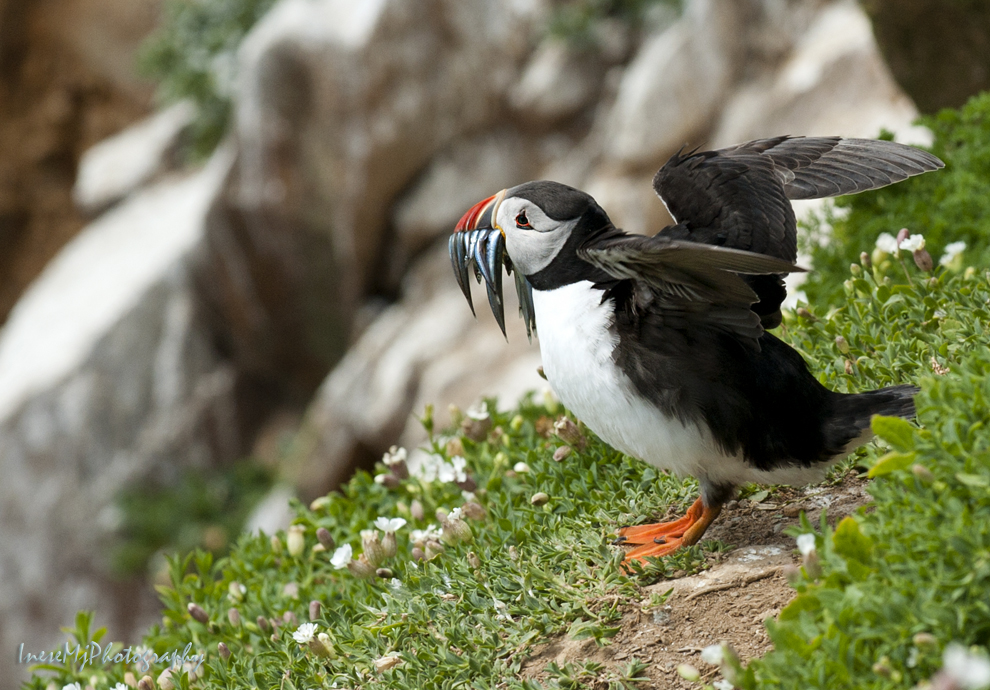
I went around for some more shots. The fun will start in the afternoon when the puffins go fishing and return with the bunches of the Sand eels in their beaks.

Saltee_Islands

Saltee_Islands

Saltee_Islands

Saltee_Islands

Saltee_Islands

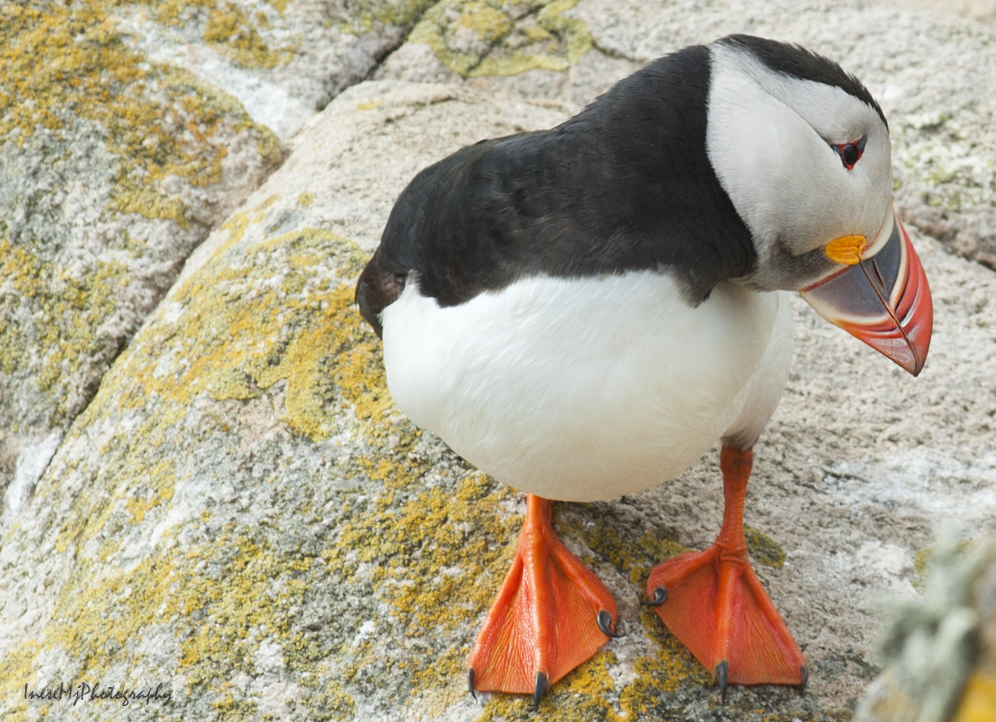
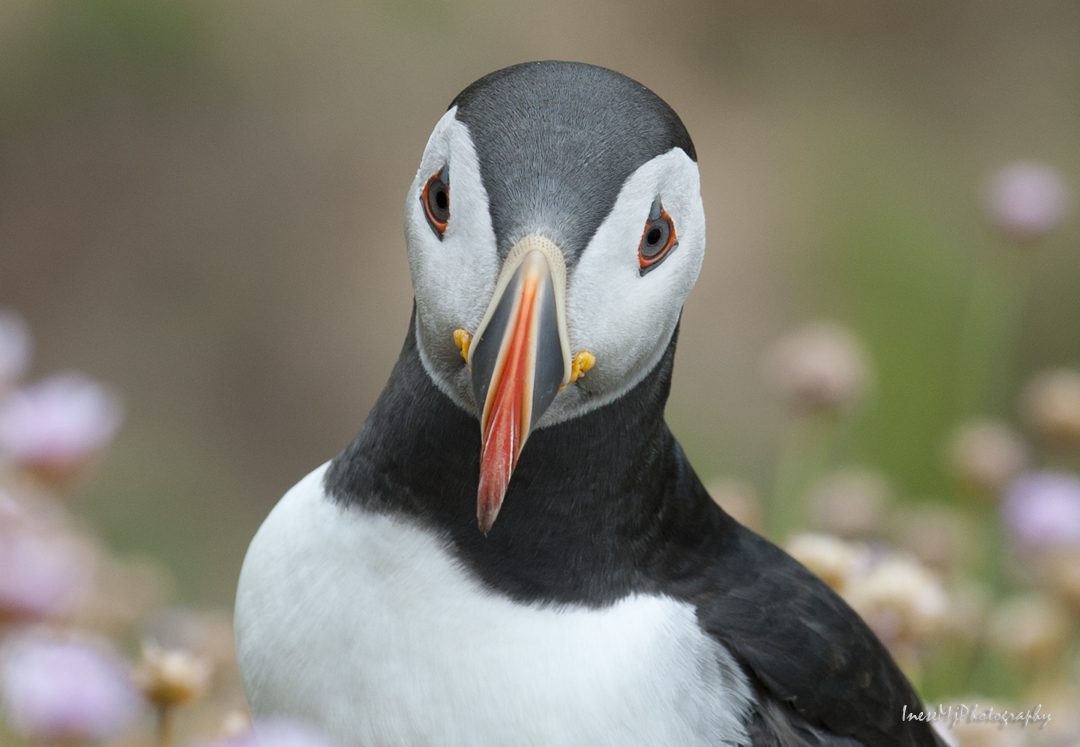
During winter, the beaks and feet of puffins fade in color, and every spring they turn  bright orange again in preparation for the breeding season.  The beak increases in size as the bird matures.

Here you can listen to a puffin  –  you will love it 🙂  Puffins usually make noises when sitting in their burrows, and the acoustics are very impressive.  I will post the link separately to give a credit to ProjectPuffin : http://projectpuffin.audubon.org/sites/default/files/audio/atpu.wav

In this photograph you can see two cameras set up by the Ornithologists to watch the puffins.

Saltee_Islands

We came a couple of weeks too early: most of the puffins young haven’t hatched yet,  but still we got lucky to see some feeding birds that afternoon.

The puffin’s beak can hold up to 60 fish.  The raspy tongue holds fish against spines on the palate allowing the puffin to open his  beak to catch more fish.

Saltee_Islands

Saltee_Islands

Saltee_Islands

We were lucky with the weather also. It was a dry day,  a little bit overcast. It is difficult to take photographs of puffins in the sun because of their black and white plumage.

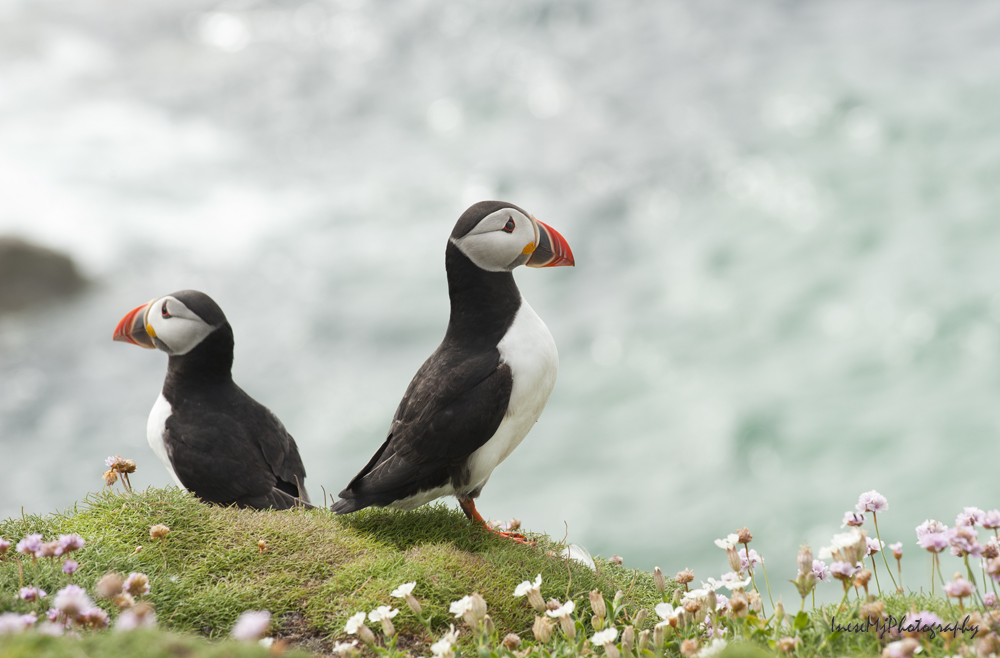
A few more puffins. The couples stay together all their life. Males are usually slightly larger than females, otherwise there is no difference.

Saltee_Islands

Saltee_Islands

This family is still working on their nest.  Puffins lay one egg per year.

Saltee_Islands

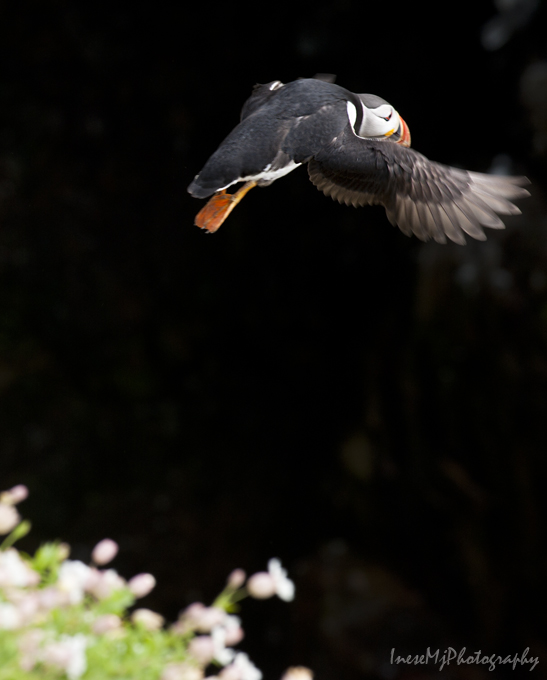
Puffins are very clumsy on the ground and in the flight. They are rather falling than landing, with a thud. In this photograph you can see some spots around the puffin. You might think it is some dirt on my lens, but it is the sand in the air. When a puffin is taking off he beats his wings and lifts up all the dust and sand.

A puffin can fly 48 to 55 mph (77 to 88 km/hr) though.  The wings can move so fast that they become a blur.

Saltee_Islands

Great Saltee Island is some 2-3 km long.  I am leaving the Puffins’ place and start hiking to the Southern part of the island along the well-trodden path.

Saltee_Islands

Saltee_Islands

Saltee_Islands

The islands  were used as a base for pirates and smugglers for centuries. The gain of these folks could very well be hidden in the many caves, like the one in the image above, but there are treasures bigger than money, and they are not hidden anywhere.

More from the Saltees in the end of the week. Hope you loved the puffins.

IneseMjPhotographyHave a peaceful week!

A look through the Waterford Crystal

waterford crystal

I see them every day – soaking wet, miserable groups of tourists trudging up the Henrietta Street in the direction of the best  known  tourist attraction in Ireland: the House of  Waterford Crystal. This post is dedicated to them. In this post I share the images I took yesterday, and the ones that are ten years old. But first the story.

In 1674 George Ravenscroft discovered the technique of adding lead oxide to the silica mixture used to make glass. This resulted in a new type of glass with great clarity which melted easier and could be blown, shaped and cut. There is no uniform definition of “crystal”, but in European Union, the glass products containing at least 24% of lead oxide may be referred to as “lead crystal”, and the products containing less lead (or other metal) oxide are called “crystal glass”.

A number of glass factories were established in Ireland in the 1700’s, mostly on the east coast close to ports since the glass making process required a constant and ready supply of coal.

The glass made at this time was quite similar in style to the cut crystal we know today and in fact, some of the patterns used then are still used in modern ranges.

In 1783 the Penrose brothers established a glass manufactory in Waterford city. It is not related to the modern Waterford Crystal company, but somehow is usually claimed to be a part of its history. Anyway, the Penroses invited a great glass manufacturer of Stourbridge  – Mr. John Hill, who had taken with him the best set of workmen he could get, and who knew the secrets of mixing the glass materials. The business flourished. After a few years John Hill left Waterford, and after that the factory had been having its ups and downs, but kept struggling decade after decade until it ceased production in 1851. A whole century there was no glass production in Waterford.

The history of modern Waterford Crystal starts in 1947 when a Czech glass manufacturer Karel (Charles) Bacik emigrated to Ireland and settled in Waterford. In partnership with a Dublin gift-shop owner Bernard Fitzpatrick, he started Waterford Glass. They persuaded a great glass craftsman Miroslav Havel to join them. Havel recruited skilled craftspeople from traditional glassmaking areas of Europe, set up training and apprenticeship programs for Irish personnel, and designed new product ranges. He visited the National Museum and made drawings from the collections of original Penrose Waterford Glass. The factory progressed and made its first profits in 1955.

During the 1960’s and 1970’s demand for Waterford Crystal went up dramatically. The factory was doing great through the 1980’s but started experiencing financial problems in 1990’s. The last and the greatest success was the 6-foot diametric crystal ball made in the factory – the Times Square New Years Eve Millennium Ball that was lowered down the pole during the New Year 2000 countdown. Ironically, it started the Waterford Crystal’s countdown: Waterford Crystal Manufacturing ceased to exist in Waterford city in January 2009. The brand is now co-owned by a US venture capital company KPS, Wedgewood and Royal Doulton (WWRD). In 2010 a new tourism-oriented manufacturing facility and retail outlet reopened in Waterford. The facility offers guided factory tours.

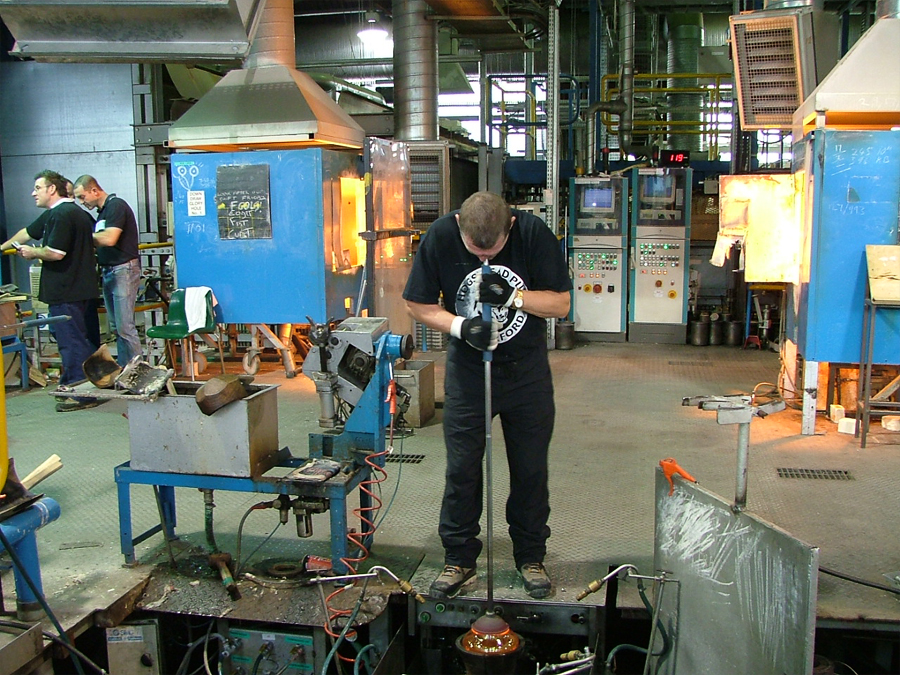
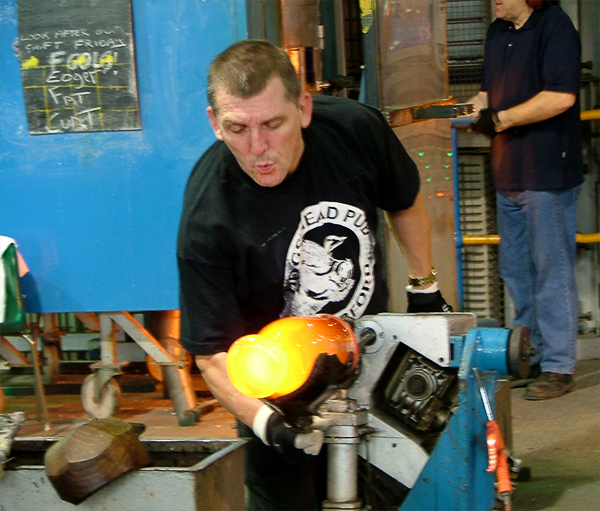
These images are taken in 2005 at the old Waterford Crystal factory workshops.

Waterford Crystal

A glass-blower in action.

Waterford Crystal

Waterford Crystal

Waterford Crystal

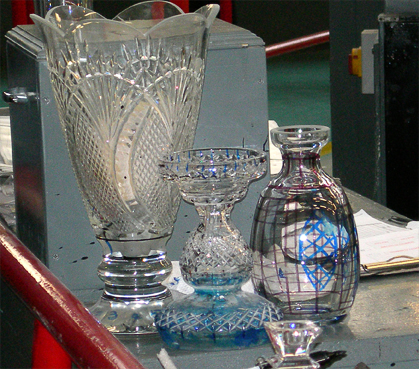
The glass is ready for the cutting process. The first vase from the left still has the top to be cut off.

Waterford Crystal

The markings show the future pattern.

Waterford Crystal

In the master’s hands the glass becomes a piece of art.

Waterford Crystal

Waterford Crystal

Waterford Crystal

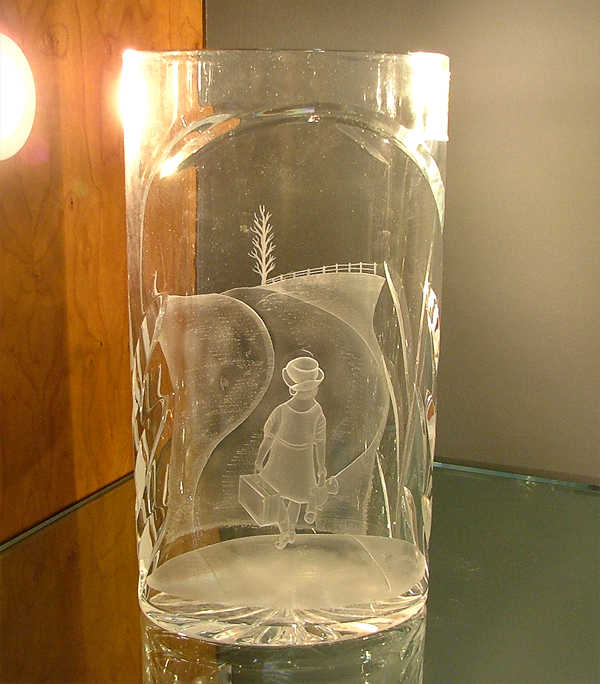
I was very impressed with this artwork: the girl and the road are cut on the opposite sides of the vase creating a 3D effect.

Waterford Crystal

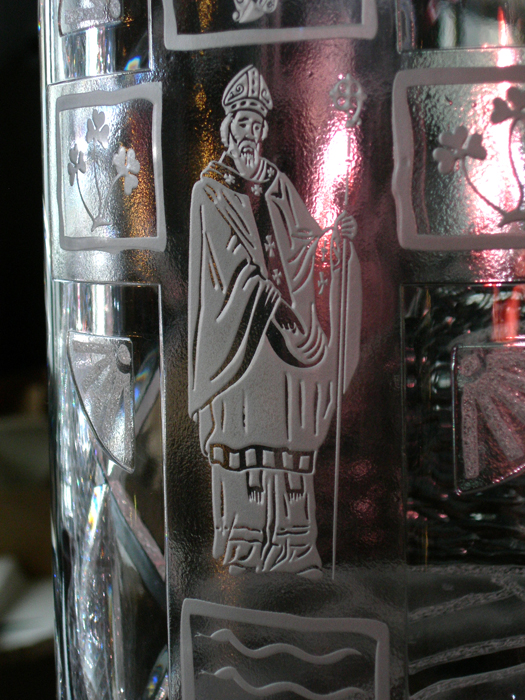
This sad St. Patrick is a very popular design.

Waterford Crystal

One of the trophy bowls.

Waterford Crystal

This one-horse carriage from 2005 is remarkably upgraded:

Waterford Crystal

its 2015  version –  in the image  below.

Waterford Crystal

The prices are also “upgraded” : this carriage will cost you 30.000 Euro.

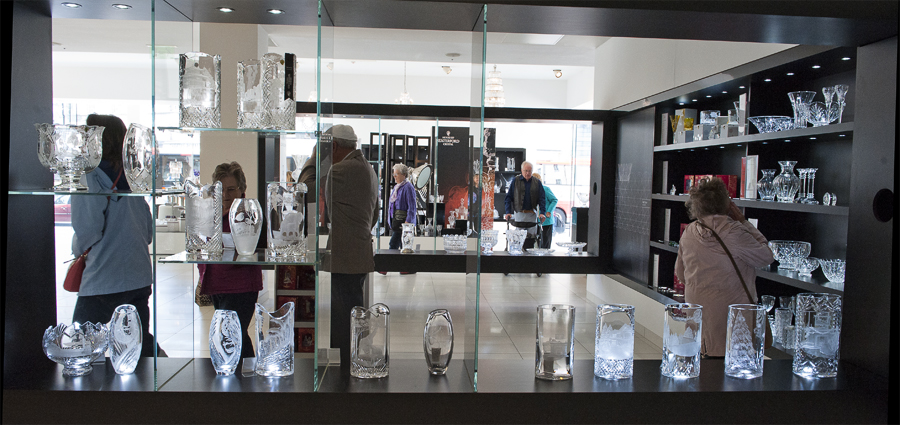
The entrance and reception desk at the House Of Waterford Crystal today.

Waterford Crystal

The place is always busy with tourists.

Waterford Crystal

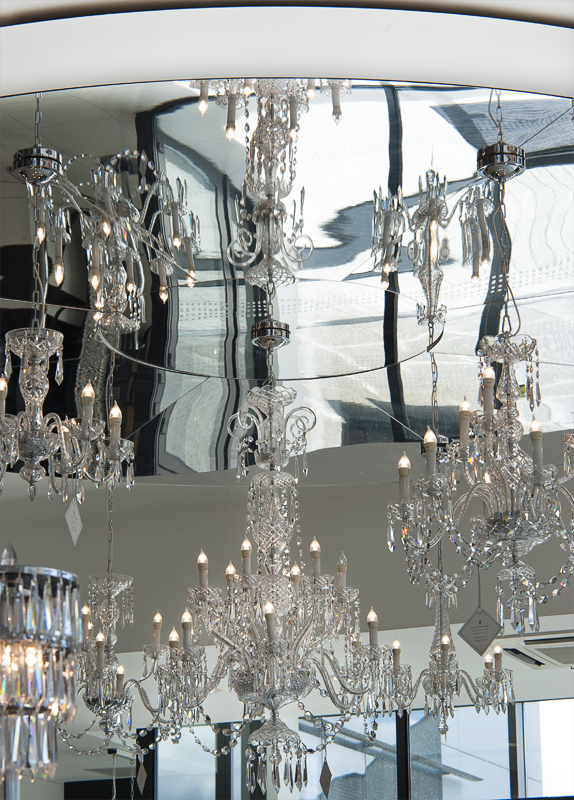
Elaborated chandeliers reflected in the ceiling mirror.

Waterford Crystal

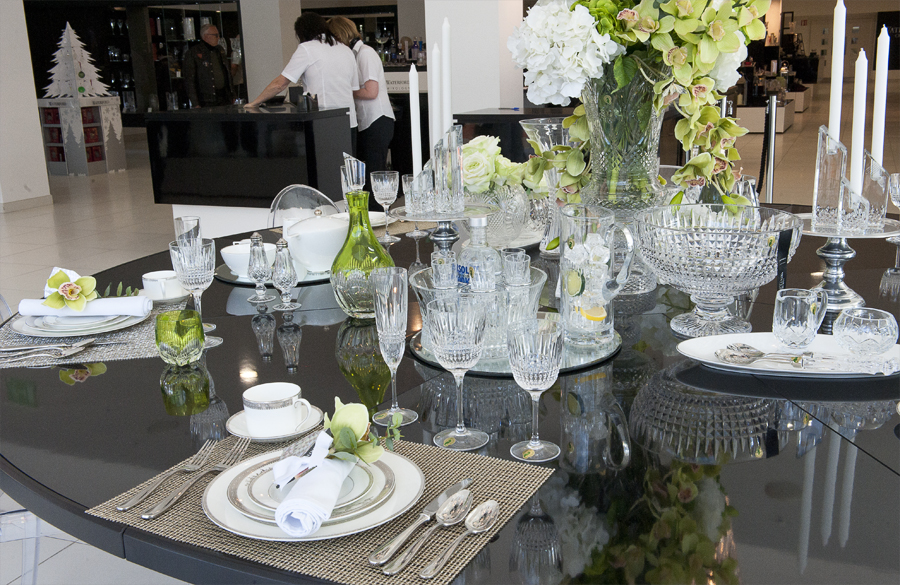
Crystal and silverware on display.

Waterford Crystal

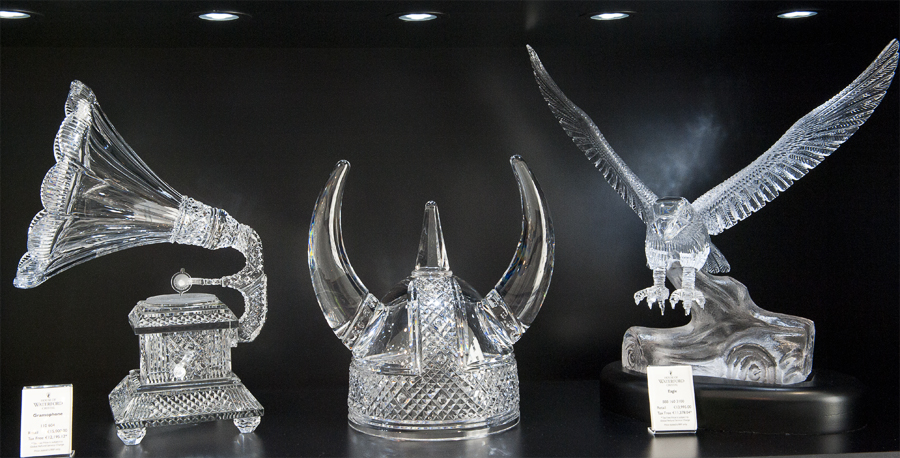
They are still making these funny things, but the prices are very serious – 15.000-30.000 a piece.

Waterford Crystal

There are lots of Christmasy designs, and no discounts, regardless of the season. I think this vase looks very neat.

Waterford Crystal

This was my favorite: the window frame and the room interior are cut on the opposite sides of the vase ( the same as the girl and the road, ten years ago).

Waterford Crystal

I also loved these two  – a vase and a bowl.

Waterford Crystal

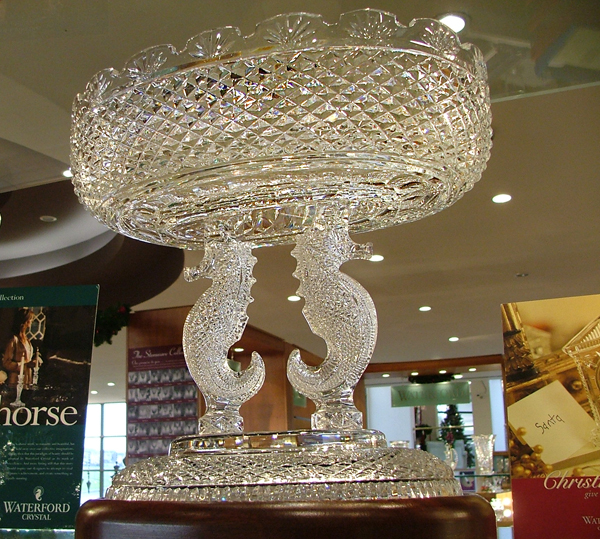
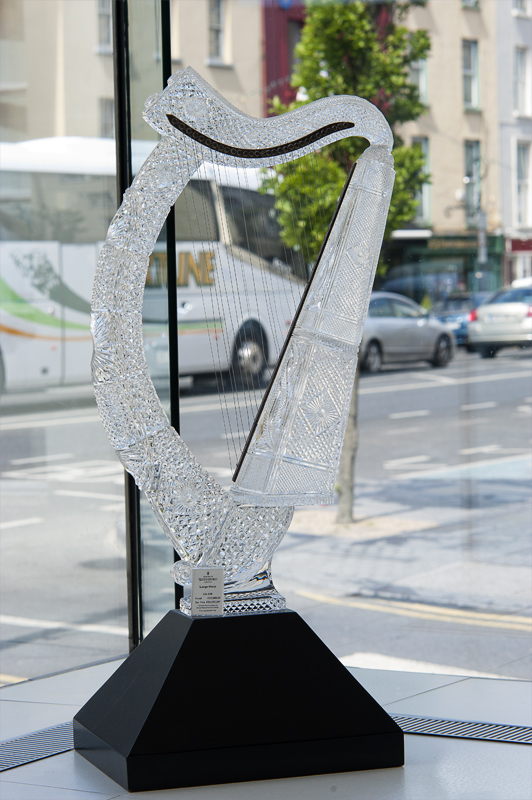
The seahorse is a trademark of Waterford Crystal designed  by Mr. Havel himself.  The harp is another trademark that is slowly replacing the seahorse in the recent years. This one can  be  bought for 40.000 Euros.

Waterford Crystal

After you make a purchase, your artwork of choice can get engraved.

Waterford Crystal

There is another small company set up by the former Waterford Crystal glassmakers – The Irish Handmade Glass Co. It is situated at the Kite Design Studio, Henrietta Street, Waterford. Visitors are welcome to watch the crystal masters at work with no charge.

kite studios

The tourists returning from the House of Waterford Crystal seldom stop here.  Some of them stubbornly walk through the rain to the Reginald Tower, but majority hurry down the street to the dry haven of their hotel rooms.  Tourism in Ireland can be challenging…

Instead of a song, I am posting a video reportage that takes you back in time. For Waterford Crystal, it was a triumph of fame.


IneseMjPhotographyHave a great week!

Travel Ireland!

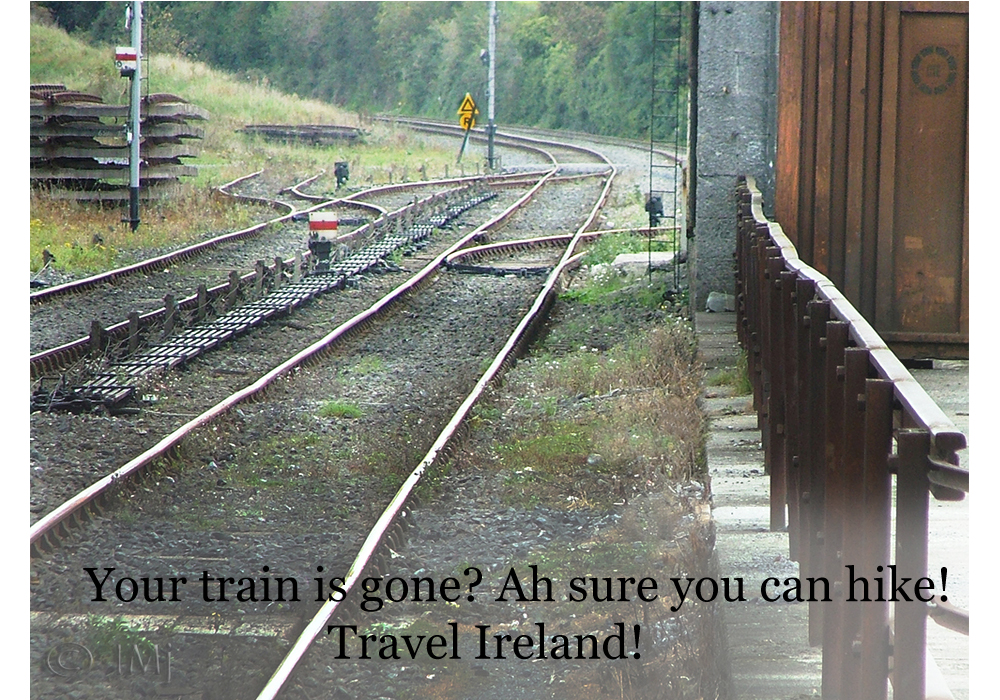
I love Ireland, and I have been in each county. The names of small villages and towns sound like  music to me. I am working on a tourism promoting project, and here are a few drafts. Take them seriously and come to Ireland!

travel ireland

travel ireland

travel ireland

travel ireland

travel ireland

travel ireland

travel ireland

Photography tip of the day: If you want to improve your skills, don’t just take random pictures but make a project like “My garden”, ” Our first year”, “Grandma’s Cooking “.

inesemj_photographyHave a great weekend! Happy Mothers Day!