Ireland

Marlfield village, Clonmel

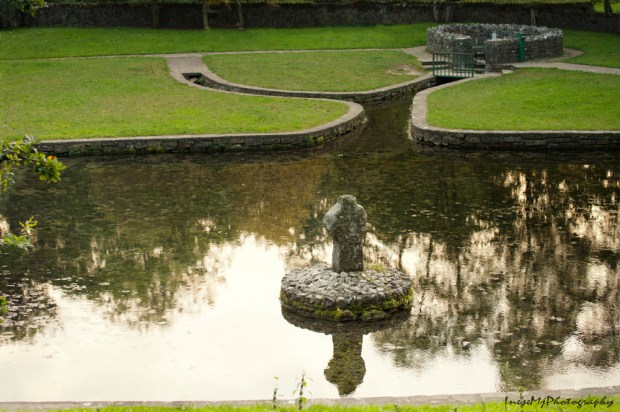
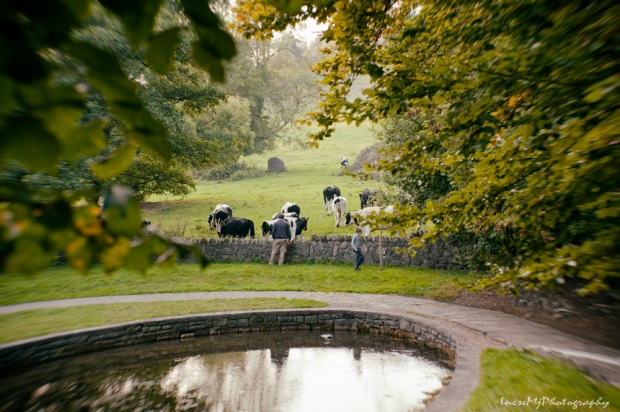
Marlfield village on the outskirts of Clonmel might be just a small dot on the map, but at least three most visited – and loved – places are there, and it is where I am going to take you this time. In the first picture, you see the St Patrick’s Well site as it looks after the major remodeling and landscaping that took place in the 1960s. The works were funded by the generous donations from the Mayor of Los Angeles Sam Yorty whose mother was native of Clonmel, Mr Arman Hammer and the Irish Israeli society from South California.

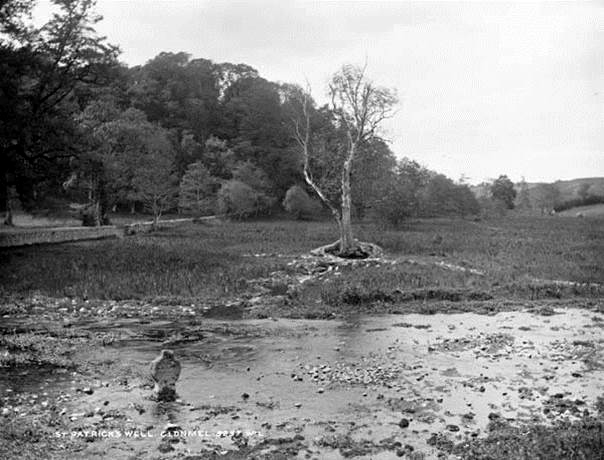
This is how the place looked 100 years ago. A large ash tree was growing at the side of the well that could be accessed by walking on the stones through the marshy land ( click on the image to see the source). To be honest, I do like the original look…
picture2

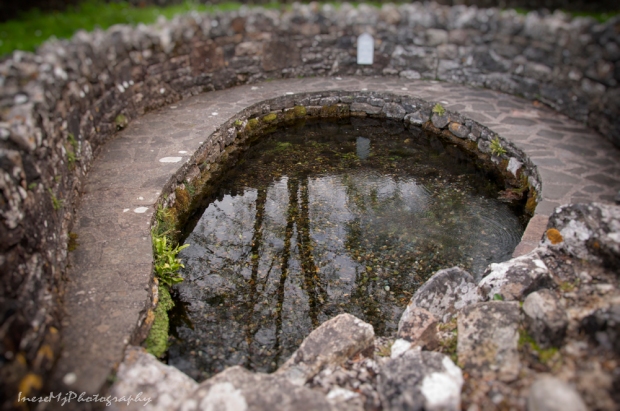
Tear-shaped stone wall surrounds the well. The sight of ripples on the surface of the water both in the well and in the pool makes you look up and check if it is raining. The water is bubbling up from hundreds of tiny springs, and it is so clear that you can bring a cup with you and drink it right there.
St Patrick's Well

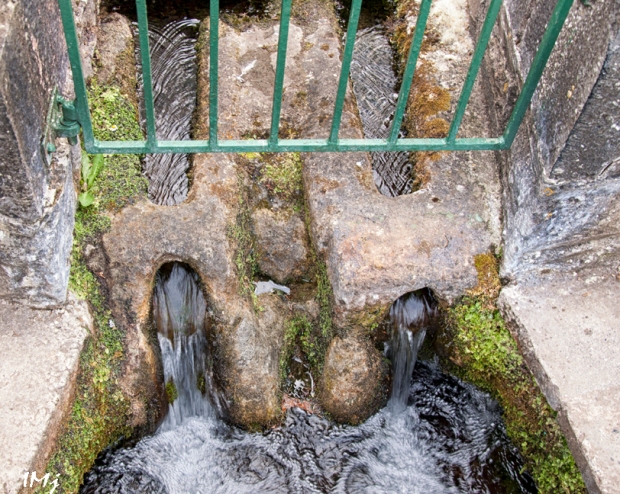
Spring water flows from the well through the hollowed stones. Similar medieval design is to be seen in St Brigid’s Well, Co Kildare.
St Patrick's Well

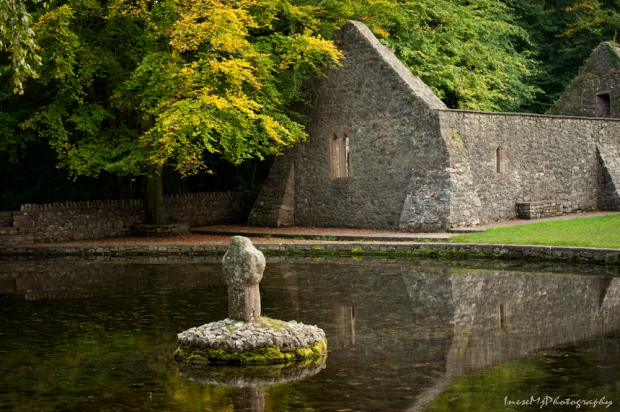
A simple sandstone cross is dated to the 5-8th century. The parish church was built in the 17th century, on the site of a much earlier monastic building –  some fragments of it are visible in the masonry of the walls.
2015-10 patr 050

Inside the chapel there is an altar tomb of Nicholas White who died in 1622, and the White family Coat of Arms. The tomb was brought here in 1805, and there is no body inside it.

St Patricks Well

A flight of stone steps connects this mystical place with the rest of the world, and it is also great for taking photographs from different angles and vantage points.
2015-10 patr 041

More images and stories about St Patrick’s Well in my blog from last year. 

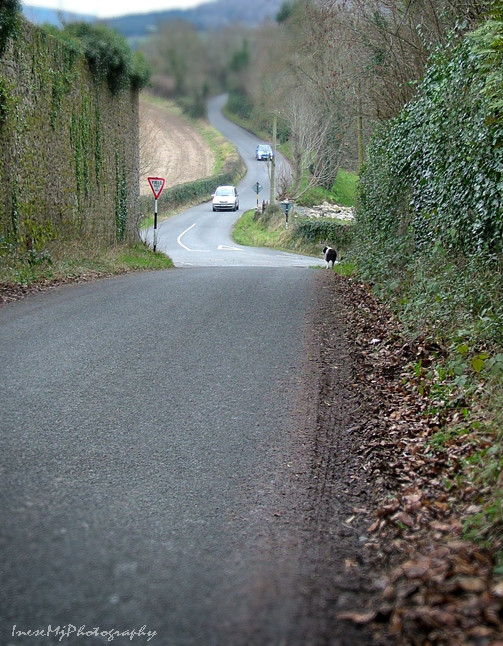
This is the road between the holy well and the village. We will walk this road all the way down to the banks of River Suir.
Marlfield road

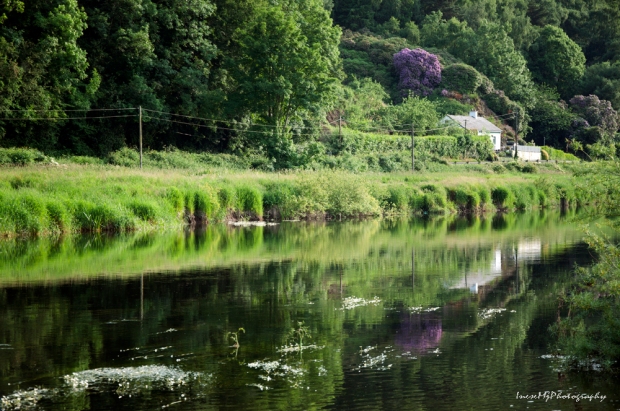
This picture was taken from another favorite place – Sandybanks. Well, a former favorite place, because a couple of years ago Clonmel City Council announced their decision to withdraw the summer Lifeguard Service from this very popular bathing spot. It was a shock to the locals when they learned that their favorite traditional bathing area ‘was not suitable for swimming’. Somehow they suspected that the decision had more to do with cutting costs than with the quality of the water.
River Suir

No bathing, so we just take a picture and walk back.

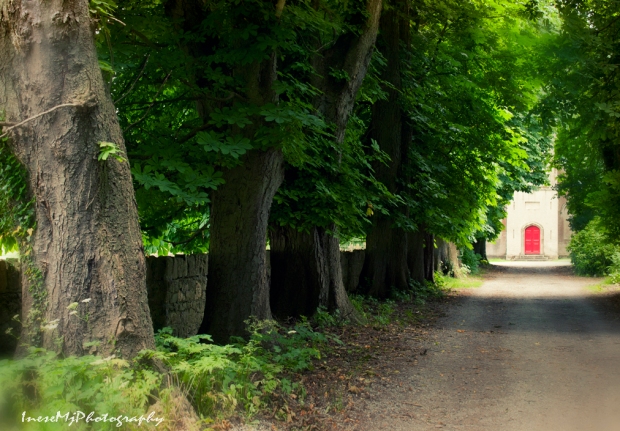
Just a minute walk from the Sandybanks there is an old church that is friendly shared between both Roman Catholics and Church of Ireland. Beautiful avenue of Horse Chestnut trees and the red door always attract photographers.
marlf 089

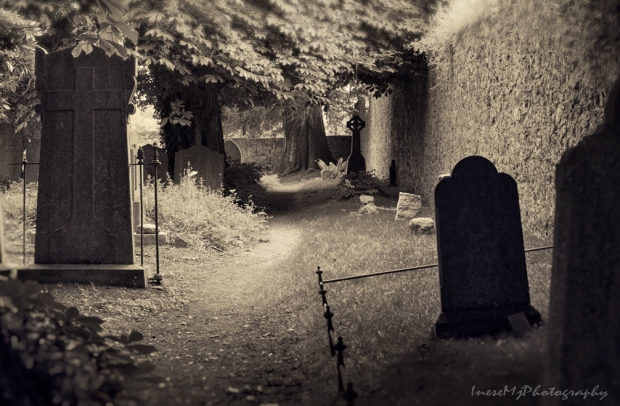
Sometimes I walk around the graveyard and read gravestones, but the main reason is that I check on the old Yew tree.

marlf 097

There is that tree, in the back of the graveyard. It takes three people to put their arms around it. I am coming to check on it once a year. It is quite scary to walk there – the reason why I converted the pictures to B&W 😉
marlf 106

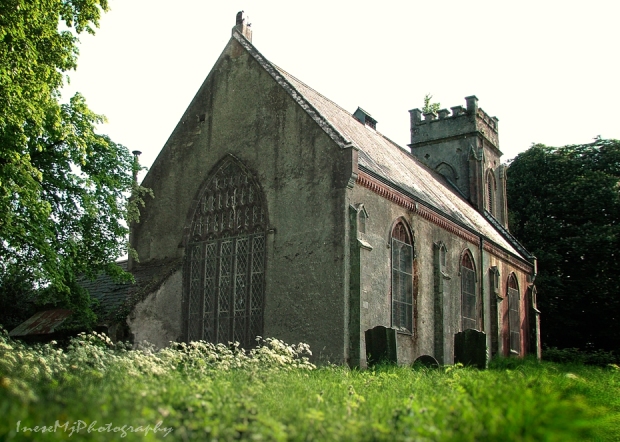
Marlfield church was built in 1818 on the site of the 12th century Cistercian Abbey. St Patrick’s Well and the church also belonged to the Abbey until it was dissolved in the 16th century. This beautiful window on the back wall of the Marlfield church is the only remnant of the original Abbey that was incorporated into the newer building.
Marlfield church

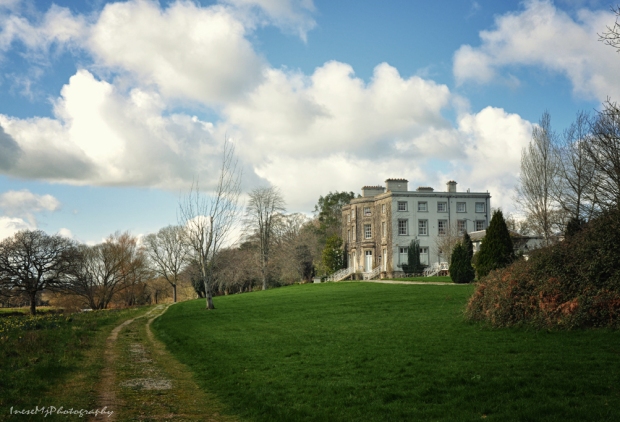
After the Siege of Clonmel in 1650 the lands of Marlfield, successfully farmed by Cistercian monks for centuries, were bought by the Bagwell family. Marlfield House was completed in 1785 by Colonell John Bagwell. The house was rebuilt after the fire in 1923. The central part of the house is used as an apartment complex, and there is also a conference hall that too can be rented.
Marlfield House

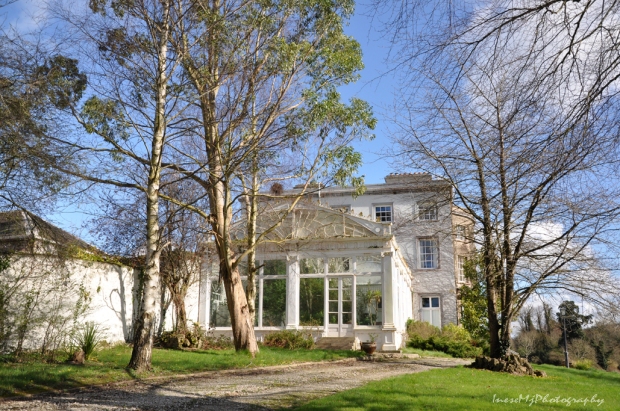
The magnificent conservatory was built by Richard Turner who designed the Botanic gardens in Belfast and Dublin.
Marlfield House

Last but not least favorite is Marlfield Lake. The lake covers six hectares in size, and the water is flowing into it from the St Patrick’s Well, where we began our tour.
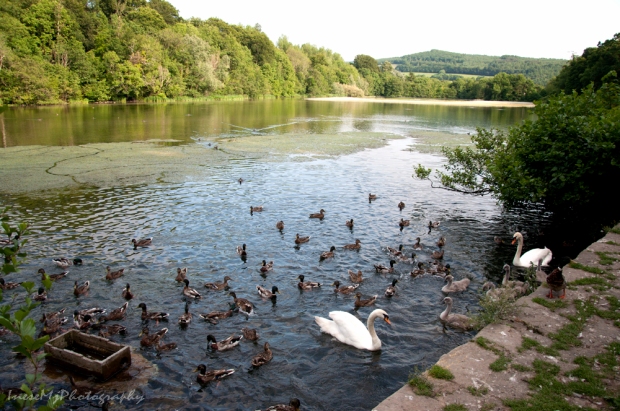
Marlfield lake

Generations of local residents have been coming here and feeding generations of the waterfowl since the late 1700s when the lake was developed from a swamp by Stephen Moore.

ducks

ducks

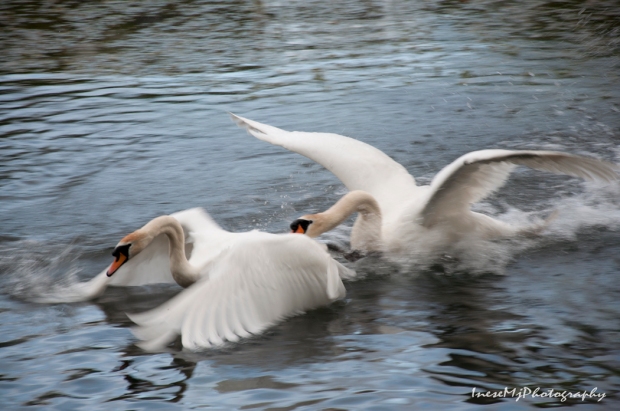
Many species are breeding here, some ducks I have never seen before. There are many swans. The cygnets are shy, but the older birds often start a fight.

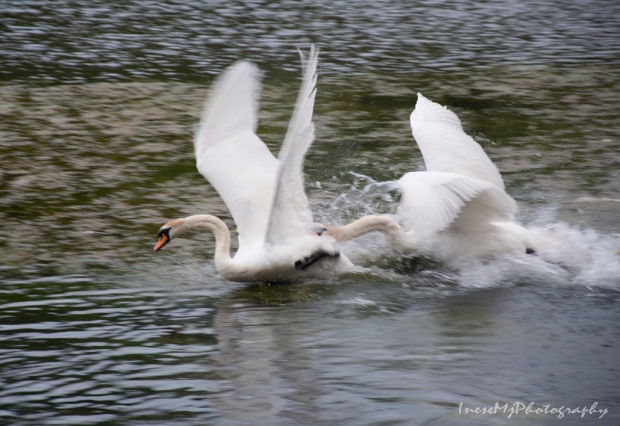
swan signets

swans

swans

When a visitor with some bread shows up, have your cameras ready.

ducks

There is a tiny picnic area, but you have to keep in mind that the road along the lake is just a regular road, and it can be quite busy.
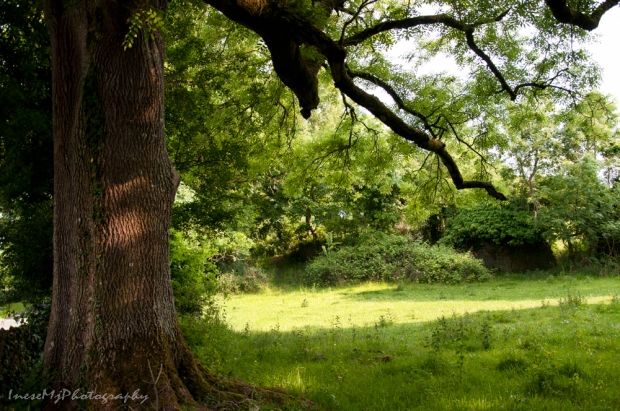
Marlfield

These photographs were taken over the years, in different seasons.

Thank you for visiting Marlfield village! Hope you enjoyed the walk.

inesemjphotographyHave a wonderful weekend!

Carey’s Castle: a hidden gem at the foot of the Comeraghs

carey castle

Just about a mile off the Clonmel to Dungarvan road, at the border between Tipperary and Waterford counties, stands the most loved and visited castle in the area.

The castle is located in the beautiful mixed woodlands close to the Glenary River, a tributary of the River Suir. Centuries ago the place was known as Glenabbey. It was a small monastic site that belonged to the Cistercian monastery in Innislounaght, Clonmel, but was abandoned in the 16th century as a result of the Dissolution of the Monasteries initiated by Henry VIII. The ruins of the old buildings and walls can still be seen.

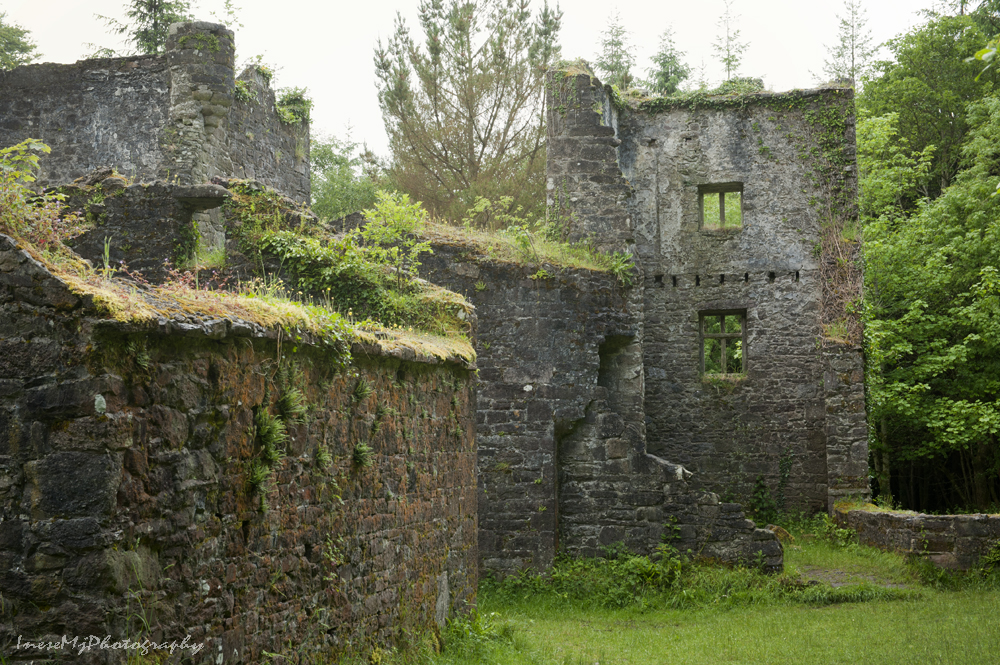
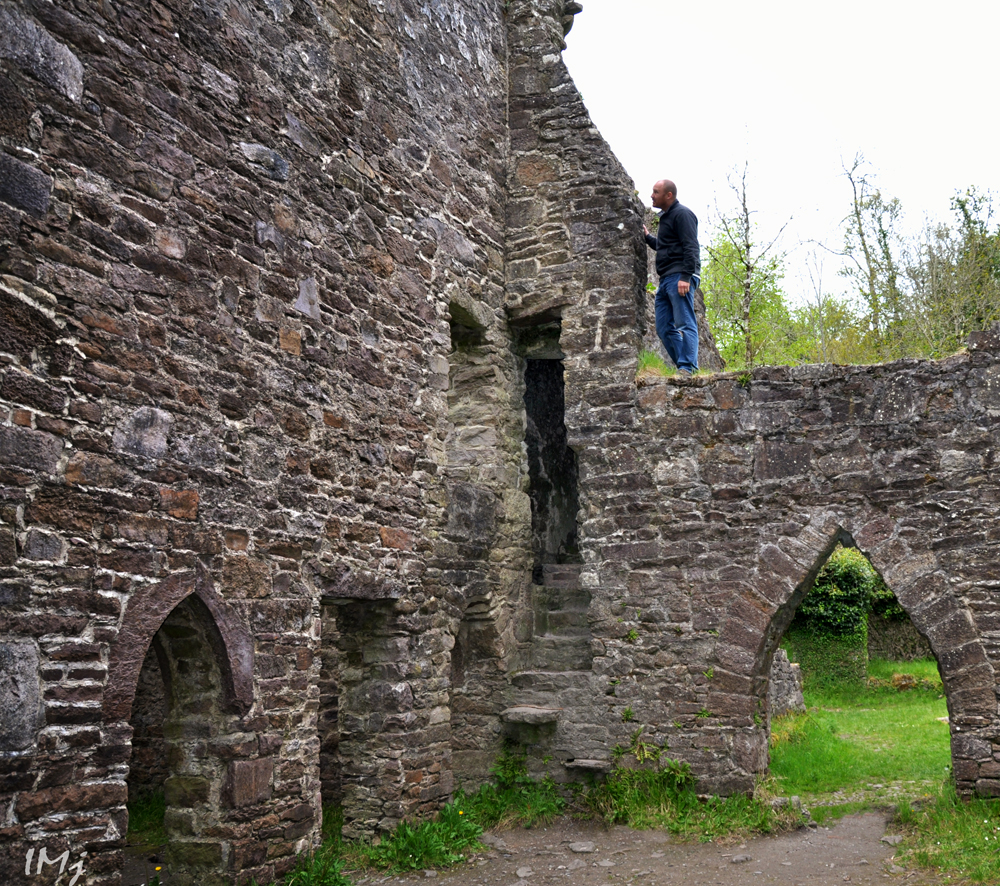
After the monks moved out, the site was granted to Edward Gough, an alderman of Clonmel. There is no record that something remarkable had been happening in the site during the next 200 years, but in the beginning of the 19th century the Carey’s castle was built. At that time, the site was the property of the Carey family, the wealthy schoolmasters who loved history. It is believed that they were the ones who built the castle, because it is a mixture of architectural styles and eras. You see an ancient Irish Round Tower, medieval Norman hall, Romanesque arches and Gothic windows. There was also a walled garden facing the river.

The Careys sold the site in the 1840s when they emigrated to Australia. The next owner was Colonel Nuttall Greene, who soon became bankrupt, and his property was sold off in the Estates Court. The site was abandoned and became derelict.

Carey castle

Carey castle

Carey castle

Carey castle

Carey castle

I always thought this building was an ice house, but now I know it is a chapel :). I love to receive feedback and learn new things.

Carey Castle

This is the other side of the chapel and the path that approaches the site from the east.

Carey castle

This is the path you would walk on from the parking lot after you take a right turn down the hill. The main path continues straight through the woods. It is also beautiful and worth to explore.

Carey castle

This is what you see when you walk down that path. In summer, the view is obscured by the tree branches.

Carey castle

Here the path makes a loop and returns to the woods. A different view from this point. On the right, you see the walled garden.

Carey castle

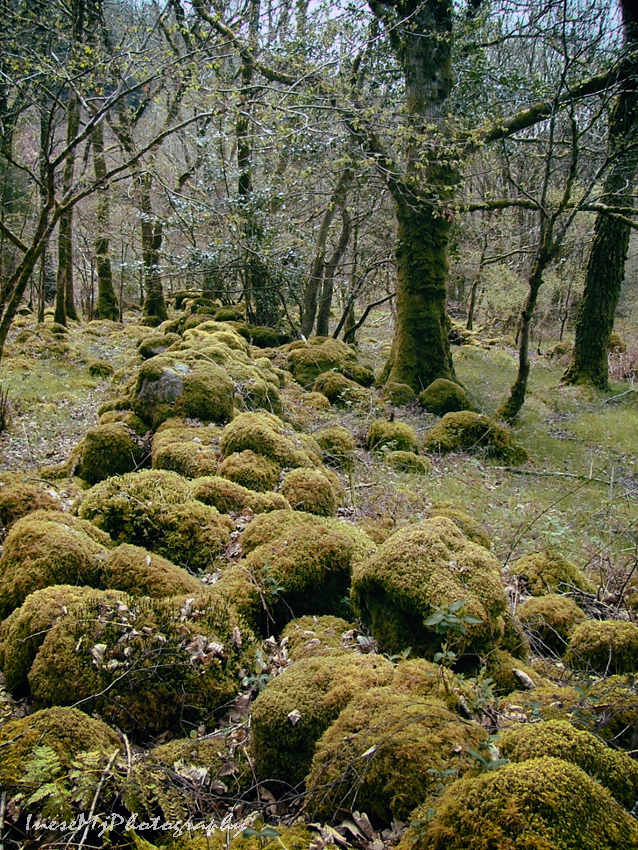
All the parts of the path are mystically beautiful. You see many ancient ruins who knows how old.

Carey castle

Glenary River is a treasure itself. Quite deep in some places, she even hosts fish. Local teenagers come for a swim in the icy-cold pool, just five minutes walk to the east from the castle.

I walk along the Glenary River out of the woods to the main road. It is quite dark here, and suddenly there is an opening between the trees, and the sheep appear like pale ghosts out of nowhere, startling me.

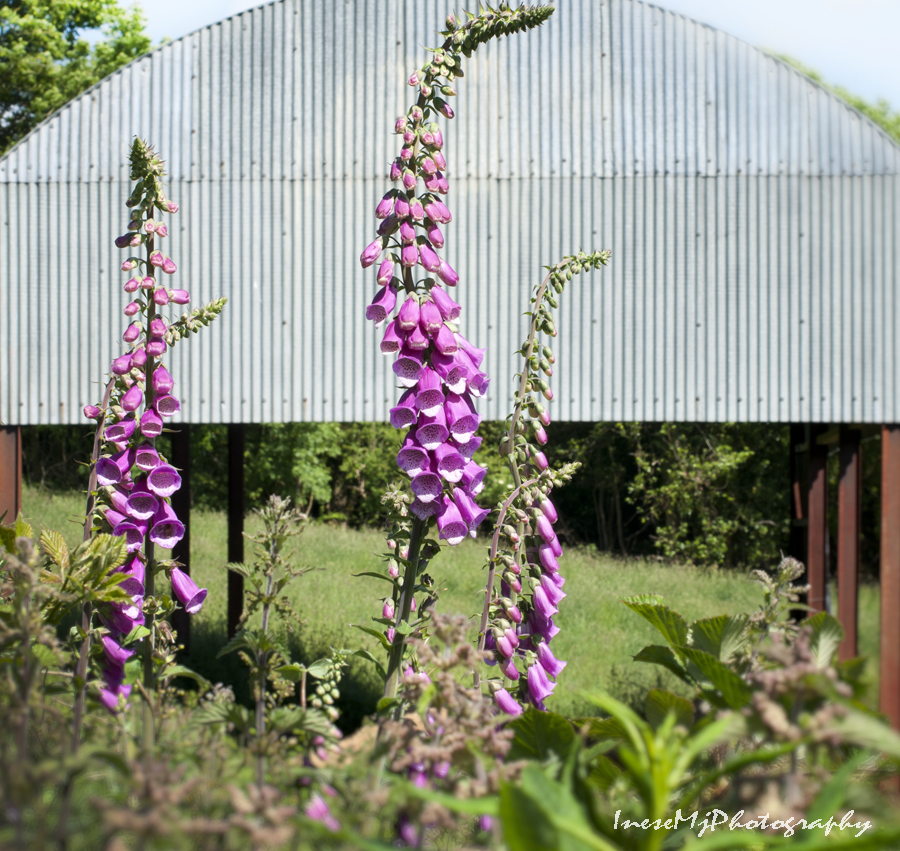
I hurry up, and in a couple of minutes the sun is shining again, and there are no ghosts anymore. Thistles and Foxgloves are stretching tall to get out of the thick wall of nettles guarding an old farmstead.

digitalis

I take some pictures of the gate and old roof, and walk to the parking lot.

Carey Castle is a unique place, open to everyone. How sad it is that people leave all their litter there after having picnics and walking their dogs. Once a year, a local Slovakian/Polish family hosts a Gulash Party in the castle grounds. A huge saucepan of stew is cooked, and families with children stay in the site all the day, and some even over night, sleeping in the tents. Everyone can come if they are well-behaved 🙂  Before the party begins, the hosts are combing the area and picking up all the rubbish left there during the rest of the year. After the party, the place is tidied up again.

There is another Carey’s Castle in the world, a cave-like dwelling in the end of a magnificent trail at the South-West corner of Joshua Tree National Park, USA. Both sites are not officially recognized as tourist destinations, and remain ‘hidden gems’.

Thank you for visiting my favorite place!


Just to let you know.  We have a wee addition to our family 🙂


inese_mj_photography Have a wonderful weekend!

Secrets

Woodstock garden


My heart goes out to the people of Italy affected by the tragic earthquake. It is heartbreaking to see the devastation and loss of life. My deepest sympathy and love to you, brothers and sisters.


Some places have their secrets. When you take a road up the hill to the Woodstock gardens, Inistioge, you have these bushes and trees on your left, and you don’t expect anything else to be there. Then suddenly there is a gap between the trees through which you see the river Nore and the bridge, and the whole world behind them, just for a second, and you keep driving, stunned, unsure if it was for real.

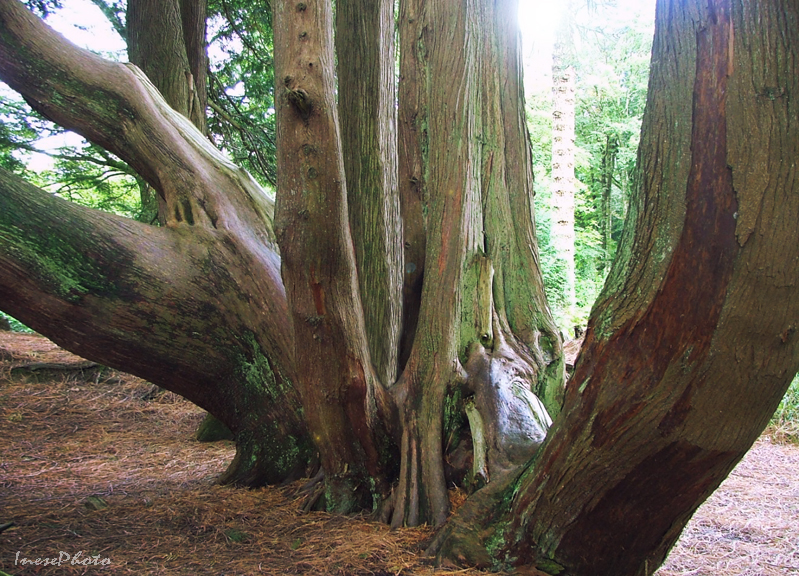
Woodstock is a place loaded with history. This is a ten years old photograph from the gardens. I wonder how many secrets were shared while walking under the canopy of the Yew trees.

Woodstock gardens

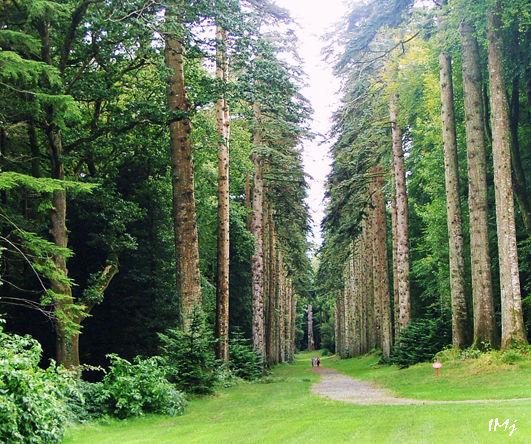
Famous Noble Fir Walk in 2005. Not all the trees survived the devastating storm in 2014 when Woodstock gardens lost 120 trees altogether. This alley feels like a temple.

Woodstock gardens

The gardens are designed to surprise. As you walk, there is a surprise or a hidden secret around the next corner… like the Monkey Puzzle Walk that was initially planted in 1845. Historical estate drainage system made it possible for these trees to grow in the area, but they obviously cannot reach their expected age of 1000 years.  Recently, many young Araucaria araucana trees were brought from Italy and planted to replace the fallen giants. Araucarias can be traced back to the Mesozoic era, and they know all the secrets of the dinosaurs.  Araucaria araucana is native to the Andes, and was introduced to Europe in the end of the 18th century. It got its name Monkey Puzzle from a gardener in Cornwall. This magnificent Monkey Puzzle Walk  is  the oldest and longest in Europe. There are some other tranquil walks in the wooden area of Woodstock I have yet to explore, and I also want to see the 300 years old Oak trees that grew there long before Woodstock estate was developed.

Woodstock gardens

I love Poppy flowers. I marvel at the way their petals are crumpled in the bud, at their elegant fruit with its beautiful cap (stigma disk, unusual in the blossom world), and seed chambers. When I grew up, we had plenty of opium poppies in our backyard garden. The seeds were collected and used for poppy seed muffins and other pastry, so they were considered food, and using the flowers as princesses and cutting the pods to learn their anatomy was not approved. Still, if we happened to live in some other country, like Australia or the USA, we might end up in jail for cultivating a source of drugs 🙂 . Sigh.

I took pictures of these beautiful poppy blossoms in the Woodstock walled garden. I haven’t seen a humble opium poppy for years, but on a few occasions I enjoyed a slice of poppy seed roll. These gorgeous cousins of opium poppy took me back to the happy days of the flower princesses and simple pleasures of my childhood.

Here is an Old World Poppy Seed Roll recipe.

Woodstock gardens date to the 1740’s. The restoration works that started in 1998 are slow, but steady. I will visit the gardens again and post more pictures in the future. Besides the walled garden, there are rose garden, rockery garden, conservatory, many woodland walks, and many secrets I have to learn.

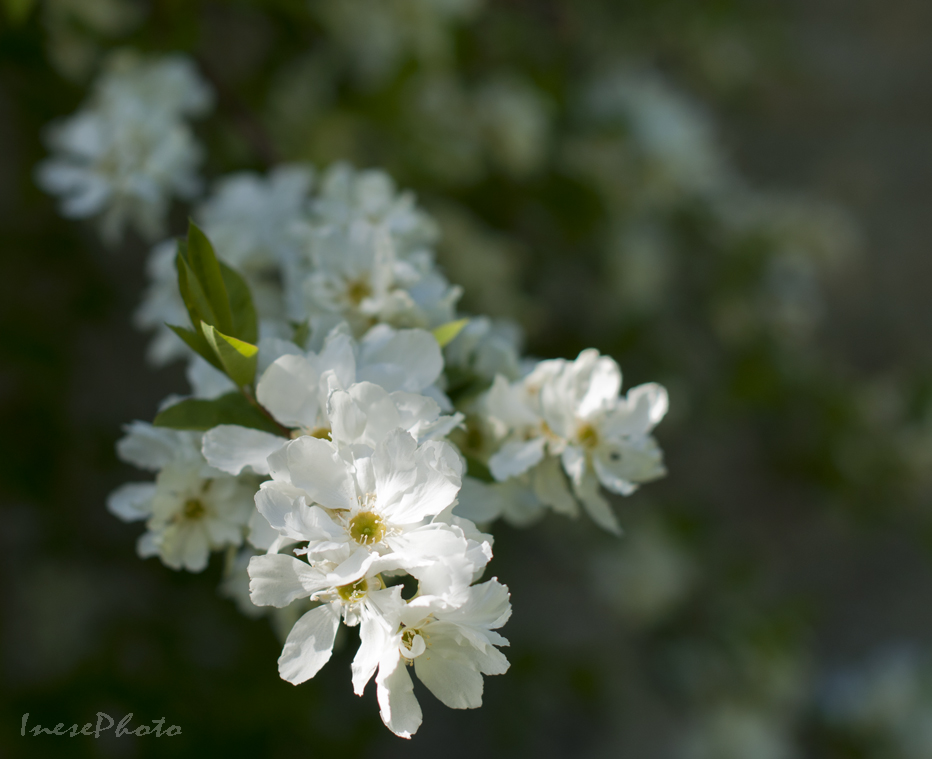
Exochorda (Pearlbush) and Rhododendron – two beautiful shrubs in bloom. Exochorda, native to China, was introduced in Europe in the 19th century.

Giant Sequoia and Japanese Thuja – straight and crooked 🙂

Sequoia

Japanese Thuja

If you are interested in the history of Woodstock and surrounding lands, you can find more in this article. The history and the people of  Woodstock are very interesting to learn about.

In 1737, the twenty-six-year-old Sir William Fownes inherited the estate and commissioned an elegant mansion, completed in 1745. His only daughter Sarah inherited Woodstock after her parents’ death. She married William Tighe of Rossanagh, member of Parliament, and since then Woodstock House has been the home to the Tighe family.

Richard Tighe crossed the Irish Sea in the 1640s – he was a contractor who supplied Cromwell’s army with bread.  A century later, Jonathan Swift would persecute his grandson Richard ( Dick) with stinging satire under the title of Dick Fitz-Baker. The Privy Councillor Richard Tighe was also called Dick a maggot, Clad all in Brown etc for making a mistake of informing upon Swift’s good friend.

Dick’s son William had three sons William, Edward and Richard, and a daughter Theodosia who became a mother to a romantic poet Mary Tighe. Mary began to write poetry as a child. In 1805, her six-canto Spenserian allegory Psyche was privately printed. Mary died in Woodstock from ‘consumption’. Asthma was hereditary in the Tighe family, as probably was tuberculosis accompanied with depression. Mrs. Tighe used all the profits from Psyche to built and extension to the Orphan Asylum in Wicklow. This article about Mary Tighe is a great read.

Mary married her first cousin, but it is her brother-in-law I want to mention here – William Statistical Tighe. He was so named because he was the author of ‘Statistical observations relating to Co Kilkenny in 1800-1801’. Statistical was one of the wealthiest landowners of that time; he inherited both Woodstock and Rossanagh. He was very well educated and had traveled around Europe and even to Russia. In 1793, Statistical began extensive works at Woodstock house and added two single-story wings.

Edward’s son George Tighe and his wife were good friends with Mary Shelley who adored their daughter Laurette and even wrote a story for her. This story had been lost for 150 years, and finally discovered in 1997 by an Italian lady in an attic of her Tuscan home.

Dick’s eldest grandson William was the one who married Sarah Fownes and started the Tighe dynasty in Woodstock.

Many gardens and walks were added between 1840 and 1900 by another William Tighe and his wife Lady Louisa Lennox. When Lady Louisa was 12 years old, she was allowed to stay with her godfather, the Duke of Wellington, at the Eve-of-Waterloo Ball, and helped him to buckle on his sword when the festivities were terminated with a call to arms. Lady Louisa set up a lace industry in Inistioge, and lived to the remarkable age of 97. She died in Woodstock in 1900.

In 1911, the next heir Edward and his wife Viola Tighe lost their seven years old son to asthma. The grief-stricken couple left Woodstock and settled in London. They moved most of the furniture, artworks and family heirlooms to London, except the library. In 1917, Captain Edward Tighe was murdered with a fire poker in their London home. The motive to this murder remains unknown. Their son Bryan was killed in 1940 in the battle of Dunkirk.

In 1921, the Woodstock house was burned to the ground by republican forces. The locals quickly removed whatever was left in the house before the fire started. Most of the library was destroyed in blaze, but the locals saved some old, leather-bound books that were taken away by horse and cart. The fire continued to burn for two days. The East wing of the house survived the fire and the Tighe’s former house keeper lived there for a number of years.

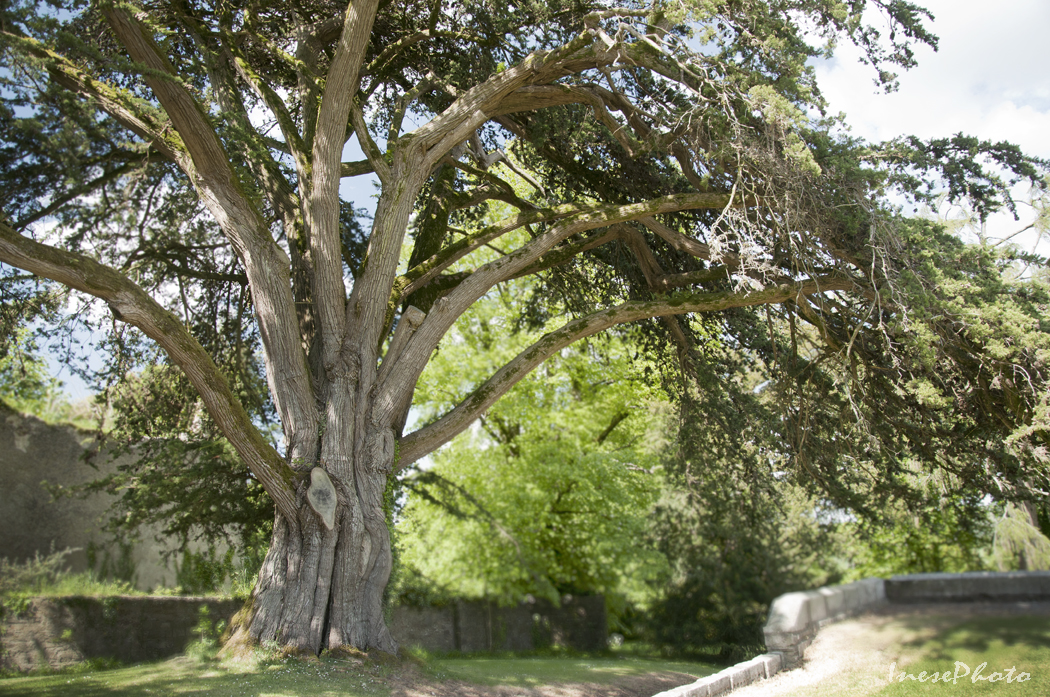
Old Cypress tree stretches its branches to touch the wall. It is unlikely that the tree was there when the house succumbed to the fire. Unlikely but not impossible. What if it was there, a seedling that survived the catastrophe?

Woodstock gardens

The outstretched branch looks somewhat spooky. What is it trying to reach?

Woodstock gardens

And there it is. The big dark secret. Look in the middle window.

Woodstock Gardens

I abandoned my initial plan to walk through the woods to the river Nore and take a picture of the other side of the bridge because I wasn’t sure that the figure in the window wouldn’t follow me. I briskly walked to my car and left.  You might ask why would I want a picture of the other side of the bridge? I already had this one.

2013-05 024

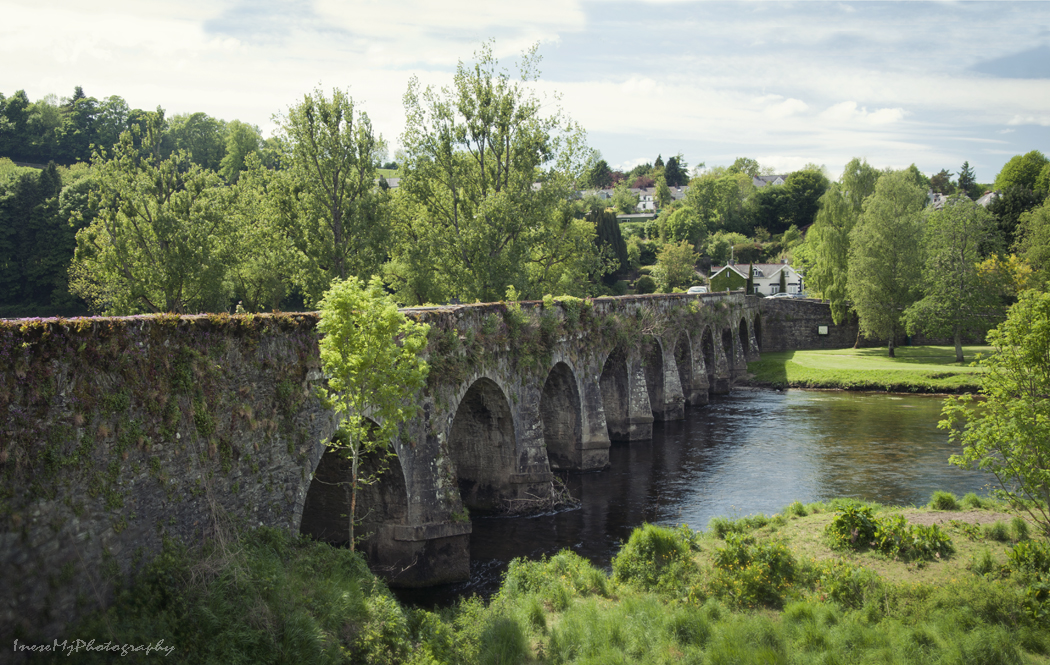
This is why. The sides of the bridge are different! In Inistioge, everything has a secret 🙂

Inistioge

Beautiful ten-arches bridge turns 250 this year. By the way, it is chronicled that a mermaid was found downstream of the bridge in 1118.

That’s enough secrets for today 🙂

inesemjphotographyHave a wonderful weekend!

Overcast sky from Dunmore East to Passage East

Dunmore East

This wasn’t the same day, even the same year when I took all these pictures, but the weather in Ireland hasn’t changed for years, so let’s presume we hop in the car and take a  short photo-drive from one village to the other, with one stop in the middle.

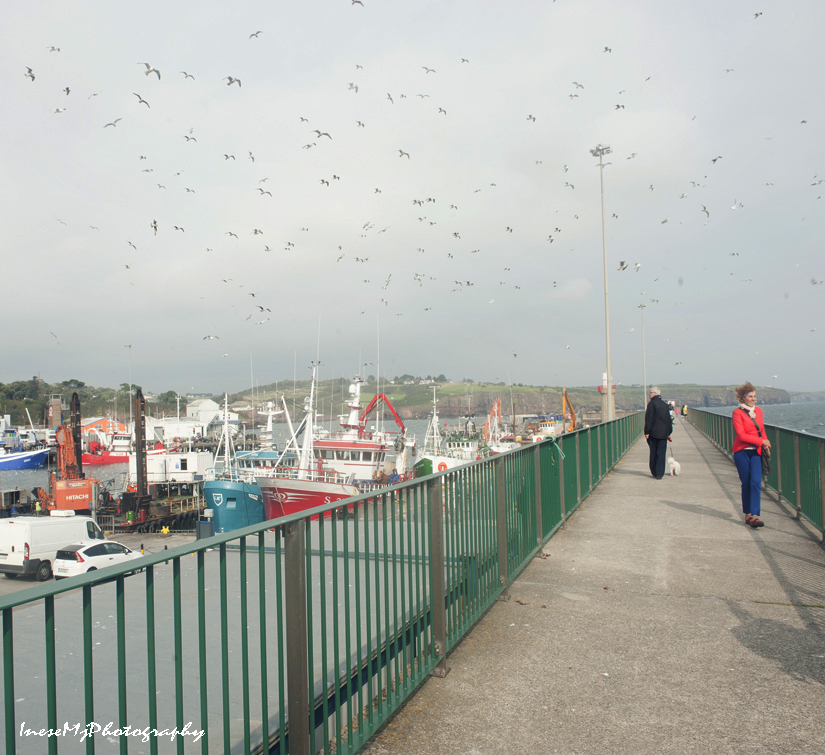
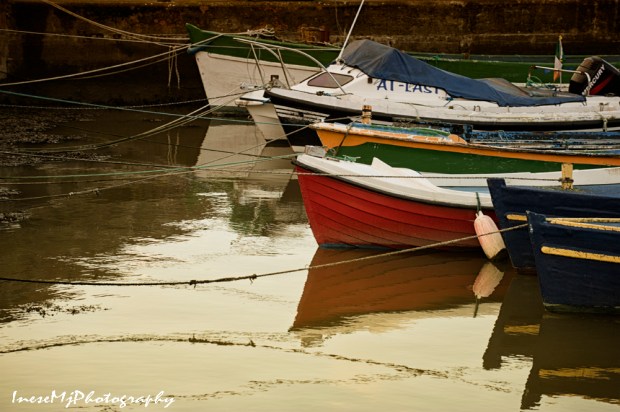
We start our trip from the Dunmore East Port  that is situated at the western end of Dunmore village.  As I walked on the pier to the lighthouse that was established in the end of 1825, the grey drizzling sky suddenly broke open and gave way to a wonderful silvery light. It lasted no longer than a minute, and the scenery quickly returned to its usual grey self.

Dunmore East

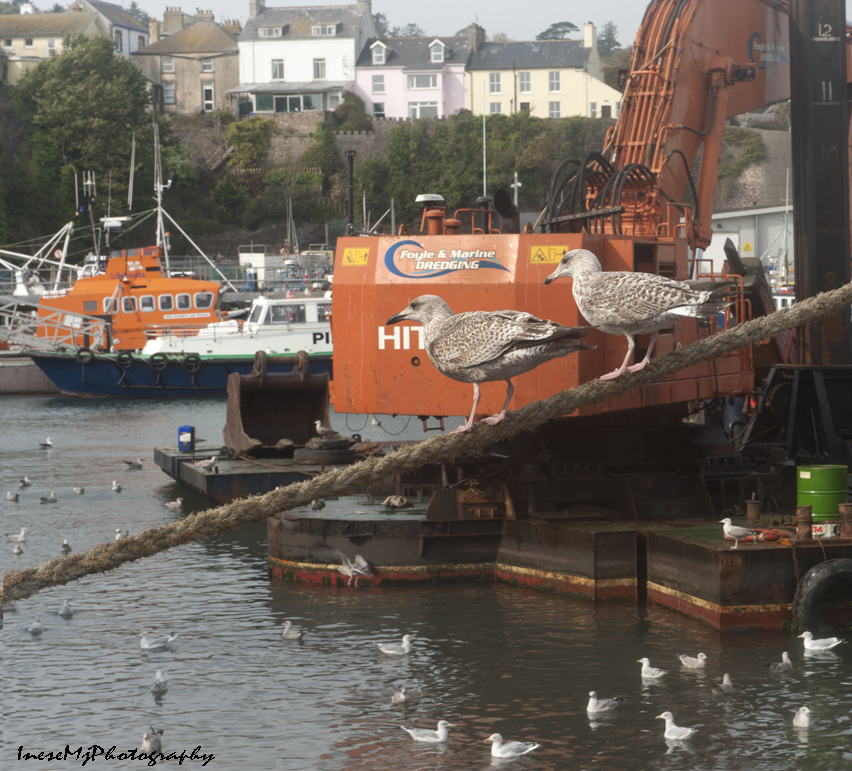
Construction works around the lighthouse obstructed the view and I turned back. Two young gulls on the rope made me smile – why did they have to stand there is such an awkward position? Maybe it was a dare? 🙂

Dunmore East port

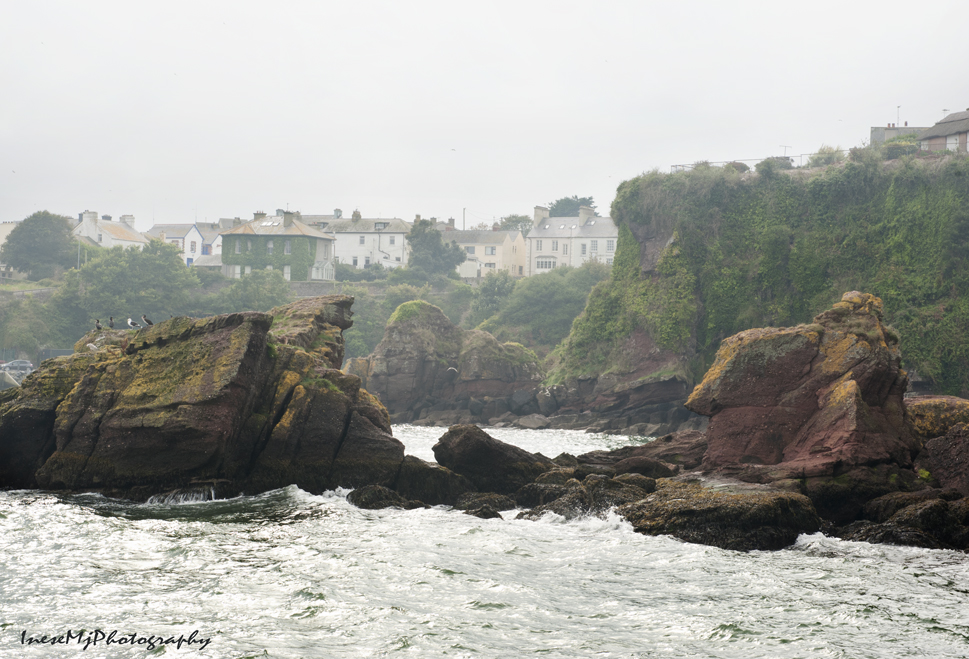
Regardless of the weather the cliffs are always beautiful. This is an old coastguard station, the most photographed (and then over-dramatically enhanced) building in the area.  If you keep walking to the west, after half an hour you will reach the Portally Cove. It is a cliff walk, but not too close to the cliffs, actually.  This time I didn’t walk that far.

Old Coastguard

The silky grass is slippy. I like walking alone, but I believe in taking precautions.  Two years ago a cow fell from a cliff in the water, but was rescued.

Dunmore East

You can see the Hook Lighthouse on the other side.

Hook Head

This picture of Dunbrody was taken many years ago from the same cliffs.

Dunbrody

To get this picture, you have to walk to the park, cross it and walk to the cliffs. The previous picture is taken from the same place – on the left, there is the port where we just came from.

Dunmore East

I leave the park and walk down to the village centre. During the winter storms, some giant waves reach the buildings.

Dunmore East

This is where we are heading, in the direction of Waterford Harbour and Passage East village, our final destination. Waterford Harbour is formed by the estuary of three great rivers: River Suir, River Nore and River Barrow.

Dunmore East

In the Google Earth image below, I have mapped the most significant strands on our way. Geneva strand is a great place for bird watching, but this time we will only stop to visit the oyster farm you see when you enlarge the picture. I don’t know how large is this particular farm (headquarters in Dunmore East), but some farms measure many hectares.

Google Earh

This is what Waterford Harbour and Woodstown beach look like at high tide. The photograph was taken after the sunrise from The Saratoga pub, “#1 of 1 Restaurant in Woodstown”, according to TripAdvisor. Fair enough.

Woodstown

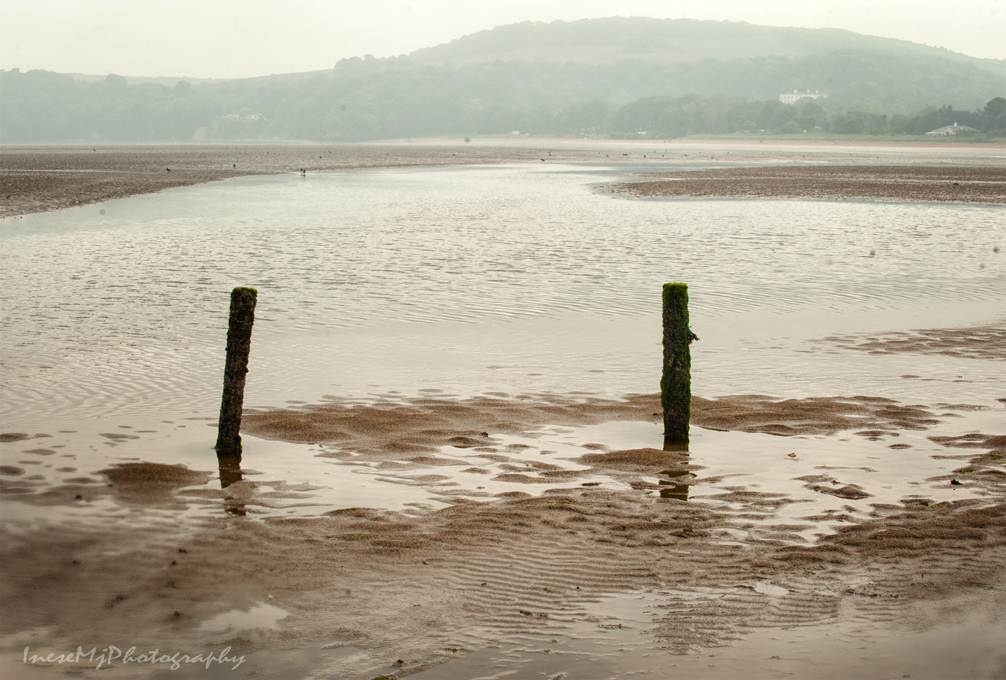
This is the same beach at low tide.

Woodstown

The oyster farm workers are waiting for the other tractor to return.

oyster farming

Here it is, coming from the middle of the harbour.

oyester farming

The higher poles of the fishing weir measure about 3-4 m in height – something like two-human height. I recon the water can reach up to 2-2.5 m at high tide, or even higher. I have never seen it myself, but I have heard that the water in the harbour is leaving and coming very rapidly, as if someone is opening and closing a gate.

The oyster farm is so fascinating that I decide to come another day and check it out. To tell that I have no doubts about this adventure would be a lie. I am terrified, but my curiosity takes over, as usual.

It is a ten-minute walk in the soft, wet sand, between the pools of water. Sometimes my feet sink in the sand, and my heart sinks too. I keep closer to the poles, but have no idea how it would help if the sand swallows me. I just hope the poles are marking a safe path.

I have a longer lens, so I don’t have to come too close, and can take my pictures from a distance. The workers are doing something with the mesh bags full of oysters – inspect them, and flip them over. They don’t pay any attention, except for an older man, who looks in my direction a few times, and then speaks something. I wave to him and try to listen to what he is saying. I would love to interview him for this blog. Then I hear “… shove that camera in your face…” and quickly realise that my time has expired. With the broadest smile, I wave to him again, take a few more shots and walk back.

oyster farming

With no interview, I had to look up the oyster farming in the internet. Here is what I have learned.

In Ireland, they cultivate Irish native flat oyster, available from September, and Pacific Gigas, available all year. The Gigas was introduced in the 1980s, and from what I have seen, this particular farm cultivates exactly the Gigas species.

The tidal waters of Waterford Harbour are flushing the oysters twice a day, providing them with natural food. Bag-cultured oysters mature more quickly than those that are beach grown, it is why the bags have to be regularly thinned and flipped over, otherwise the oysters will develop a wrong shape.

The Gigas oysters take about three years to reach market size ( about six years for the native Edulis species). Oysters are cultivated to the size of spat first, to the point at which they attach themselves to a substrate. Then they are set out to mature.

There were many empty trestles that made an interesting picture.

oyster farming

These are the oyster bags. The holes are very small, but I could say that the oysters were the size of a half-palm.

oyster farming

oyster farming

On my way to the shore, I take some pictures. The distance is quite remarkable.

woodstown beach

I am trying not to step on the coiled castings of lugworms. Nearly there!


oyster farming

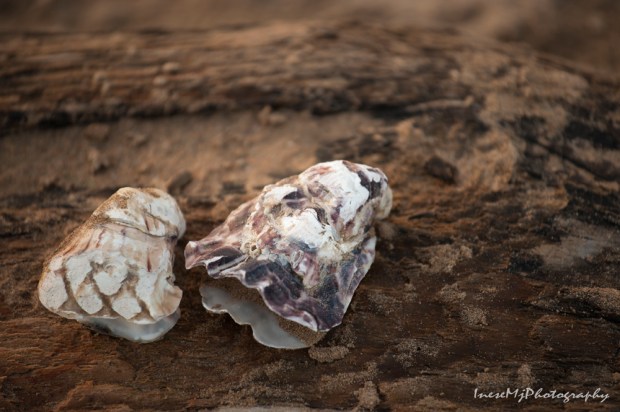
I found a broken oyster bag in the sand after a storm last year. I didn’t know how long it was there, and were the oysters still alive or already dead, so I let them be.

oyster farming

What made me sad, was the pattern of mesh on the shells.

oyster farming

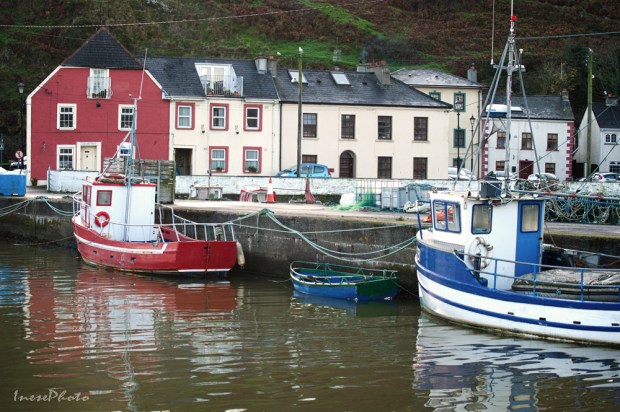
We are leaving Woodstown, and drive another 5km. Passage East is a tiny village, but it is very important to the locals because of the ferry service between Co Waterford and Co Wexford.

Passage East

2015 -09 027

Passage East

I have already mentioned Passage East village in my blog post Goats and Monkeys. A huge herd of goats is living in the hills, and sometimes they come down and cause a traffic jam. This billy goat is the leader of the herd. His diabolic looks are quite impressive.

Passage East goat

Here is the ferry, and some day we will cross the river and go to visit places around the Waterford Harbour.

Passage East

Thank you for taking a risky hike to the middle of Waterford Harbour with me 🙂 In my next blog post, we will travel up the River Barrow, and then up the River Suir.

inese_mj_photographyHave a wonderful weekend!
Meanwhile in the streets

Gottfried Helnwein

Visiting Saltee Island was a pleasure, but it is the time to return and check out what we have missed while we were away. There are some street scenes and the events that took place in Clonmel and Waterford.

Clonmel Junction festival is the most eventful week in July, filled with live music, street performance, theatre and visual art. Installations of the works A Child for sale by a world renowned artist and Kilsheelan resident Gottfried Helnwein could be seen in various places in the streets of Clonmel.

In my blog post Cry for the Last Child, I wrote about Gottfried and his beautiful castle. His granddaughters Croí and Éala are regular models for his paintings.

Gottfried Helnwein

Lords of Strut  – very talented and very positive comedians from Cork gave a brilliant performance in Clonmel.

clonmel junction 052

clonmel junction 028

‘Over styled and under dressed’, silly but charming  characters Strut brothers Sean and Seamus,  won the hearts of young and old with their hilarious show, acrobatics, satire and dance.

clonmel junction 077

The streets of Waterford were not always as deserted as you might think after looking at this picture.

minimalist

Historical reenactment of 1916 Easter Rising gathered quite a crowd and took us a hundred years back.

reenactment

minimalist

reenactment

reenactment

There is a video of the Reenactment I found on Youtube – I even caught a glimpse of myself in it 🙂


All sorts of transportation in The Quay, side by side. I love this street, and I think that most of my Waterford pictures were taken there.

captain

Irish United Nations Veteran meeting was held in Cathedral Square, just a minute walk from The Quay. Thank you for your service!
meeting 025

meeting 054

meeting 075

Waterford Spraoi festival is one of a kind. Theatre, music, art, dance and much more is happening in the streets of Waterford on the first weekend of August. Here is my Spraoi 2015 post. I will share only a few pictures this time.

Spraoi orchestra string quartet.

Spraoi

Morbid&Sons, a brand new undertaker business. Way to go, guys!

Morbid&Sons

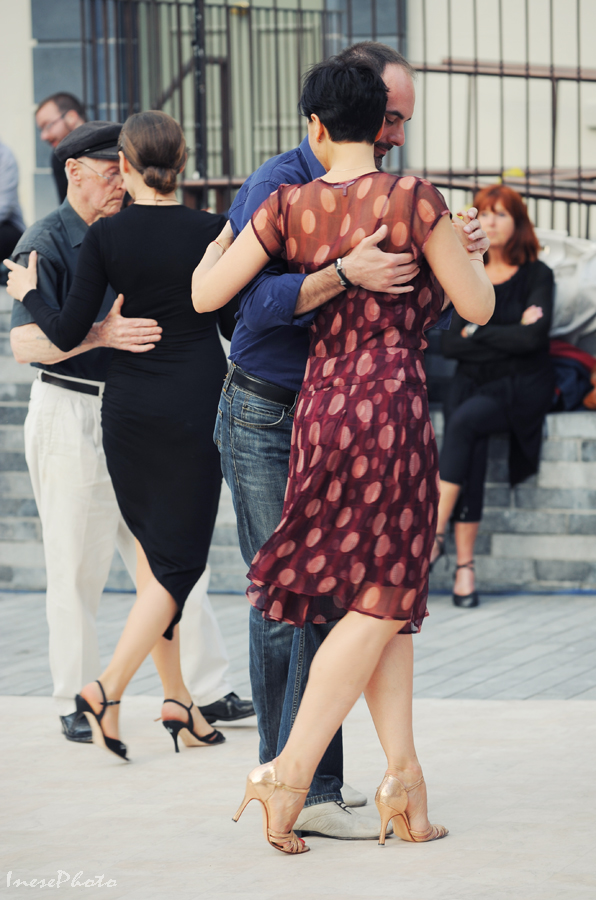
Tango for all! Dance until dark!

aspraoi tango 090

aspraoi tango f 137

The sun is setting down and it looks like we are having a rainy day tomorrow 🙂

Waterford

Melting gold of the setting sun flows behind the horizon. Darkness comes instead.

night

It is a perfect time to see the famous Spraoi monsters in the streets of Waterford City…

SPRAOI

… and listen to the monster style music 🙂

SPRAOI

Don’t be afraid of Spraoi monsters. They are a little bit crazy, but all they want is to have fun.  The only really scary and ugly thing in this world is hate.

Thank you for stopping by and for your interest in Ireland. In my next blog post, we will return to the Ocean and take a very unusual walk 🙂

inesemjphotography Have a wonderful weekend!