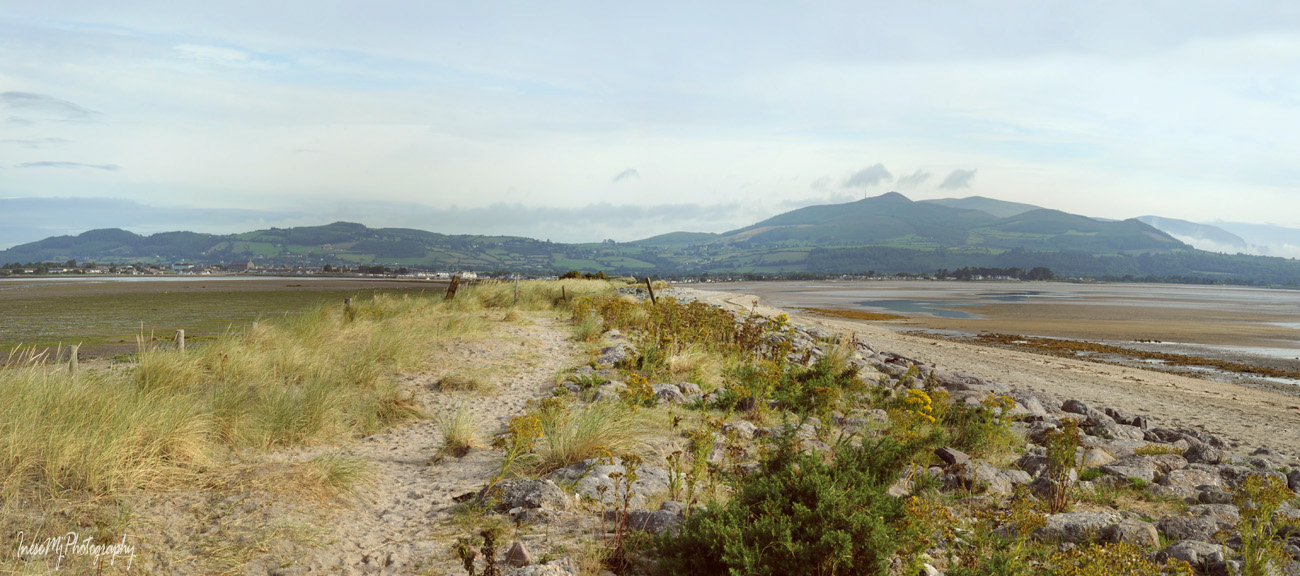
One more blog from my long walk. You can watch a video about the Cunnigar in my previous blog post
Centuries ago, An Coinigéar was owned by the Duke of Devonshire, and was the site of the first golf course in West Waterford where the Duke and his prominent buddies used to come and play. In the 1861, the strip of land was bought by John R Power. The tenants of the only dwelling house on An Coinigéar were the Walsh family. As it was so far off the road, the local postman was paid some extra cash for every time he delivered a letter.

It looks like there were trees growing on An Coinigéar in the past.

Michael Sheehan, Irish priest, educator and scholar of the Irish language, was a young boy when he first came to An Coinigéar to play croquet with his schoolmates. They somehow moved fencing out of its place, and the son of original Mr. Walsh came out of his house and gave them a piece of his mind. Young Michael in astonishment asked his friends what language was the man speaking. Irish, was the answer. Michael was so impressed that he dedicated the rest of his life to studying and promoting the language of his ancestors, and was the author of many books in Irish.
I am glad that there is no golf course on An Coinigéar these days. My favorite coastal plant Sea holly can grow undisturbed, and feed armies of different insects.


Male Common blue butterfly is added to my list of species discovered on An Coinigéar 🙂
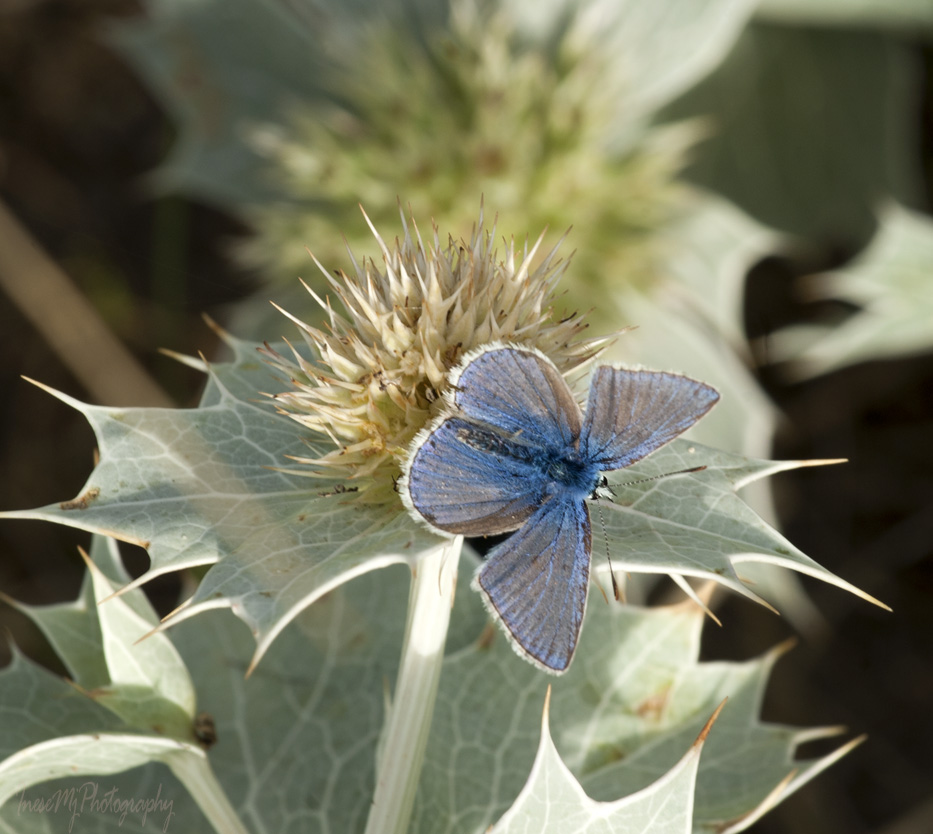
This Sea holly is hosting a party – male and female Common blue, and an unidentified wasp.

Female Common blue.

I love the fragile beauty of these little pieces of sky.


Another form of unhurried life.

I noticed the recent presence of cows on the Cunnigar, but didn’t see them. They probably crossed from west to east behind the dunes that are several metres high. Finally I saw a herd moving towards The Ring in the low water some two hundred meters from the shore. Two cows – a huge pregnant and a young one – were way behind the herd, but the incoming tide didn’t seem to bother them. This is a heavy zoomed picture. The cows looked like two dots to me.

The western part of the estuary began filling up too, forcing the birds to relocate.

The tide was well in when I reached the dunes.

I crossed to the eastern part and was pleasantly surprised to see this male Wheatear. You can see the hallmark tail pattern. Wheatear has one of the longest migration routes of any songbird. I have read that the birds breeding in north-eastern Canada fly almost non-stop across the northern Atlantic to North Africa. My main resource of information about birds is this page.


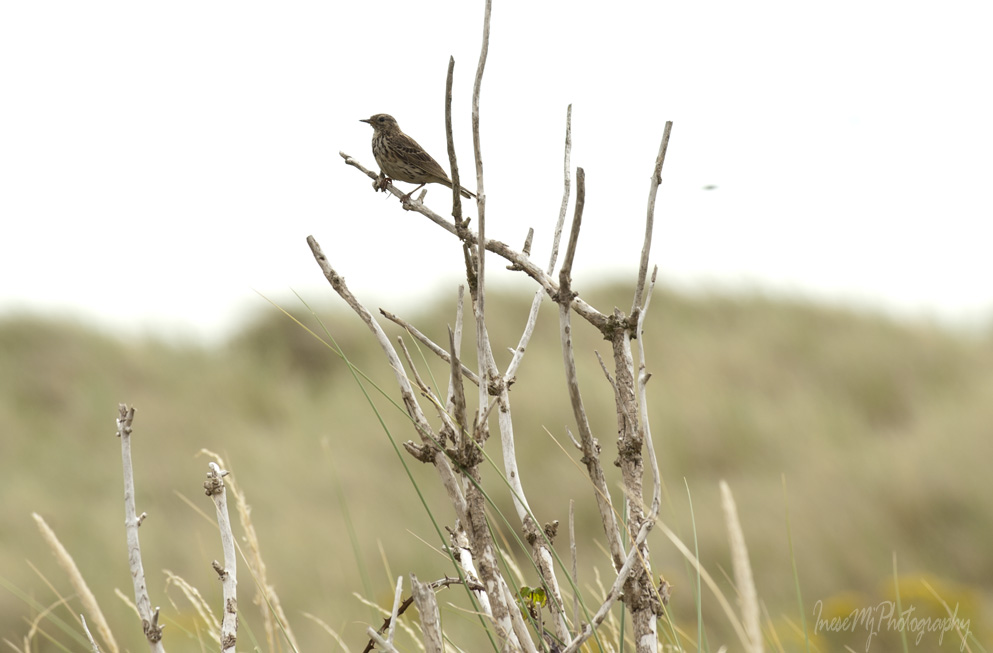
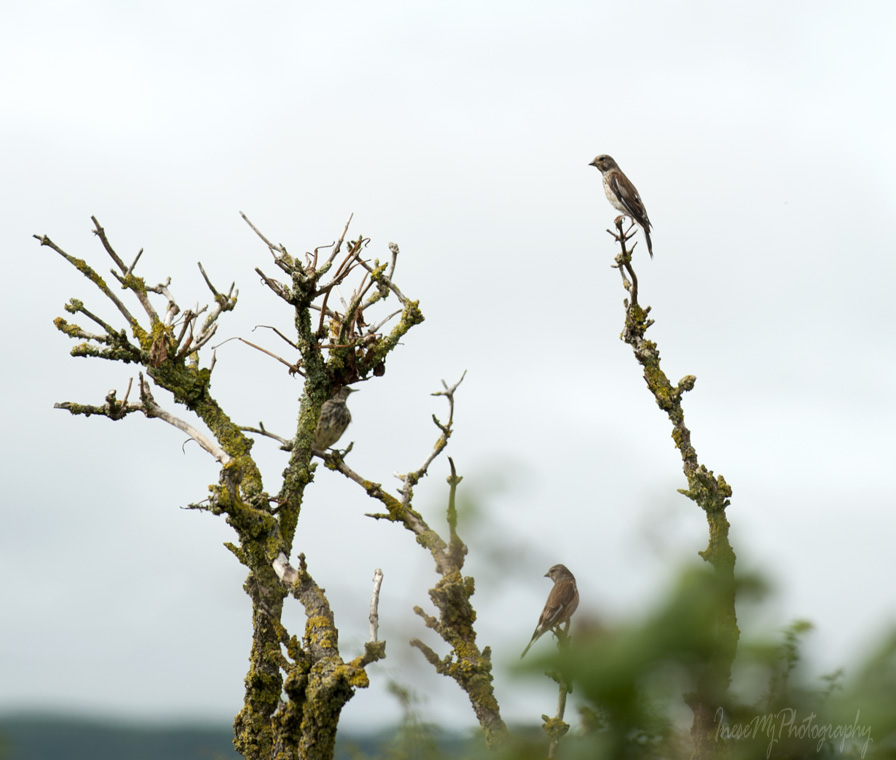
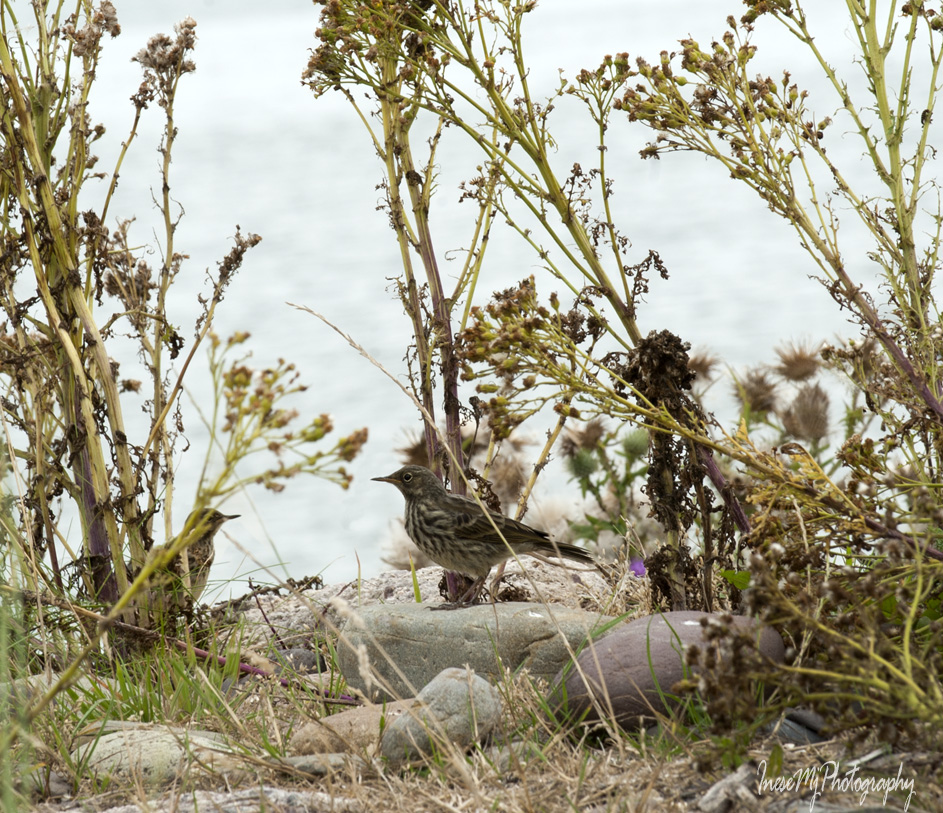
The dunes on An Coinigéar are beautiful. I wish people were mindful about these fragile ecosystems and didn’t walk off trail. I took some pictures of birds from a distance – Pipits and Linnets.
There were seven Herons standing on the other side of a marshy area, but when I tried to sneak up closer, five of them took off. I got a couple of good pictures of herons in flight, and already used one in my New Years post.

Finally I reached the Point! Dungarvan quay doesn’t look too close. At low tide, the distance is much closer, and it is possible to walk across.

Here is a link to the Dungarvan Hillwalking club website where you can learn more about the annual event of the Cunnigar Crossing, and possibly join it some day. Last year, 359 people took part and €1961 was raised for charity. If you think you might do the crossing, check out the Hillwalking Club homepage and join their Mailing list. The Crossing event will take place in July or August.
The photograph from the website is linked back to the page.
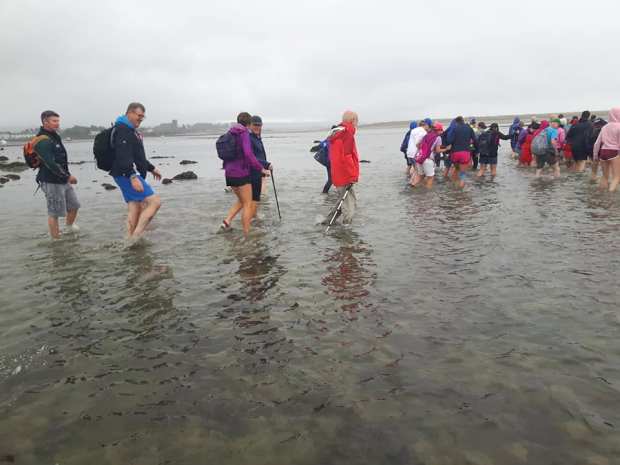
In bygone days, An Coinigéar served as a shortcut from the Ring peninsula to Dungarvan, and women went to market with their baskets on their heads, and some students crossed to attend school.
In the 1880s, it was proposed to build a bridge, but thankfully it never happened, and the automobile era put an end to the use of An Coinigéar as a shortcut.
In later years, a local family run a ferry service to take the picnic-goers over in two rowing boats. If you needed the ferry, you stood at the point and waved a white handkerchief.
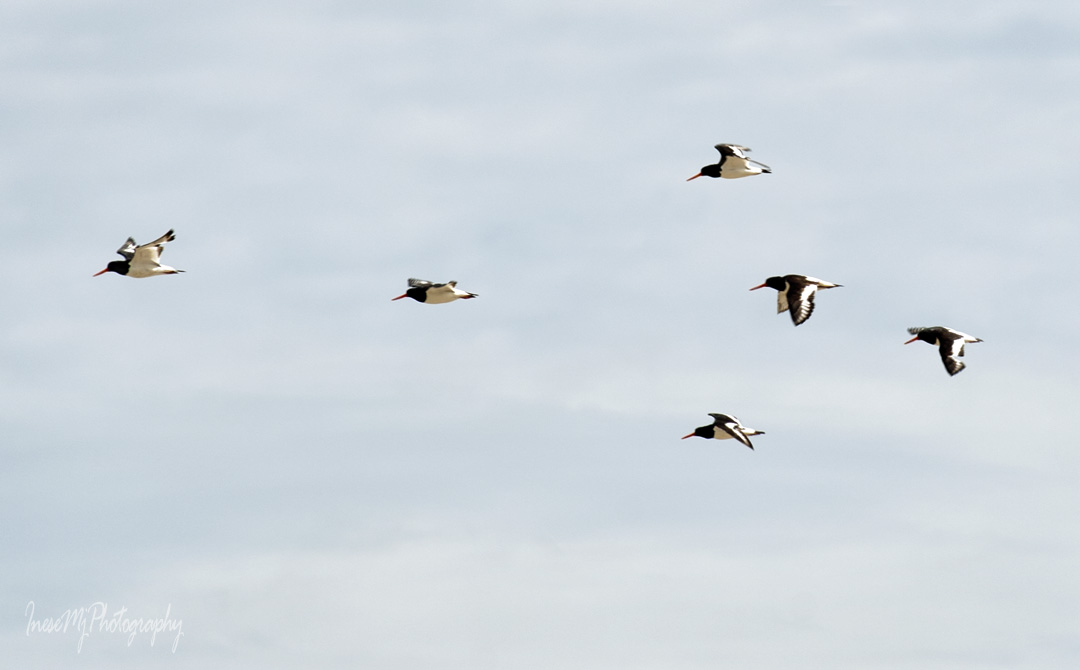
On my return journey I watch the birds and enjoy being surrounded with water.
Summer is almost over, but I find some samples of coastal flora.

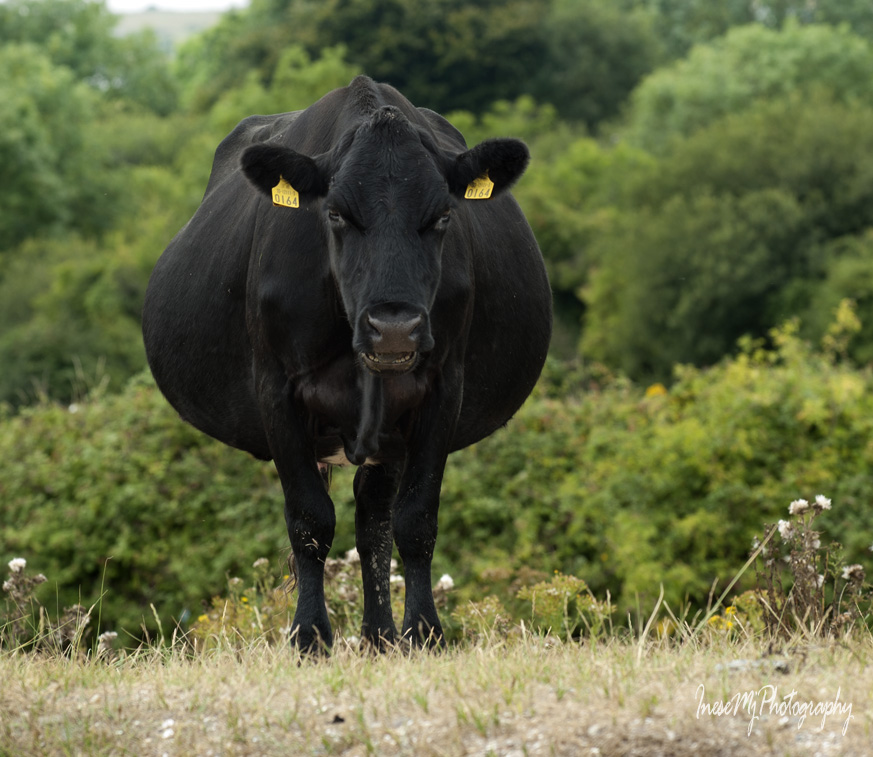
Near the car park I see the herd and immediately spot the brave mama.
Good bye, An Coinigéar. It was good to spend time with you 🙂

Thank you for joining me on this walk.
 Have a wonderful weekend!
 Making memories
Enjoyable post, great photos of beautiful countryside.
Thank you for taking us on a walk! Happy weekend to you as well.
Thank you for taking the time to join the walk! 🙂
No, thank you for taking us for a walk through your memorable posts. The scenery is always minded crunching and the derelict wall whispered to me like a calling of the ancients. The sea holly you gave us a spectacular picture of the flower alone and then the different insects and butterflies given as a feast to the eyes. The other birds were interesting as we don’t have these species where I live and it is always a pleasure to see nouveau. Yes, we should preserve our ecosystems. As a good by the cow does seem pregnant and was adorable. Be well my friend. Hope you are doing well.
Thank you so much, Joseph! I am doing well. Glad you enjoyed the walk across the bay. Are you having snow this winter? Hope your new place is warm and cozy.
One snowfall but did not last the day. All melted as soon as it touched the ground. That is the way I like it lol.
Yes, the snow is only good in the Christmas pictures, if you ask me 🙂
Yes – 🙂
Joseph, check your spam folder, please 🙂 I think there is a whole bunch of my comments 🙂 I just discovered that my today’s comment was gone. I wrote again, and the other one disappeared too…
No nor in spam. That has happened to me on the odd occasions. Your answering a message and everything goes poof in the air and you can’t retrieve it. Most annoying.
It is indeed. I will try again today.
Awesome place … Awesome photographs. g
Thank you John. Hope you are on the mend.
you make all
creatures
great & small
valued, Inese 🙂
Thank you so much, David 🙂
Have a wonderful weekend too, as always I enjoyed your photos 😉
Thank you Elisabeth! 🙂
Thanks for the beautiful photographic journey. Lovely!
Thank you for joining the walk 🙂
I so very much enjoyed the walk.
Thank you!
I hope the mama cow gave birth to a healthy baby.
Thank you! I too hope 🙂 These are tough cows.
Inspiring post, as always … with great images.
Thank you! The place is magic.
A beautiful little self-contained ecosystem 🙂
Absolutely. Even the cows get their niche 🙂
By far and away the most splendiferous mag I shall read this week.
Thank you Mike, you too kind. Some places are like no other. It is absolutely magic walking 3 km into the bay on a narrow strip of land, unspoiled, ancient.
Your word ‘unspoiled’ stands out. It is the key to unlock a creative mind, such as yours, Inese.
Thanks 🙂 The Cunnigar is pure. It is one of a few places where I regret being mortal. I would be happy to reincarnate as a Coastal holly and grow there forever 🙂
What a splendid thought, Inese
“I love the fragile beauty of these little pieces of sky.” What a beautiful, poetic way to describe the butterflies, Inesse. And the Sea Holly is gorgeous. Your walks with your camera always make me feel like I want to go there. For now, your posts make me pay closer attention to the lovely details of nature in my own backyard. <3.
Thank you for your kind words, Diana. Every backyard is a universe for so many little critters and plants. Backyard – it is where we are going to spend our days if we live very very long 🙂
This is really a beautiful region of your country – loved the butterfly and bug images especially. That cow looks awfully big though and she was certainly checking you out.
Thank you! 🙂 The cows were all over the bay on low tide. I was terrified that they would be swept away in ocean, but sure it wasn’t their first trip 🙂 The herd lives there permanently.
It looks like they were not afraid of you. That was quit a picture of the cow!
Yes, it was the one who walked across the bay with the tide coming in. I thought she would drown! 🙂
Beautiful and brilliant! xoxo
Thank you so much, Jason!
Maybe the BBC should ask you to be the new David Attenborough? ~ George
He is my hero, George 🙂
Mine as well ~ George
I love those collection of Sea holly pictures with small insects / butter flies on them. They are so lovely!
Thank you! 🙂 I am in love with this plant all my life 🙂
I have not seen this plant before seeing ones in your pictures. I will now keep eyes on one. I am wondering they are only in Ireland.
No, they grow everywhere around the world in the coastal areas, but they might look a little bit different as there are many species of this plant.
That is good!
Oh, I did enjoy my Virtual walk, Inese!
Thank you! 🙂 This place is unique. Some day I will write about the Ring peninsula from where the Cunnigar sprouts 🙂
Ah, I have been to the Ring peninsular, but don’t have many photographs as I was driving and didn’t ha ve too many hours….
Oh so wonderful to hear this! There are some Whale watching spots, but I don’t have a lens that would be long enough. The whales and dolphins have been seen throughout December and January.
I like to daydream that when I retire, I will spend a month here and there absorbing the culture and beauty of a place while I write, walk, and drink beer in pubs. Honestly, that’s my dream retirement. Your pictures were beautiful. Waterford County looks like my kind of place. Thank you!
Cindy, thank you! I am so glad you love County Waterford. I wrote about the mountains you see in background. County Tipperary is behind them. Waterford is more touristy, but Tipperary is still intact 🙂 The Cunnigar is also quiet, which is good. Hope you find these places beautiful when you come over 🙂
One day.
After looking at those beautiful photos of An Coinigear, I’m drifted to pay Coinigear a visit. Beautiful shots by the way.
Thank you! Join the crossing. I think they have buses to take people around.
Wonderful 🙂 and you’re most welcomed.
Great post and amazing pics!
Thank you Luisa!
❤