
The day out with Pat the Fox Man continues.
After leaving Jerpoint Abbey, Pat asked me if I ever been to Kilfane Church. I haven’t, so off we went.
Medieval parish church of Kilfane, now in ruins, is located on the other side of Thomastown, some 15 minutes drive from Jerpoint Abbey. The adjoining structure is a presbytery – a stone house where the parish priests resided in the upper floors.

The graveyard alone deserves a separate blog post.

Good timing! Inside the church we met a very knowledgeable man who makes a living doing what he loves – an archaeologist, author and photographer Chris Corlett. Chris kindly answered my questions, and as we walked around the church he pointed out many things I would have overlooked. I left the men to chat and went to take some pictures for this blog post.
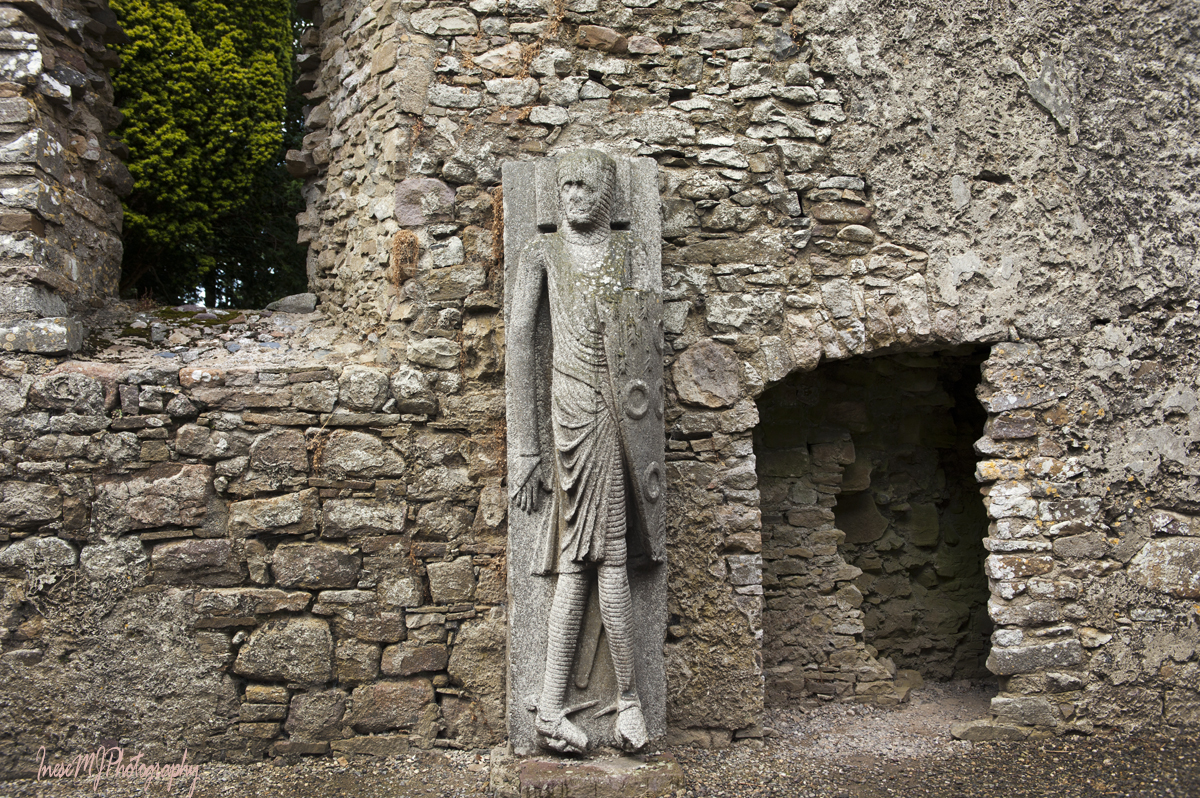
The biggest (literally) attraction of the ruins is an eight feet tall effigy of a knight in full armor made from a slab of limestone. The knight wears a mail hood and body armor, a surcoat, and a sword on a sword belt. He also wears spurs which means he had fought on the horseback.

The coat of arms on the knight’s shield reveals his identity. It is the Cantwell family coat of arms: annulets and a canton ermine.
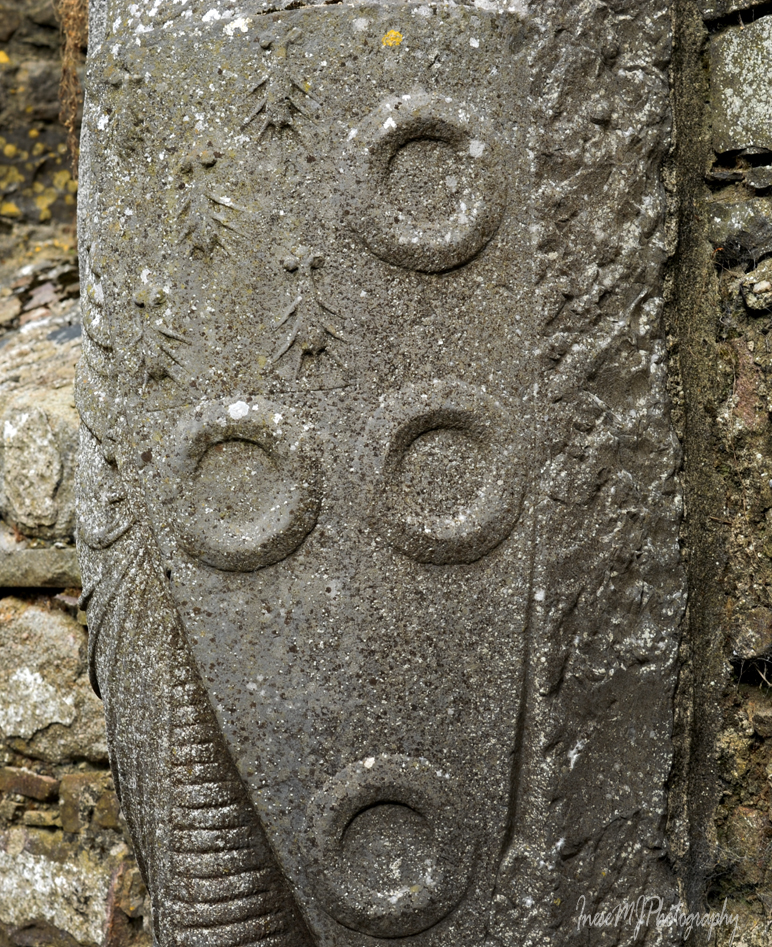
The Cantwells were a Norman family, originally from Suffolk. They came to Ireland in the end of the 12th century and were made Lords of Kilfane for their loyal service to Theobald Walter, the first Chief Butler of Ireland. It is believed that the effigy depicts Thomas Cantwell who died in the 1320-s.
Cantwell Fada – The Long Man – is the largest effigy of its kind in Britain and Ireland.
In contrast to the smiling knights and bishops of Jerpoint Abbey, Thomas Cantwell’s carved face looks gloomy and unhappy. The story goes that the reason of his unhappiness and death was his marriage to Beatrice Donati whom he met while on crusade. Beatrice soon bored of her life with Cantwell and befriended the ‘Kilkenny witch’ Alice Kyteler. Both were arrested. Beatrice was held in Kilkenny dungeon but escaped and hid for five month in a monastery. Her husband eventually captured her and killed her accomplice, but Beatrice managed to fatally stab him in the heart with a gold bodkin.
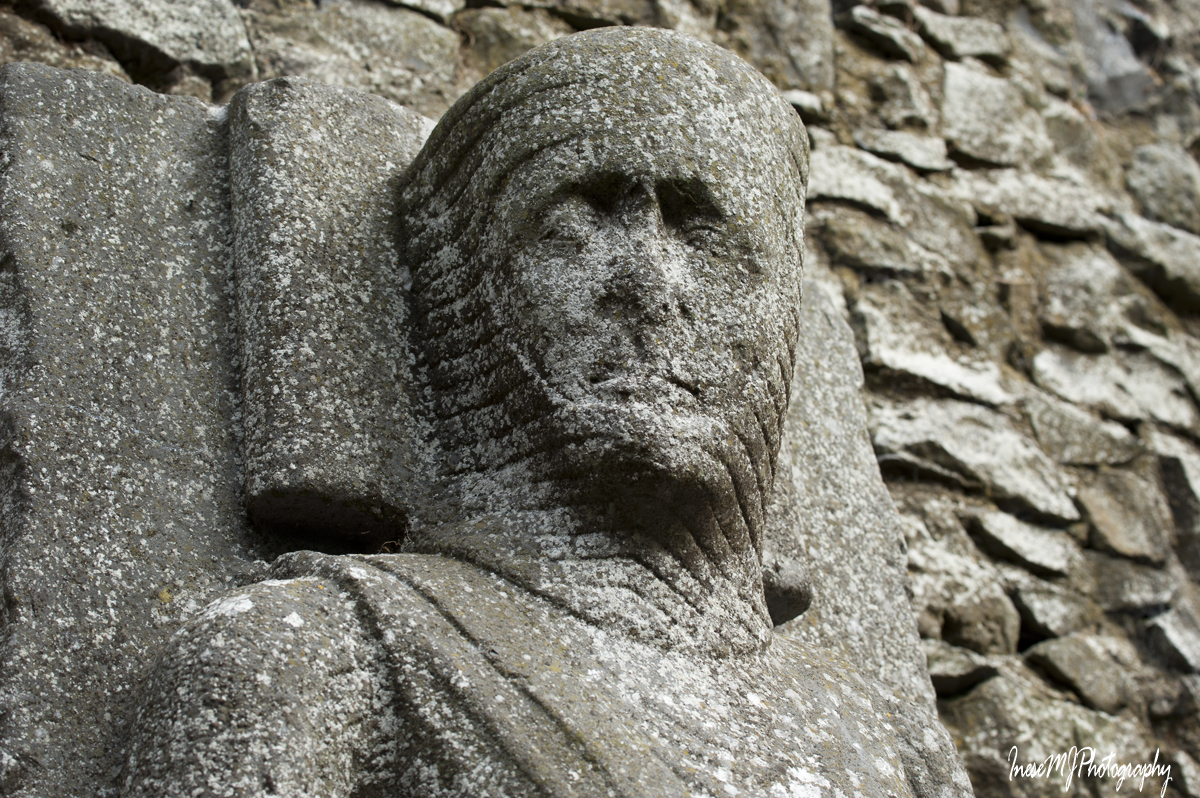
When the church was taken over by the Protestants, the effigy was buried, but later was dug up again. There are four copies of it made in 1852.
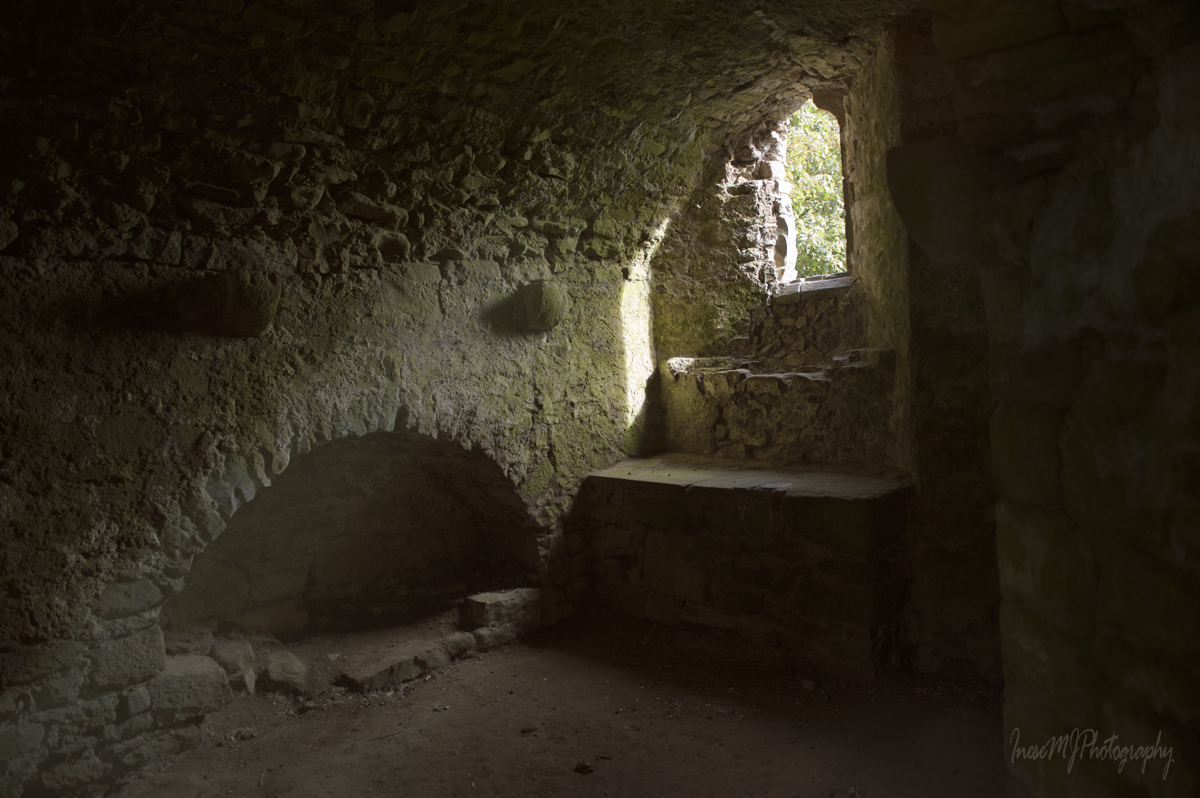
The hole in the wall is actually a door to the ground floor room of the presbytery – a sacristy, where the vestments and articles of sacred rituals were kept.
The sacristy.
The stairs go up to the priests’ residency. At the top of the stairs there is a trap door. A hall is on the right.
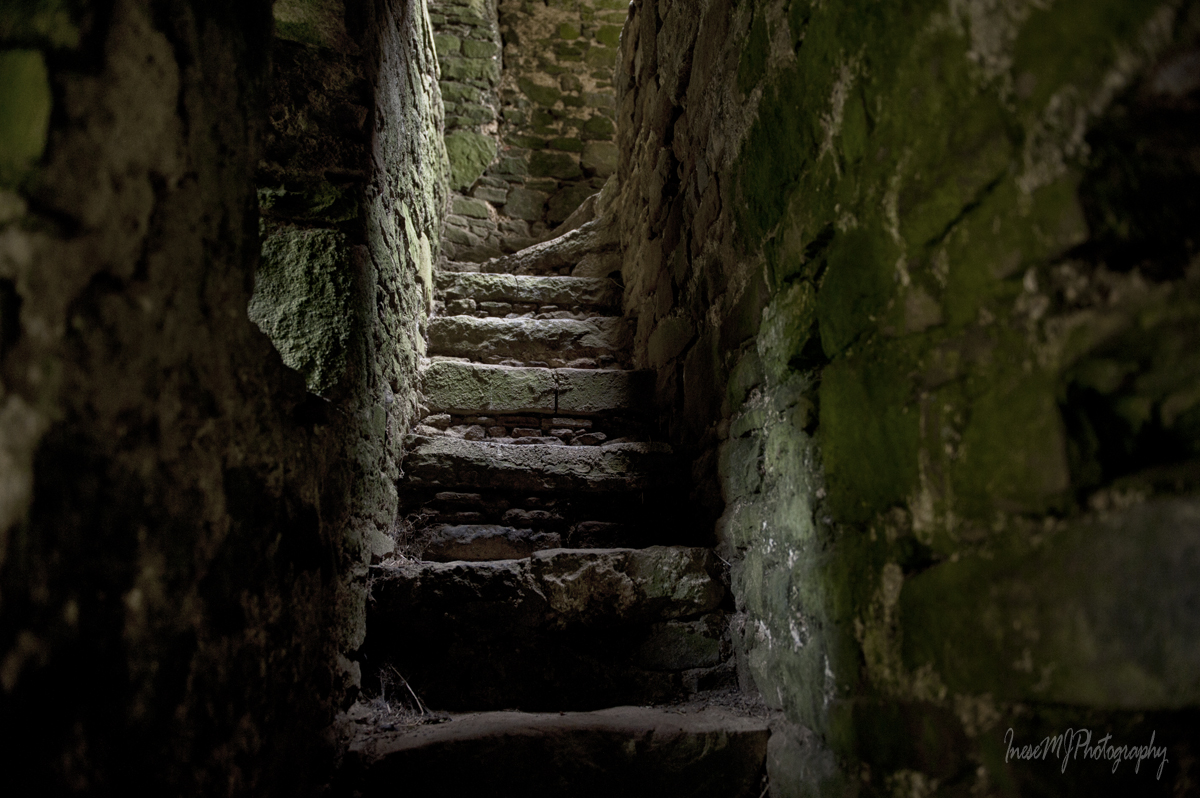
The trap door.

A toilet.

The floors are gone but you can see where they used to be.
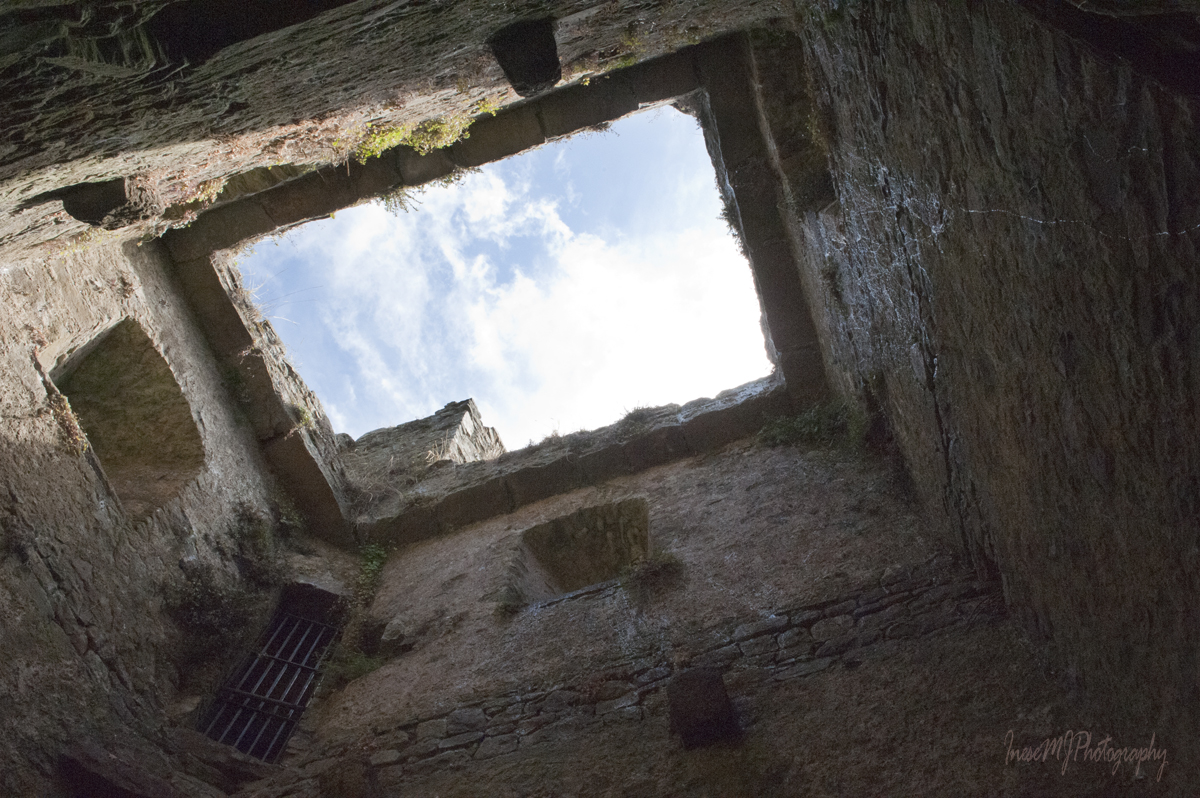
I couldn’t resist climbing the narrow stairs.

One floor up.

Another floor.

I keep climbing.

Finally on the top!
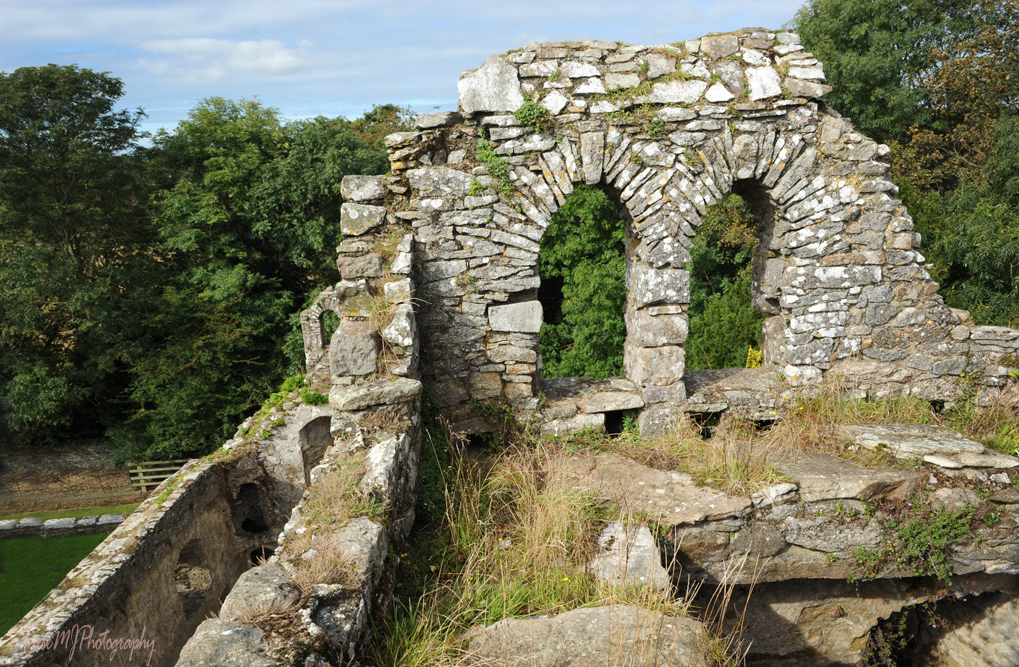
I had to stick my camera out of the narrow window to take this picture.

Back on the ground again. There is so much to see – it is simply amazing.
The bell tower has its own staircase, but it is damaged and too narrow anyway.

Both walls feature original ogee headed doorways.
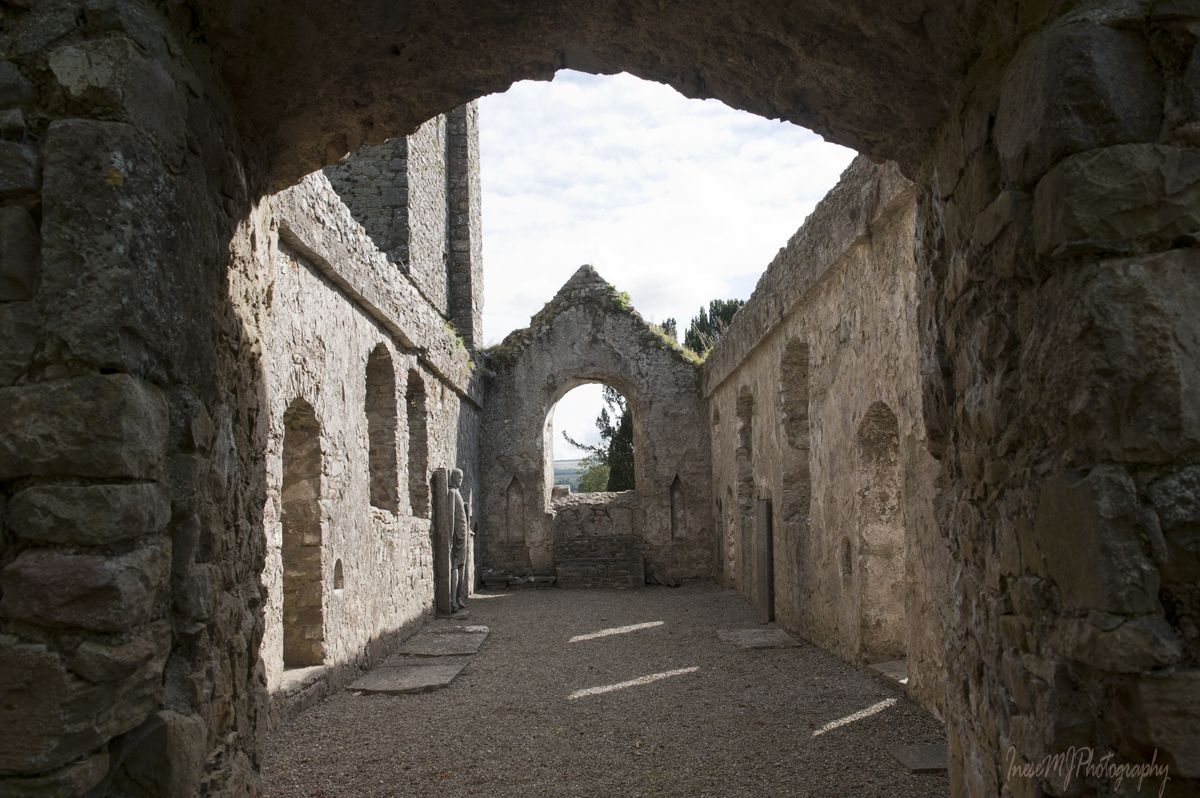
Ogee arches were introduced to European cities from the Middle East. They were a popular feature of English Gothic architecture in the 13th century when Kilfane church was built.

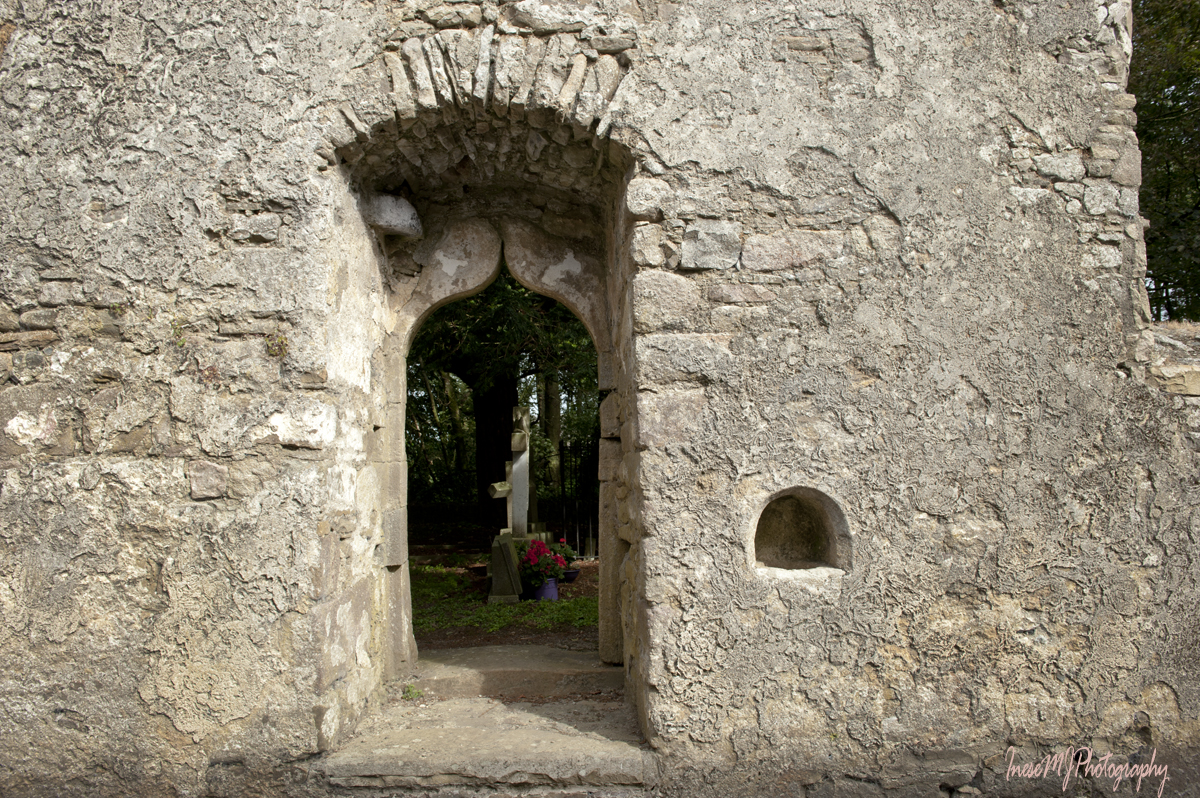
Stone seats for the priest and his assistants in the south wall – sedilia.

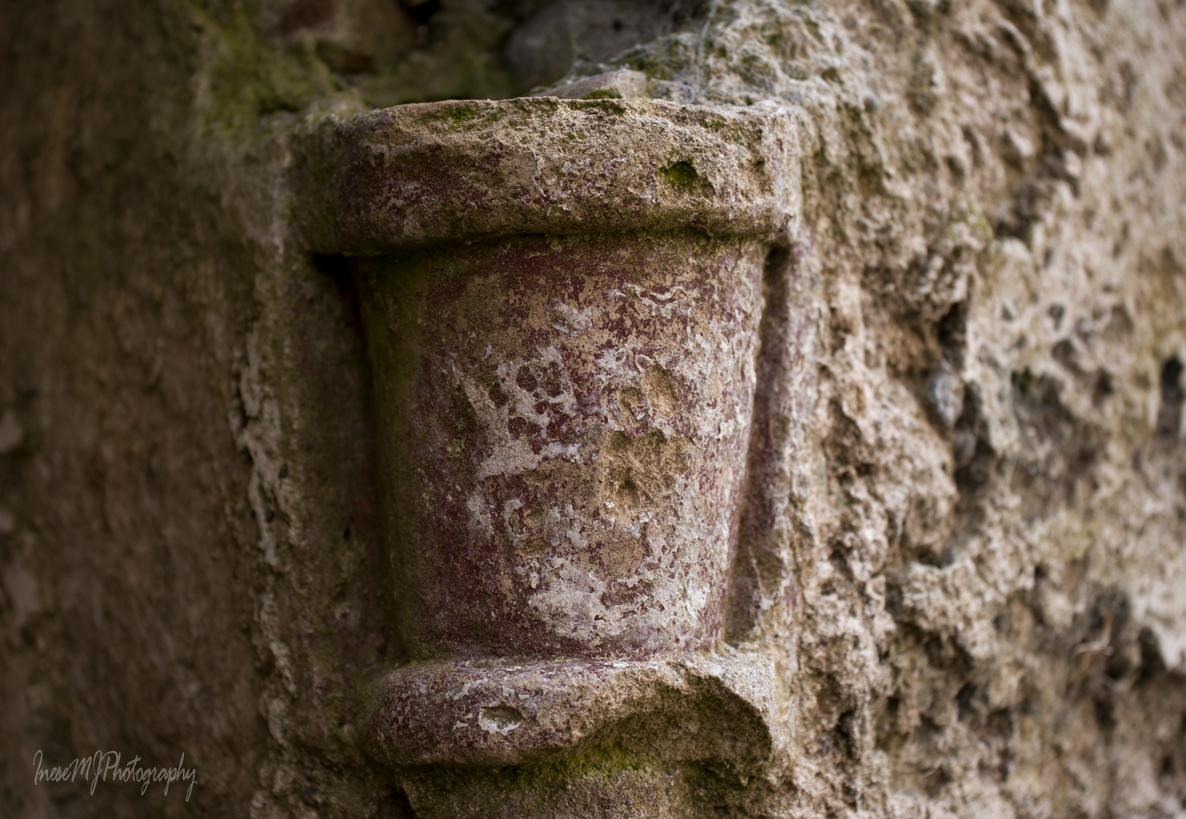
Sedilia still have some ancient red paint residue on the carvings.
Another amazing find is the fragments of the consecration crosses on the church walls.

A new constructed church had to be consecrated, or made into a sacred place of worship. The Bishop would bless the building and anoint it making the sign of the cross with his thumb dipped in consecrated oil. Typically, twelve such crosses were created on the inside walls, and twelve more outside on door frames and corners. Each of these crosses would have been incised and painted afterwards.
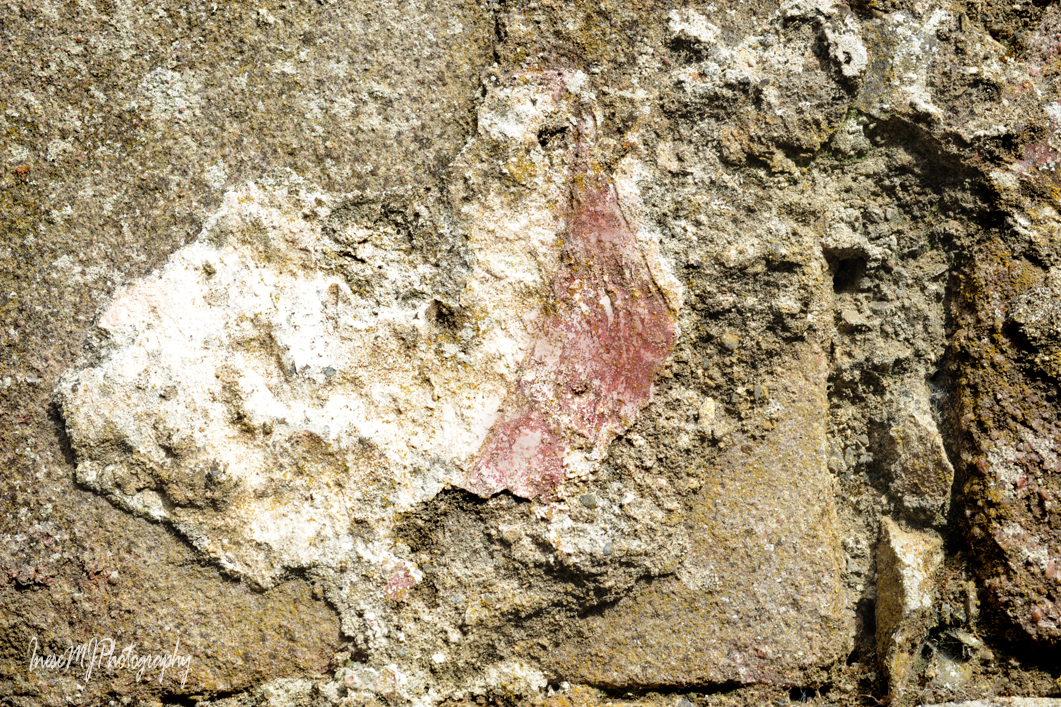
You can see two incised circles and a cross incised and painted within the inner circle.
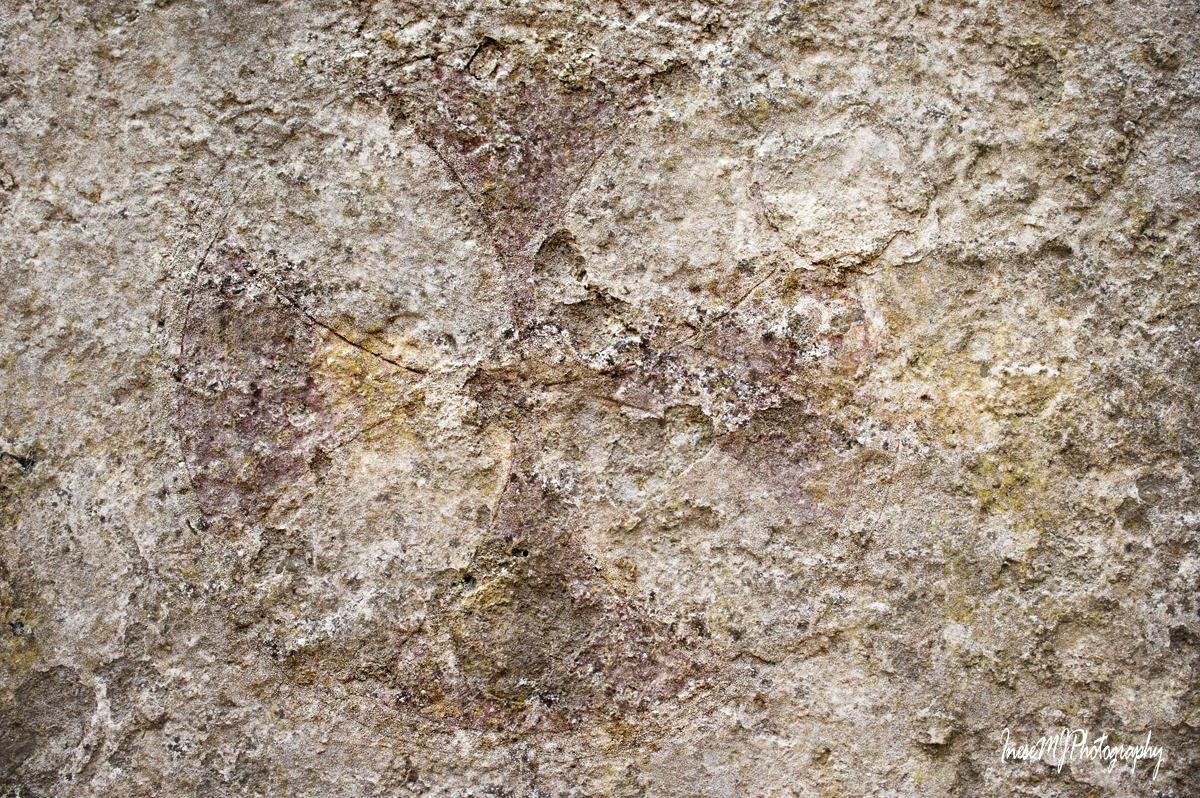
In the end of the 17th century, the church was taken over by the Protestants and the consecration crosses were concealed by plastering over them. When a new church was built just across the road (c. 1825), the roof was taken off the old church.
The plaster is falling off, thus revealing the old consecration crosses. Chris Corlett is sure about another few places where the crosses would have been placed, but you can read about everything in his own publications.

One last look at the church and the Long Man.

I ate in The Long Man pub once … It is ‘closed for renovations’ these days. I just drove over there to take this picture.

Thank you for joining us on this day out, dear readers! County Kilkenny is full of history, and I hope to write more about it in the future.
 Have a wonderful weekend!
 Making memories
I love discovering history and learning more of the stories behind the architecture. You share them so wonderfully, and lovely images as always ❤
Thank you so much, Takami! ❤ This little church that was built 700 years ago is a history book 🙂
Another day with Pat, awe, there might be more than meets the eye in this relationship. 😉
The same day, Jason. Three blog posts from the same day. I wish all my days were that productive.
I wish I could have one day like yours. That would mean that my photography skill was superb!
Something tells me that long man was no joy to live with. Lovely textures and shadows in these pictures.
I am afraid you are right. He was a mean landlord too. That poor girl should have stayed in her sunny Florence.
A sad tale of Cantwell and no wonder he looks disheartened. Despite being a ruin, the place has lots of areas that are well preserved. I’m surprised that people are allowed to climb those stairwells, but what a treat. Great photos, Inese. 🙂
Yes, the church is taken care of, and there are many other interesting features I haven’t mentioned. Some precautions are in place – I could not step out of the stairwell as there are steel bars installed in front of every bigger opening. The tower house looks quite solid – no loose stones. My favorite part was inspecting the walls and finding the crosses 🙂
Thank you for sharing your adventure, Inese 🙂
Thank you Irene. It was a long and interesting day 🙂
I believe so, Inese.
Absolutely fascinating, Inese! It’s crazy how one society/civilization had to take over another and bury, or destroy the art history from the other. Domination dominating dominions of history seems a consistent theme.
Man was not much more than animals at that point, and still is not.
Perhaps wine is the only redeeming feature of man’s evolution. Okay … art…. but art was buried, and wine continued!
Pat took you to one fab place!
Thank you Resa! We have plenty of history here to learn and discover. I hope all is well in Toronto. We didn’t have any Canadian artists for Waterford Walls this year. I will share the walls in two weeks. Some of them are quite interesting xxxx
I can hardly wait! xxxxxx
Nice weather for such a fun adventure. Thanks for taking us along.
Thank you! It was a fun adventure indeed 🙂
Wonderful as always!
Thank you, Bruce. It is a treasure box, this little church.
……………..Inese,
enjoyed your post so much that I did a portrait of the Long Man
(I didn’t use your photo). Really great post !!!
Inese, I’m not anonymous. I am Michael of Multiplemichael.
Michael, sometimes the blog does funny things out of my control 🙂 Thank you so much for stopping by!
You can use my photos, no problem with that Michael 🙂
Such an amazing place. I wonder what it looked like when it was in its heyday?
Must have been a lovely little church. There is also a castle, and a park with a waterfall. I might write about them too some day.
Inese, these photos are pure magic! Thank you for sharing them with us. It’s good to see Pat again too. Hugs on the wing.
Thank you Teagan! I don’t know if you have seen the post, but Grainne died, and Pat is missing her. I just though he needed a day out. Hugs.
Oh, I’m sorry. Yes, I missed that. How very sad. Sigh…
By the way, one of the “random things” you left for the Delta Pearl (mahogany) will be in chapter 10, next weekend. Hugs right back.
I LOVED this post. Absolutely fascinating. Wee bit of everything here. And the pics are stunning. Love them all but most of all the one from the top.
Oh thank you Shehanne! It is my favorite too 🙂
While the drop of kinda of …ok… I was still drawn to so much in that image. One thing was despite you leading up to it with stairs and things, it was suddenly dizzying in the best way, like how did you get THAT high. The three pics below are also beautiful for diff reasons/
I am surprised myself, as the size of the stairwell and my own size didn’t agree much 😉 I felt claustrophobic.
I don’t blame you. These stairwells are so tight.
What a fun way to spend a day! Thanks for taking me along, I enjoyed all the photos.
Thank you Cindy! It was a great day, and we were lucky to meet Margaret and Chris.
Very interesting, would love to visit. You deserve great credit for bringing these ancient buildings to our notice. Maith an cailín thú
Thank you for your kind words, Brian. If you plan to see the church some day, you have to drive through Thomastown by R448 and make a right turn just before the Long Man pub. I think there is a brown sign. Park across the new church and walk through a little gate. Who knows, may be another piece of plastering fells off and reveals a new consecration cross for you to discover 🙂
Great photographs.
Thank you 🙂
Kilfane church provided great food for your camera, Inese!
Thank you! Even more food for my curiosity 🙂
The ruins look magnificent. Imagine how they looked back when they were newly constructed. Thank you for sharing them with us.
Happy weekend.
Thank you! 🙂 Hope your weekend is wonderful.
Thanks
This looks fascinating. We visited similar sites in Ireland and they were my favorite places. The effigy is really interesting. Thank you for pointing out all of the details and what they mean.
Sorry for the late reply. Some comments ended up in my spam folder – 25 comments! never happened before.
The effigy is one of the coolest things I have ever seen. So wonderful it survived all these centuries. I was surprised to learn it wasn’t a copy.
What a wonderful post, Inese! And how lucky you met an archeologist right on spot! Poor Long Man for having been stabbed to death by his wife but maybe she had good reason too… wouldn’t it be great to travel back in time for a glimpse behind the scenes? 😉 Have a lovely weekend! xxxxxxxxxx
Sorry for the late reply, Sarah. 25 comments ended up in my Spam.
You are right, he wasn’t a sweetheart. Instead of standing by and defending his wife, he was actually a guard for her when she was imprisoned.
No worries, Inese! It happens now and again. 😊
Old stonework make great pics. Your one are fantastic, Inese ~ George
Thank you. I love history.