
Clonmel is one of my favorite towns in County Tipperary – a place rich of history, and surrounded by beautiful landscapes. If you travel Ireland and are interested in photography, it is a place to visit for many reasons.
In 1840 an instruction manual in the use of the daguerreotype was offered by the Dublin Mechanical Institute and the natural Philosophy Committee of the Royal Dublin Society purchased a camera for taking daguerreotypes in the same year. Photography started its journey in Ireland.
Photography was quickly taken up by Ireland’s professional and landowning classes and the residents of Ireland’s big country houses. One of Ireland’s pioneering photographers, William Despard Hemphill was a native of Clonmel
William Despard Hemphill (1816–1902) was born into a large professional middle class Church of Ireland Tipperary family in 1816. After graduating University of St Andrews, he returned to Clonmel and had a successful medical practice, being doctor to both the Lunatic Asylum and the Prison.

Dr Hemphill composed and played music, was an avid orchid grower, turned ivory ornaments and was interested in archaeology, geology, and Waterford glass. He experimented with the latest photographic techniques, won several prestigious awards, and left a vast historical photography record of the 19the century scenes and people. He won fourteen prizes in Dublin, London and Paris. His photographs were praised for excellence of composition and artistic taste.
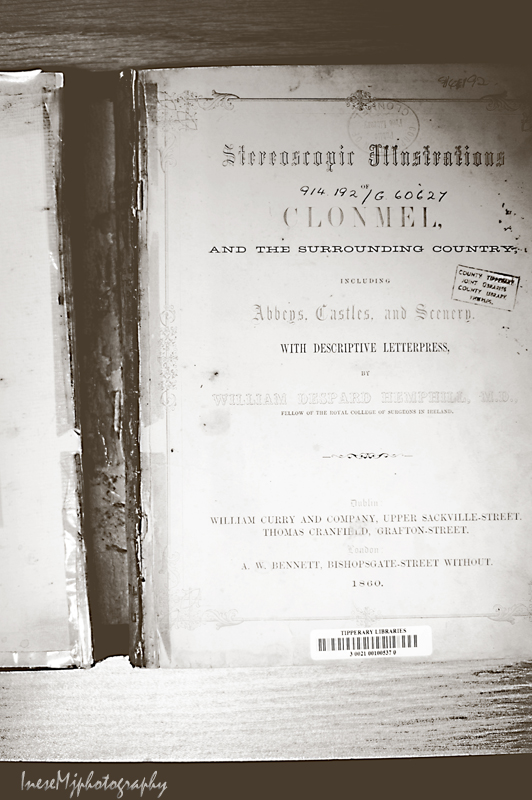
William Despard Hemphill is best known for his book ‘Stereoscopic illustrations of Clonmel and surrounding country, including Abbeys, Castles and Scenery. With descriptive Letterpress’, which was printed in Dublin, in 1860.
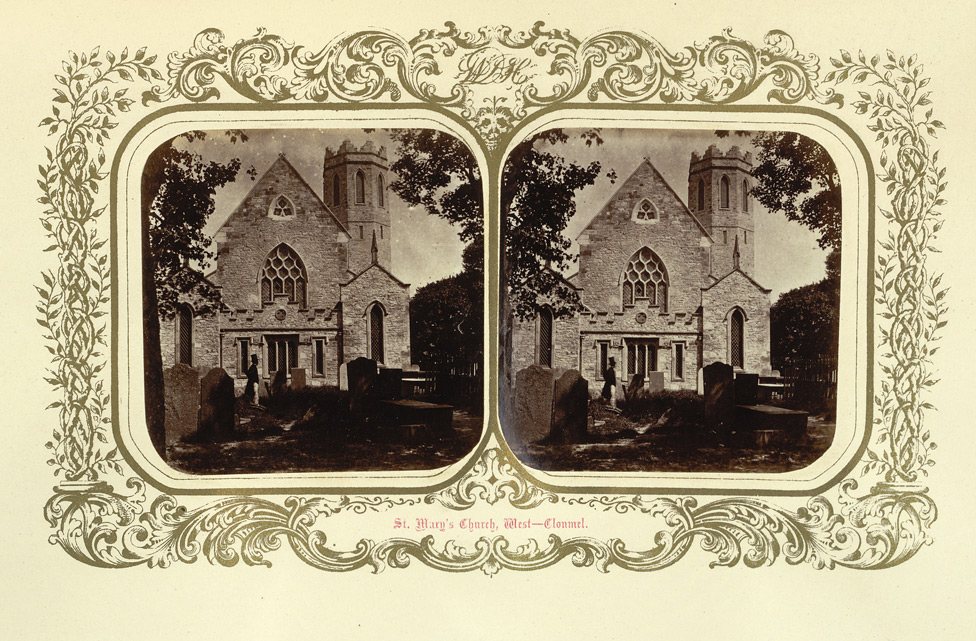
Stereoscopic photography recreates the illusion of depth by utilizing the binocularity of human vision. Stereoscopic photographs, or stereographs, consist of two nearly identical photographs – one for the left eye, one for the right. Viewing the side-by-side images through a special lens arrangement called a stereoscope helps our brain combine the two flat images and see the illusion of depth. Stereoscopic photographs became very popular after Queen Victoria and Prince Albert received the gift of a stereoscopic viewer at the Crystal Palace exhibition in 1851.
Dr Hemphill’s “Stereoscopic Illustrations” book comprises two volumes – one is the stereoscopic photographs themselves, the other – the descriptive text. The work is extremely rare; it was never available to the general public, and possibly only distributed by Hemphill to his aristocratic friends in South Tipperary. Each known copy is unique and differs from the others. The National Library lacks all the photographs. Clonmel County Museum has two full copies containing the photographs, however, they are not on display for the general public .
Clonmel Library has a copy of the volume containing the descriptions to the photographs (no illustrations). If you ask, they will give you the book and you can read it all – 102 pages. It is printed in red & black, with the decorative red border vignettes. A sonnet written by a well-known, or anonymous author, or by William Despard Hemphill himself, opens each chapter. The volume opens with two quotes written in Greek and Latin – by Lucian and John Dryden respectively.
I went around the town to recreate some of Dr Hemphill’s photographs. The bits of information about the scenes I took from that famous book.
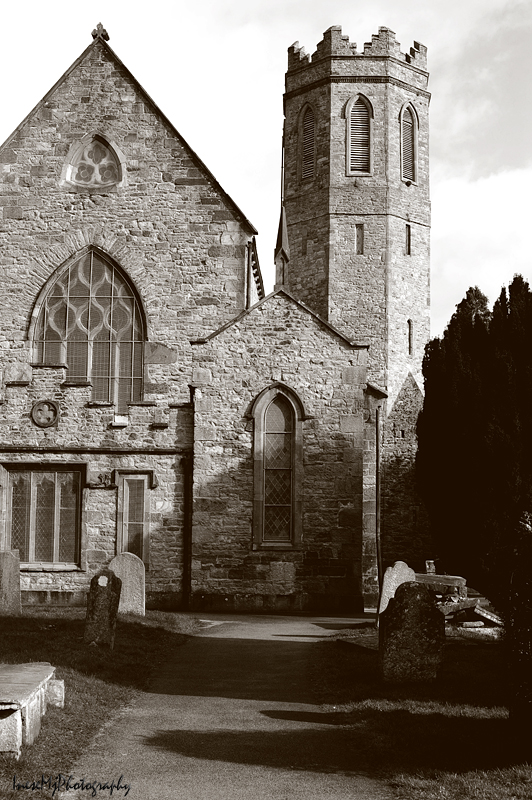
In 1857 Dr Hemphill photographed St Mary’s, Clonmel, his parish church shortly before the reconstruction and alteration works. The Western Wing was not altered and looks the same today.
This image depicts a part of the Eastern Wing that was altered during the reconstruction works and no longer exists.

This image of the Quay is taken from a boat. Commercial barges like this one were used before the railway was built in 1854. Some buildings along the Quay are still there, but the Manor Mills in the background have been demolished.
Quay, Thro’ The Arch Of The Bridge, Clonmel ( 1857-58)


Scot’s Church, Anglesea St, Clonmel (1857-58) with its pretty little Ionic portico
“Clonmel, the assize town and capital of the County of Tipperary, is situated on the River Suir, which here separates the Counties of Tipperary and Waterford, and is built principally on the north side, and partly on some islands in the river, which are connected with each other and the town by bridges of considerable antiquity.” (Descriptive text by William Hemphill)

In the street, you can see a car. It is a Bianconi long car. Bianconi was an Italian man who settled in Clonmel and became a Father of Public Transportation in Ireland. The headquarters of Bianconi’s Transport was in Parnell St nearby.
Otherwise the street hasn’t changed.


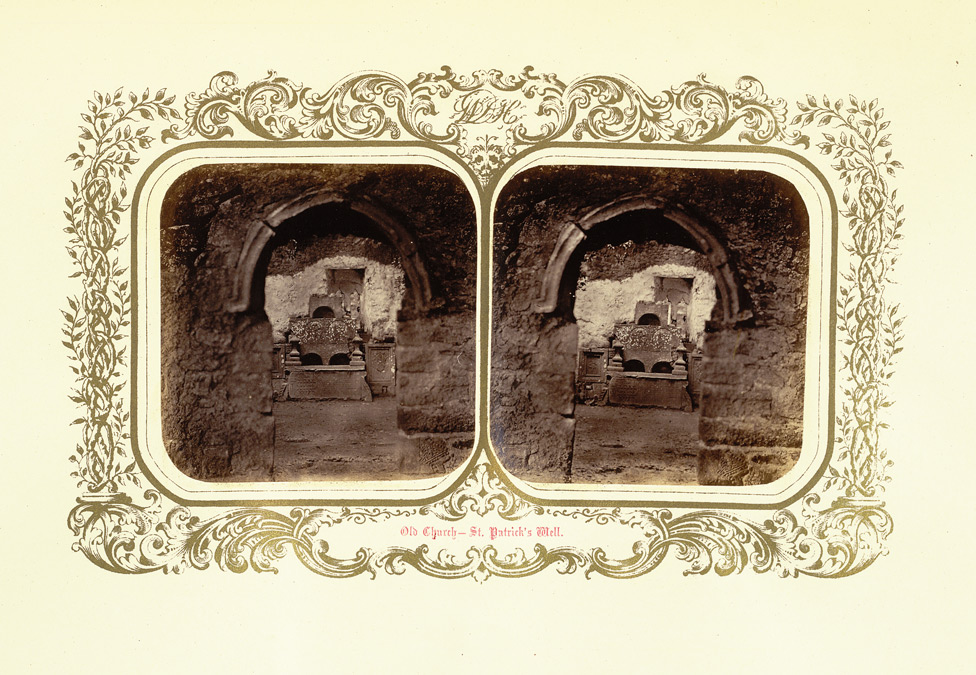
Another beautiful place that still exists is The Patrick’s Well and Church.

An old lady selling some religious souvenirs used to sit at the tree every day.
This is what the Patrick Well site looks these days. No one is selling souvenirs any more, but an old man, David, is there almost every day ready to answer your every question about the site and its history.

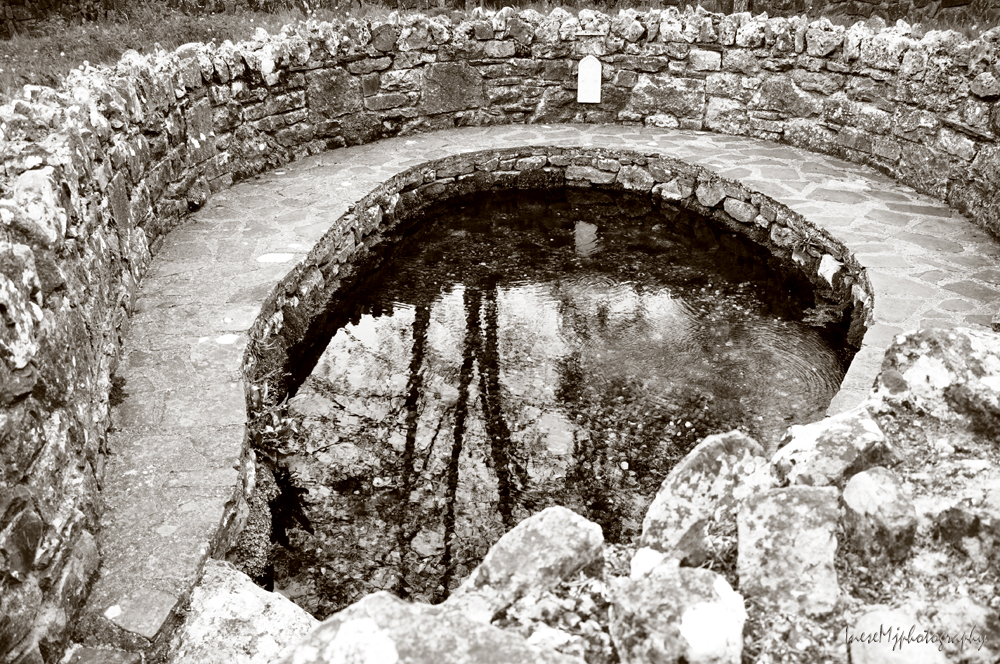

There are some changes inside the Church. The altar had to be removed because of the repeated acts of vandalism, and only the base of it remained intact. David showed me some carvings I wouldn’t have noticed otherwise: a figure of Jesus with the fields and buildings of Jerusalem in background.

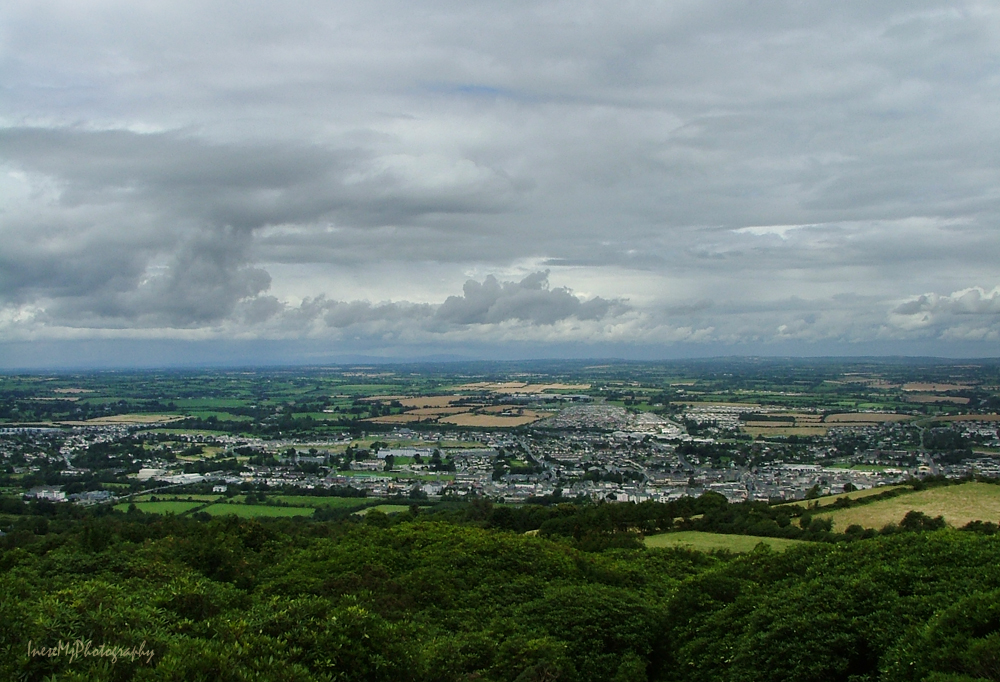
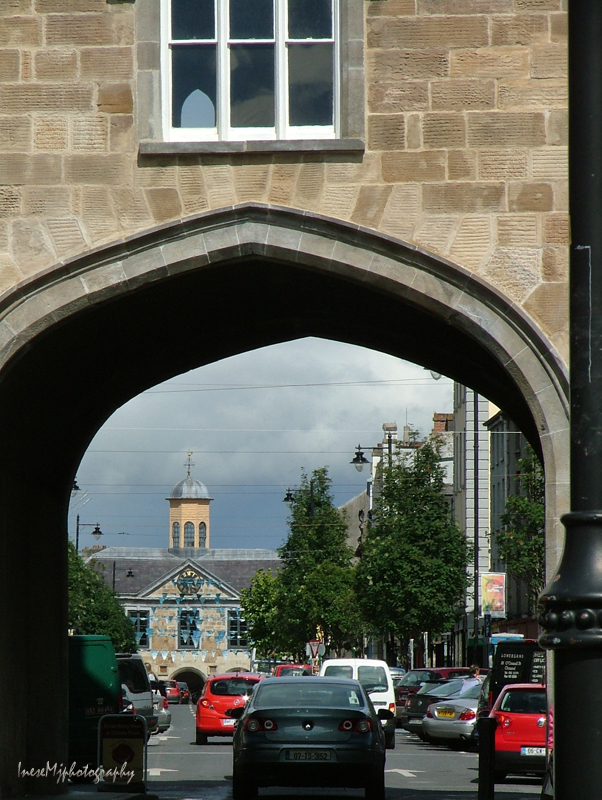
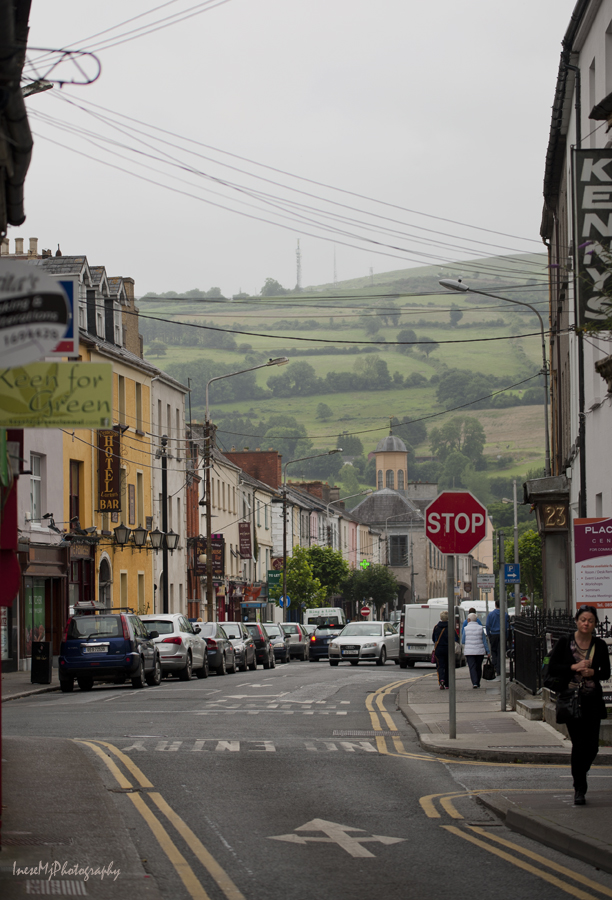
And here are a few more pictures of Clonmel taken over the years. Different seasons, different vantage points, different moods. Lovely town that has a tiny Tourist office in the Mary’s church premises, because there are very little tourists. A gem that is not hidden, just overlooked.
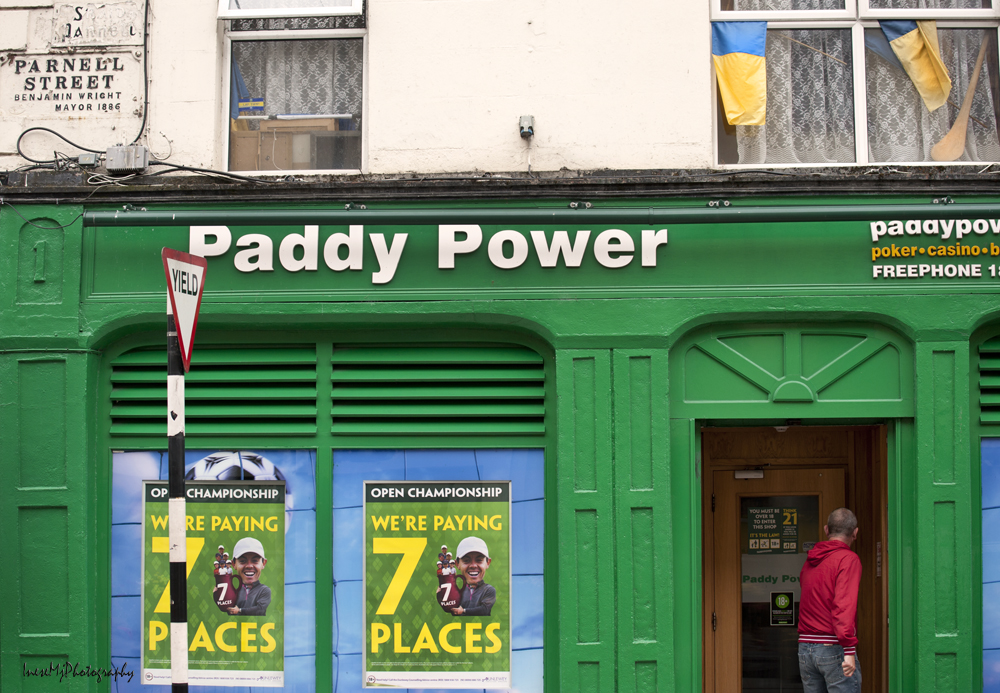
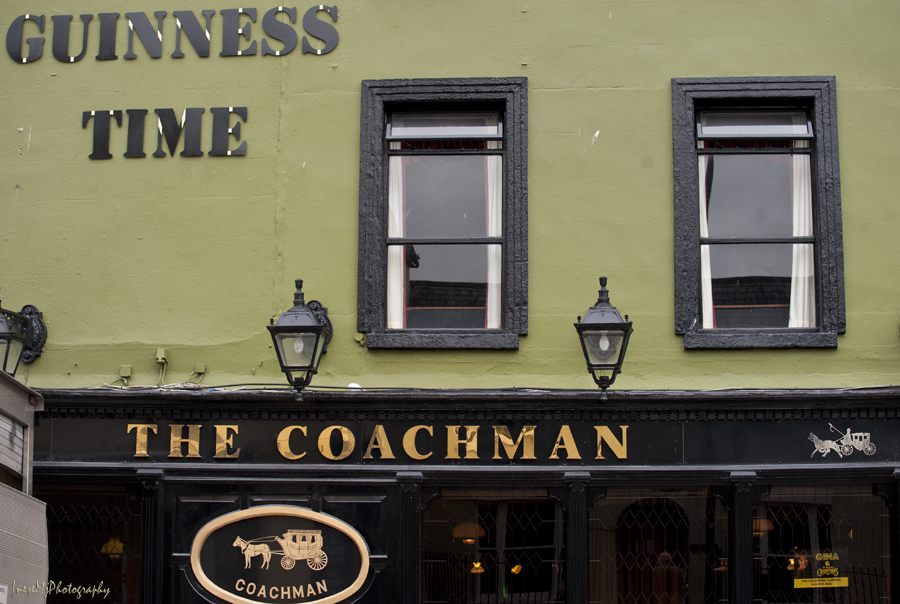

So, back to Dr Hemphill again. His home was demolished and a shopping center was built where a beautiful garden used to be.

I went to the parking lot and asked random people if they knew who William Despard Hemphill is. Two elderly gentlemen knew to tell me about the Hemphills’ estate. Not that he is completely forgotten – in 2013, Clonmel County Museum presented a stunning exhibition of the photographs of William Despard Hemphill – Silent Exposure. It was my first experience viewing stereoscopic photographs.
I went to his parish church graveyard and found his grave. There is a beautiful Celtic cross with the inscription that says: The memory of the just is blessed.

Thank you for walking the streets of Clonmel with me!
 Have a wonderful weekend!
 Making memories
Very nice! Always interesting to compare the old with the new. You can actually get the 3D effect looking at the old photos without a viewer. By crossing your eyes while looking at the two photos, a third 3D image will appear between the two. It takes a little practice, but don’t worry, your eyes won’t stay crossed! 🙂 It would be neat to create stereoscopic images for the new views, but I have no idea what sort of setup they used back then.
Thank you for your comment! There are many articles and videos on stereoscopic photography. Some people still do it 🙂
Thanks for stopping by my humble blog! I have enjoyed exploring yours and your Ireland – would love to visit.
Thank you so much for your comment! You have a lovely blog, and I will visit again and read more. I love cats, and I imagine how sad it is to say good bye to so many furry friends. Have a peaceful week! Hope to talk to you again!
These pictures are seriously awesome!
Thank you! The quality of the images is amazing. I have my own Daguerreotype portrait exposed on a colored glass – no film photography, let alone digital, would ever give such detail. These photographs are 150 years old, stored God knows where, and still look sharp. Thank you again for your interest and comment.
Inese – You’ve become a talented historian along with already being an awesome photographer. I believe we all learned from this post along with enjoying each image – both old and new. Fascinating from beginning to end. Well done!
Thank you so much for your kind words, Sheri! Very little is known about WDH for a simple reason – there is, basically, only one book written by a museum researcher, and two more books and a couple of articles are based on the first book 🙂 That’s it. Thank you again!
This is fascinating Inese – the old photographs are full of character, as are your own – the rainbow and the light casting on the street is beautiful and that first image of D W Parke’s is full of atmosphere.
Thank you so much for your comment, Andrea! I love that special light the Nature has for the stormy weather. All the colors seem richer, thicker, and the air is glowing.
I have many images of the Parke’s chemists taken over the years – at the different stages of decay and vandalism. This one is from last week. Every time I walk past it, I take a picture because I know it will look different next time.
Thank you again. Have a peaceful week!
Very interesting blog – I had never heard of William Hemphill and his wonderful work. It reminded my of my Viewmaster that I loved as a kid – I can see his influence in later photography.
That’s true, the Viewmaster!
Stereoscopic photography was once very popular, I guess, but I have never come across any other photographers in the internet. WDH did a great job organizing his images in the albums and leaving a lot of related writings. It is why these images survived.
Thank you so much for commenting!
Yes, I was thinking of my Viewmaster too.
Interesting post, I learn so much from this – I have no idea about Stereoscopic photography!
So did I until 2013 🙂 Thank you for your comment, Indah!
Beautiful post. Gorgeous place and a fascinating figure. I’d heard about the stereoscopic photographs but never seen any. Curiously, Dalí did the same with paintings and a viewing device and it does create the sensation of depth…
Thank you for your comment, Olga! The quality of the photographs is incredible, and viewing them through a stereoscop is a very special experience. I spent about two hours at the exhibition, looking through the viewer. WDH left such a legacy! His works can be found in the UK and USA, but nowhere in the world there are so many works in one place, like in Clonmel.
Thanks for such an interesting and enjoyable post 🙂
Thank you so much for your comment!
Your own photography is as splendid as ever, with well chosen angles; but what was fascinating about your subject, of whom I had never heard, is the Stereoscopic photography. This is because, complete with the viewers, my brother Chris was experimenting with the method for a year or two before his death last year
Thank you for your comment! I learned about WDH and Stereoscopic photography only two years ago and since then I wouldn’t miss an article on this fascinating subject. And the most amazing thing is that these images were produced by very limited and simple means of the newborn art.
Sorry your brother passed away. Was he taking stereographs or making stereoscopes?
Thank you, Inese. Chris was doing both, and also experimenting with 3D
Very nice story Inessa 🙂
Thanks man! Put my structural to a good use 🙂
Thanks so ,much for sharing the information on WDH and his wonderful photographs. You’re helping history stay alive.
xxx Gigantic Hugs xxx
Thank you for the beautiful trip.
Thank you Annie! Glad you loved WDH 🙂
I love to travel through your lens. It’s amazing.
Thank you so much!
Thanks for this wonderful trip ^_^ I’d love to know the Celtic Ireland.
Thank you for your kind comment!
Very interesting post. I too like the shot with the rainbow. When I visited Ireland ten years ago the closest we got to Clonmel was Cashel.
Thank you for your comment! I will write about Cashel soon. I met a guy who has some family stuff in Rock of Cashel museum, and I thought it would be a good reason to write a post 🙂
Being part Irish, I was absolutely fascinated by this post. I LOVED the picture with the rainbow in it!! Incredibly that you caught it and I hope you will find a pot of gold at the end of it!!! Beautiful post all the way around. Every image I truly enjoyed!!!! Love, Amy ❤
Thank you so much, Amy! Where are your ancestors from?
Germany/Ireland/England/France … I’m a mixture you might say. My sensual side is from France. My pragmatic side is from England. My determined/strong side is from Germany. And my creative/cute/funny/dreamer side is from Ireland. That is how I know the wee folk who gather in my gardens to dance, Love, sing, and make merry. 🙂 😉 ❤
Oh that is definitely from your Irish blood! 🙂
LOL Don’t I know. I can be a real wise butt. My mouth tends to have a life of its own sometimes coming out with the most hysterical things. Hehehehehe I laugh at me!!! 🙂
A good laugh is precious!
AGREED!!!! 🙂
Very interesting post…I love the story and the photos, both old and new…Cheers =)
Thank you for commenting! History is one of my favorite things, and these collections are incredible. Hope more people learn about WDH. He is almost forgotten.
This was a really enjoyable and informative post. I liked learning about stereoscopic photographs. Looks like a pleasant place to tour.
Thank you for your comment! These books are priceless, and you can see and read them if you visit 🙂
Reblogged this on Praying for Eyebrowz and commented:
One of the best blogs out there by my Irish friend. Read more at inesemjphotography.com
Thank you so much! It might help more people to hear about WDH. He was a rock!
The photos are incredible!
Thank you! When i went to the exhibition I was simply stunned by the quality and detail.
Hi Inese. This is such a fascinating post. I enjoyed learning about the stereoscopic photographs! And the photos you shared are beautiful. Yes, this was a lovely adventure. Mega hugs! 🙂
Thank you for stopping by, Teagan! I am fascinated by history and love cute Irish towns 🙂
Hugs!!!!!